


Starting a meditation practice often feels like a fresh breath of hope, offering the promise of more peace, clarity, and presence… But keeping our part of that promise? That’s where many of us stumble. Between busy schedules, fluctuating moods, and daily distractions, it’s easy to lose momentum or become disheartened by a lack of consistency. However, the truth is: meditation hurdles are part of the journey, not signs of failure.
Building a consistent practice isn’t about doing it perfectly, in fact, the obstacles we face can actually be invitations to adapt and grow. Learning how to sustain mindfulness through real, messy, and unpredictable life provides us with the opportunity to develop the kind of resilience that benefits us both in and outside of our practice. Whether we’re navigating inner resistance or external demands, we can meet meditation obstacles with the kind of flexibility and compassion that has far reaching benefits.
Meditation Practice
Take your practice to the next level, & the next… With a Year and a Day commitment.

Let’s consider eight, practical and accessible strategies that can help us meditate more consistently. Together, we’ll explore how to adapt our practice, create supportive conditions, and even celebrate our progress in meaningful ways. We’ll also learn why consistency doesn’t necessitate a rigid routine, and how we’re actually practicing to support a relationship with ourselves that’s worth returning to, over and over again.

#1: Flexibility & Adaptability
When it comes to building a consistent practice, rigidity often becomes its own meditation obstacle. We set lofty expectations—like: 30 minutes every morning, in total silence, with perfect posture—and then feel defeated when life doesn’t cooperate. The truth is, sustaining mindfulness requires a flexible mindset, not a flawless schedule.

Let your practice breathe. If your morning gets away from you, meditate in the afternoon. If sitting still feels inaccessible, try a walking meditation or gentle mindfulness while commuting. By loosening the grip on how practice “should” look, we give ourselves room to meditate consistently, even during imperfect moments.
Remember, flexibility isn’t a lack of commitment, it means honoring your reality and adapting your practice to support it. Whether you have five minutes or fifty, presence is always available. When we meet meditation hurdles with openness instead of pressure, we transform them into pathways of self-compassion and resilience.

#2: Realistic Goals
A common meditation hurdle is expecting too much, too soon. We imagine that to meditate consistently, we need to commit to long, silent sessions every day. In reality, sustainable growth begins with small, achievable steps that align with our current lifestyle.
Instead of striving for perfection, start by choosing a goal that feels doable. This might mean sitting for just five minutes each morning or practicing mindful breathing before bed. These small efforts compound over time, creating a strong foundation for a consistent practice.

Setting realistic goals also helps us sustain mindfulness without burnout. As we gain confidence and notice the benefits, we naturally feel drawn to deepen our commitment. Keep in mind: consistency isn’t about intensity, it’s about showing up. When we approach our practice with patience and practicality, we give ourselves the best chance to overcome meditation obstacles and experience long-term transformation.

#3: A Supportive Environment
Overcoming meditation hurdles often begins with the space we occupy, both physically and relationally. A supportive environment nurtures our ability to meditate more consistently by minimizing distractions, setting clear boundaries, and signaling to our nervous system that this time matters. However, we don’t have to overcomplicate this either.

Start by choosing or creating a dedicated spot for your practice, no matter how small. This could be a special room with a dedicated cushion, a park bench, or simply a chair in a quiet corner of your office. Visual cues like soft lighting or calming objects can signal your brain that it’s time to settle and focus too. Even more important than aesthetics, though, is continuity. Make the space familiar, welcoming, and easy to access.
Another way to create supportive boundaries for your practice is to communicate your intentions with those around you. Let loved ones or housemates know your chosen practice time so they can support (or at least not interrupt) your efforts. If possible, join a meditation group or online community. Accountability and shared intention can help sustain mindfulness through encouragement and connection.
Remember: a supportive environment isn’t about perfection, it’s about ease and accessibility. When we feel supported by our space and relationships, we’re more likely to stay committed, even when meditation obstacles arise.

#4: Morning Momentum
The way we begin our day often sets the tone for everything that follows. That’s why mornings hold unique power when it comes to sustaining a consistent practice. By prioritizing meditation first thing, even for just a few minutes, we build positive momentum that can carry us through meditation hurdles with greater ease.
Mornings tend to offer more spaciousness before external demands kick in. Starting your day with mindfulness, breathwork, or a simple mantra practice gives your nervous system a calm foundation. It can easily become a ritual of self-connection before the world asks anything of you.

If you struggle with meditation obstacles later in the day, using your mornings to anchor your practice can help. This early rhythm doesn’t need to be long or elaborate either. A quiet breath, a grounding intention, or a short guided session is enough to reinforce your inner alignment. Over time, anchoring our practice in this way can become a habit that helps us meditate consistently, even when life feels unpredictable.

#5: Gentle Accountability
One of the most powerful ways to overcome meditation hurdles is through gentle, external support. While meditation is often an internal practice, we don’t have to walk the path alone. Finding accountability—whether through a friend, mentor, group, or app—can make the difference between falling off track and staying grounded in a consistent practice.

Accountability helps us create a rhythm. Whether it’s checking in with a trusted friend, joining a meditation circle, participating in an online community, or using technology to remind us, we’re allowing our practice to take up more space in our lives. Remember: it’s about finding the type of support that helps you meditate consistently, especially when your motivation dips, not creating undue pressure or expectations.
Knowing someone else is holding space for your practice can be the motivation you need on hard days. Reminders can help you stay on track, even when your schedule is busy or life gets demanding. These tools can also transform mindfulness into something more relational or actionable. With mindful companionship and support, we allow ourselves to build the resilience to sustain our practice with more ease and enjoyment.

#6: Be Kind to Yourself
One of the most overlooked yet essential tools for navigating meditation hurdles is kindness toward ourselves. When we miss a session, feel restless during practice, or fall out of rhythm altogether, it’s easy to slip into judgment or disappointment… But these moments are exactly when compassion matters most.
A consistent practice doesn’t mean perfect attendance or flawless focus. It means returning, again and again, with care. When we approach ourselves with gentleness, we create space to grow without pressure. Instead of framing missed days as failures, we can view them as part of the natural ebb and flow of life.

Self-kindness helps us meditate consistently by removing the harsh inner critic and replacing it with a supportive inner guide. When we normalize the ups and downs, we release the shame that keeps us stuck and return to our practice with renewed trust. This patient kindness, not harsh rigidity, is what sustains mindfulness over time.

#7: Flow Through Busy Times
Life doesn’t always move at a mindful pace. When responsibilities multiply and time feels scarce, it’s easy for our practice to slip through the cracks. However, sustaining mindfulness isn’t about perfect conditions, it’s about maintaining presence—even and especially in the imperfect ones.

During hectic seasons, we can release the idea that meditation must look a certain way. Maybe we trade a 20-minute session for two minutes of breath awareness between meetings. Maybe we listen to a calming mantra during a commute or pause for stillness before bed. What matters is that we keep the thread of practice alive, however thin it may seem.
These small acts reconnect us to ourselves amidst the noise, helping us move through the chaos with more calm and clarity. Truly, when we adapt our meditation practice to fit our reality, rather than abandoning it altogether, we reaffirm our commitment. Flexibility becomes a form of devotion, allowing us to meditate consistently even when life is anything but.

#8: Celebrate Small Wins
When navigating meditation hurdles, it’s easy to overlook our progress. We tend to focus on the sessions we missed or the distractions we couldn’t shake. Yet, every time we show up—whether for five minutes or fifty—we are reinforcing our intention to sustain mindfulness and build a consistent practice.

Celebrating small wins is essential to staying motivated. Maybe you meditated consistently for three days this week. Maybe you remembered to pause and breathe during a stressful moment. These are not merely minor achievements, they are the seeds of your transformation.
Take time to acknowledge your efforts. A journal entry, a silent smile of recognition, or even sharing with a mindful friend can affirm your growth. By honoring the small steps, we make the journey itself more joyful. Each moment of presence is a victory, and every return to practice is a celebration of your resilience and devotion.

Conclusion: Embracing Progress Over Perfection Lets Our Practice Grow with Us
Overcoming meditation hurdles is about compassionate persistence, not rigid discipline. Every effort we make to meditate consistently, no matter how imperfect or brief, strengthens our capacity to sustain mindfulness in daily life. A consistent practice is not built by force, but by returning to ourselves with grace, over and over again.
There will be days when obstacles arise or distractions win. Let them be part of your path too, rather than “proof” that you’re off track. Adapt, experiment, and remind yourself: meditation is a lifelong relationship, not a performance.
The most important thing is that we continue showing up for ourselves, for our peace, and for our growth. Whether it’s a mindful breath in traffic or a full morning session, your resilience matters. Keep going, step by step and breath by breath, knowing that with each small win you are deepening your roots into the life you want to live.
Mindful Meditation
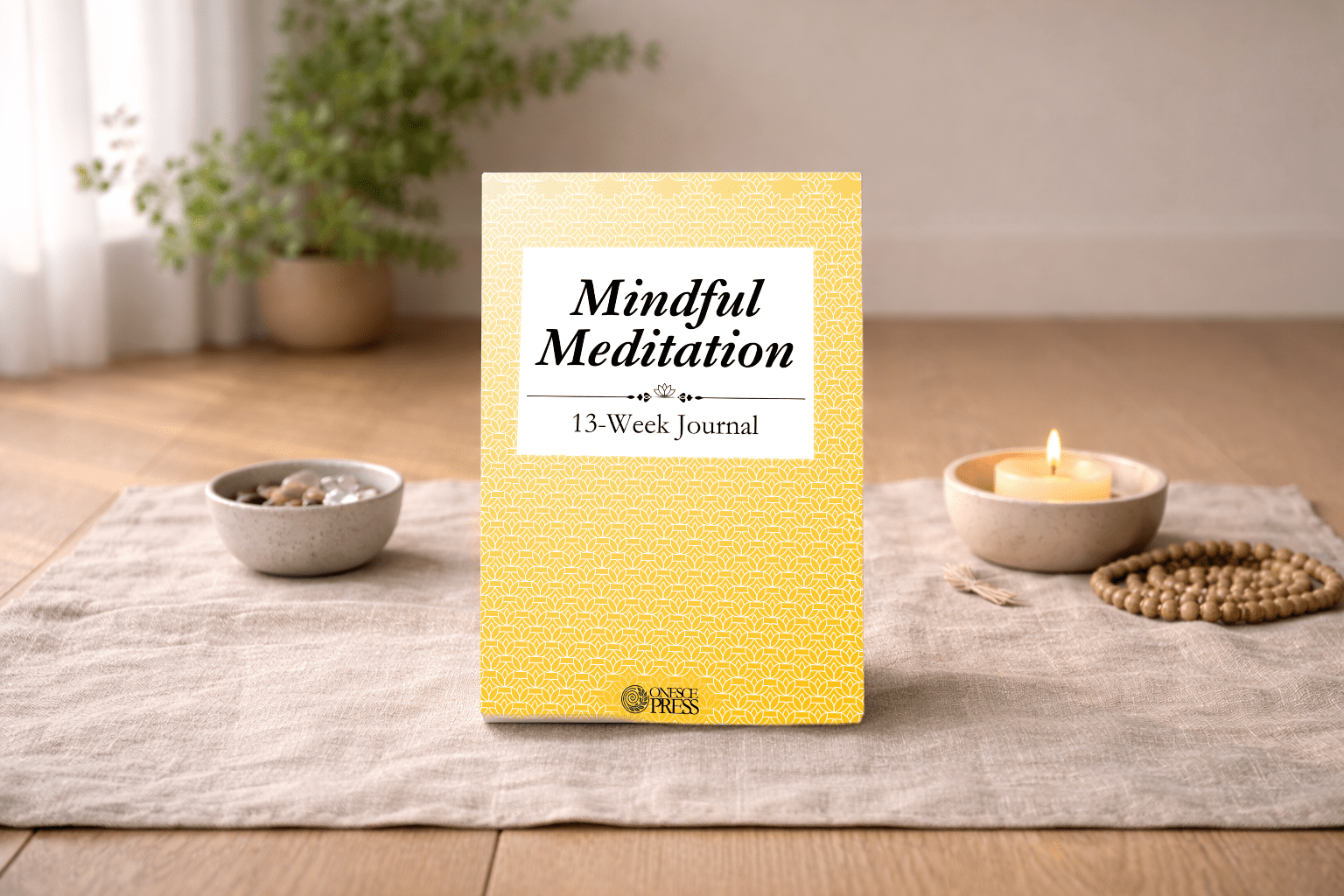
JOURNAL FEATURES:
- Your companion on a 13-Week journey of discovery and personal growth.
- Soothe the “monkey mind” and record details about your meditation experiences.
- Honor responsibilities and distractions, then tap into what your subconscious is doing.
- Watch your new devotional practice grow organically as you give yourself the grace to show up, just as you are.
Give yourself the gift of more mindfulness. You can also find this journal on Amazon!