


Mindfulness isn’t something we leave behind when we step off the meditation cushion. It’s not limited to quiet rooms, yoga mats, or early morning rituals. Truly, practicing mindfulness extends into the way we show up: in conversations, in our work, and even in the small, often overlooked moments of daily life.
When we bring mindfulness into our relationships, we listen more deeply and love more intentionally. When we carry it into our work, we respond instead of react, focusing with clarity and purpose. Even the simplest routines—like washing dishes, commuting, or answering emails—can become gateways to presence when approached with awareness.
Mindful Meditation
Quiet your “monkey mind,” record your experiences, & deepen your practice.
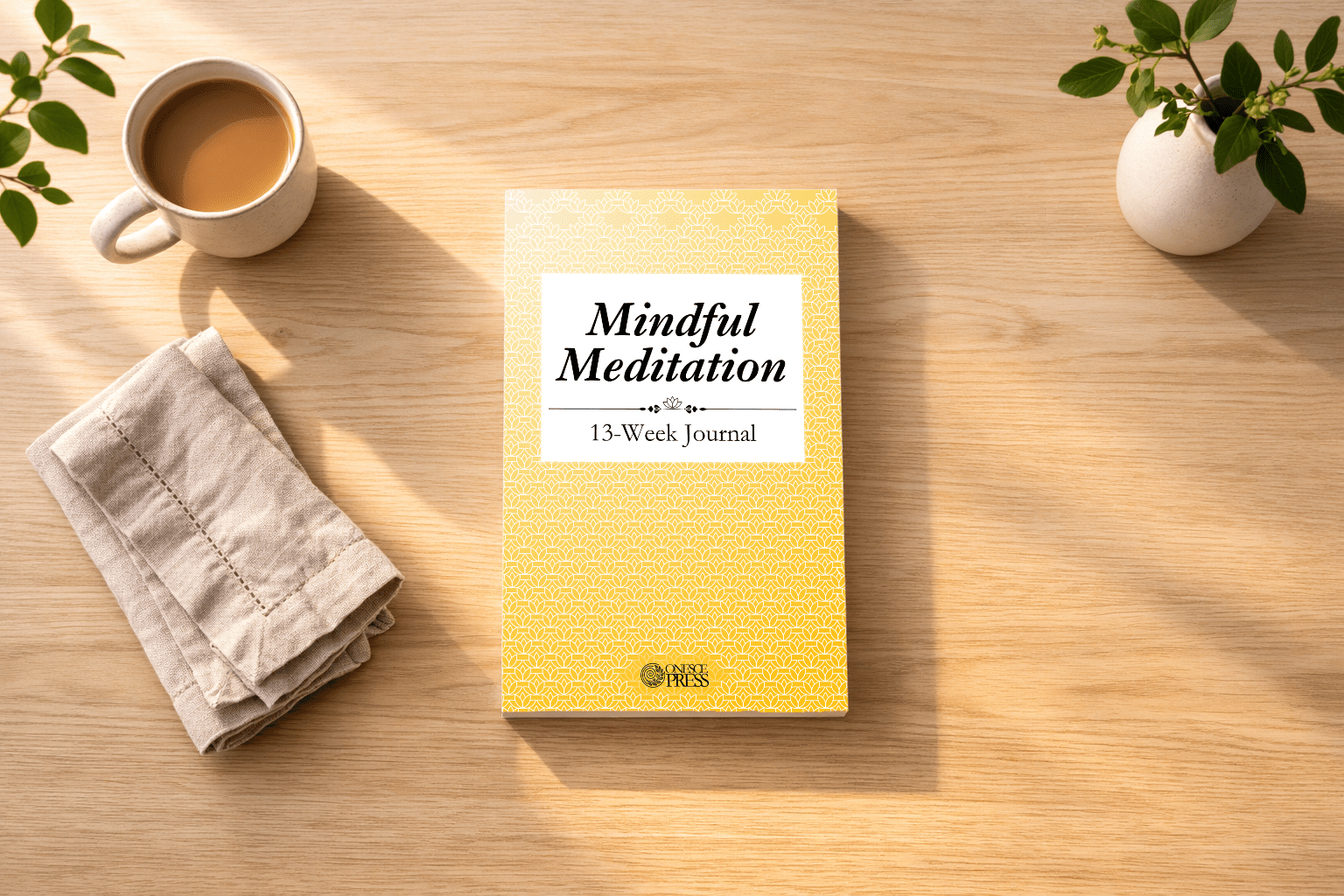
Let’s explore the real-world applications of mindfulness: in relationships, at work, and throughout our daily routines. We’ll discover how, whether we’re navigating difficult conversations or folding laundry, mindfulness can help us create a life rooted in clarity, connection, and compassion. We’ll also consider how every moment, no matter how mundane, can become an opportunity for us to live more intentionally.

Mindful Relationships
Relationships thrive with presence. Whether with partners, friends, family, or colleagues, our ability to be fully engaged—without distraction or assumption—creates the foundation for deep, authentic connection. Practicing mindfulness in relationships means listening with our whole being, observing without judgment, and choosing to respond with care instead of reacting from habit.
When we pause and truly see the person in front of us, we invite intimacy and mutual understanding. This begins with active listening: softening our internal dialogue and giving space for the other’s voice to be heard. Mindfulness teaches us to hear not just the words, but the emotions beneath them. It allows us to sense when someone needs silence, comfort, or our undivided attention.

It also means becoming aware of our own emotional patterns. Mindfulness helps us recognize when we’re triggered, defensive, or projecting past experiences onto the present moment. Instead of blaming or withdrawing, we can breathe, reflect, and choose a response aligned with compassion and clarity. This doesn’t mean avoiding conflict, but it does mean that we approach it consciously, with a willingness to learn, understand, and grow.
By returning to presence again and again, we nurture relationships that are rooted in authenticity rather than performance. Over time, that authenticity allows us to become safer to others. This happens, not because we’re perfect, but because we’re present. Furthermore, in that safety it’s common for trust, love, and healing to naturally deepen as well.

Mindful Communication
Communication is where our inner state meets the outer world. When we speak mindlessly, we often fall into patterns of defensiveness, assumption, or haste because we’re responding from habit rather than presence. Mindful communication invites us to pause, breathe, and choose our words with care instead, helping us to align what we say with how we want to show up.
At its heart, mindful communication begins in silence. It’s in the space before we share that we can allow ourselves to notice what’s rising before we act on it. This might mean observing a surge of frustration before replying to a difficult message, or taking a breath before responding in a heated moment. The pause becomes a portal, transforming reactivity into conscious choice.

In conversations, mindfulness helps us slow down and stay connected to our intention. We can ask ourselves: are we seeking to understand, to express, to soothe, or to assert a boundary? When we’re clear on our purpose, we can then speak with more honesty and kindness. This intentionality softens conflict and opens space for genuine dialogue rather than one-sided exchange.
Practicing this kind of communication—especially in emotionally charged moments—takes courage and compassion. However, over time, it becomes a practice of self-respect and relational care. We begin to listen with more openness, speak with more clarity, and bring more presence into every exchange, ultimately cultivating and nourishing our connections even when the conversation is challenging.

Mindfulness at Work
Work is one of the most time-consuming aspects of modern life, yet, it’s also often where we feel most disconnected. Mindfulness at work doesn’t require us to change our job, instead, it invites us to change how we show up to it. By anchoring ourselves in presence, we reclaim our attention, restore our clarity, and reorient to purpose.
Mindful work begins with single-tasking. Instead of multitasking or reacting to every ping and notification, we give our full attention to one task at a time. This focused presence enhances not only productivity, but also creativity and satisfaction. It allows us to move through our work with intention rather than urgency.

We can also bring mindfulness to how we relate to time and priorities. Rather than rushing through the day on autopilot, we pause to ask: What truly matters right now? This question helps us align our effort with our deeper values, turning even mundane tasks into acts of service or self-mastery.
Mindfulness doesn’t mean working slowly, but it does mean working with awareness. Whether we’re leading a meeting, sending emails, or solving a complex problem, our capacity to stay centered ultimately improves outcomes and reduces stress. Over time, mindfulness becomes not just a strategy for better work, but a foundation for more meaningful, values-driven success.

Mindful Breaks
In the middle of a busy day, even a brief pause can be a powerful act of self-care. Mindful breaks allow us to interrupt the momentum of stress and restore equilibrium to the nervous system. Even a few moments of awareness can create space, ease, and clarity, helping us return to the business of our day with more energy and emotional balance.
A mindful break can be as simple as stepping away from your screen, closing your eyes, and taking three slow breaths. With each inhale, feel the air enter your body. With each exhale, allow tension to soften. This small act signals safety to the brain and invites the body out of fight-or-flight mode.

You might also use a mindful break to stretch gently, sip a warm beverage slowly, or simply gaze out a window and observe your surroundings without rushing to interpret or fix anything. These acts help shift your attention from mental output to embodied presence, which refreshes both focus and mood.
Rather than waiting until burnout forces us to stop, building in mindful pauses throughout the day helps regulate emotions, enhance concentration, and sustain performance. These moments aren’t detours from productivity either. In fact, they’re the very fuel that makes meaningful, sustained effort possible.

Mindful Eating
Mindful eating is an invitation to slow down and bring presence to one of the most fundamental rituals of life: our nourishment. Rather than rushing through meals or eating on autopilot, this practice encourages us to engage all our senses. It invites us to notice and savor the scent of herbs, the texture of fruit, and the comfort of a fresh meal. It’s not about what we eat, but how we relate to the act of eating itself.
When we eat mindfully, we shift from consumption to communion. We begin with a pause—perhaps a breath or a moment of gratitude—and allow ourselves to fully receive the experience of the meal. Chewing slowly, noticing flavors as they unfold, and honoring the effort and elements that brought the food to our plate reconnects us with the cycles of nature and the rhythms of our own body.

This practice also helps us tune in to physical hunger and satiety cues, supporting a more intuitive relationship with food. Rather than eating until we’re distractedly full, we learn to recognize satisfaction, to notice how different foods affect our mood and energy, and to meet our true needs with care.
Mindful eating can be practiced at any meal, whether alone or with others. Even one quiet, present bite can transform a moment of chaos into a moment of peace. By choosing to eat with awareness, we nurture not just our bodies, but our emotional and spiritual wellbeing too. It’s the art of remembering that our nourishment is truly a sacred act of presence, gratitude, and love.

Mindful Movement
Mindful movement invites us to reconnect with the body as an active participant in our awareness, not a mere vessel for experience, and engage with it as a living instrument of presence. Whether through yoga, stretching, walking, dancing, or simply standing and swaying, bringing attention to our posture, breath, and sensation turns motion into meditation. This practice is not about performance or outcomes, but about attunement: listening deeply to the body’s cues and moving in harmony with its needs.
In our fast-paced culture, we often overlook the subtle messages of the body. Mindful movement teaches us to notice tension before it becomes pain, restlessness before it erupts, and balance before it slips away. As we learn to move with awareness, we discover that the body is not separate from the mind, recognizing it is both a mirror of our emotional state and a guide to returning to the present.

Even simple activities—like reaching for a cup, shifting in your seat, or stretching after sitting too long—can become rituals of reconnection. By slowing down and breathing with the body, we transform routine motions into sacred acts of self-care. The practice becomes a reminder that presence is not confined to stillness, and that it can be found in every graceful gesture and each grounded step.
Mindful movement offers us the opportunity to honor our physical form as a source of wisdom. It teaches us to embody our intentions, soften our internal dialogue, and inhabit our lives more fully. Through presence in our movements, we come home to ourselves gently, deliberately, and with reverence.

Mindful Tasks
Mindfulness doesn’t even require doing something that we enjoy. In fact, some of the most powerful opportunities to deepen our awareness arise in the quiet rhythms of daily life. When we infuse ordinary tasks with intentional presence, even the most mundane moments become opportunities for sacred practice.
When infused with our presence and awareness, chores like washing dishes can become a ritual of renewal, inviting us to witness the feeling of warm water on our hands, the scent of soap, or the soft clink of ceramic. Rather than avoiding it or rushing through the task, we can slow down and feel the gratitude for having food to eat and a home to care for. Each plate becomes a symbol of nourishment, and each motion in the process transforms into a quiet prayer of devotion to the life we’re living.

Folding laundry, sweeping the floor, or tidying a room can also become gestures of mindfulness. As we handle each object with awareness and gratitude, we return to our bodies, our breath, and our intentions. There is unlimited meaning in the care we offer our spaces and ourselves when we do so with presence.
Even transitions—like commuting, waiting in line, or brushing our teeth—can be reclaimed as mindful rituals. By noticing our breath, observing our surroundings, or feeling the ground beneath us, we drop into the now. These moments are always available and hold the quiet potential to anchor us in a life lived fully, one sacred breath and one sacred action at a time.

Conclusion: Living More Mindfully Means Loving, Sharing, and Enjoying More Fully
Mindfulness is more than a practice, it’s a way of being. When we bring awareness into our relationships, our work, and the smallest details of daily life, we reclaim the richness that is always available in the present moment. We begin to see each interaction as an opportunity for connection, each task as a chance to return to ourselves, and each breath as a quiet reminder that we are alive, aware, and empowered to choose how we engage with the world.
This is not about perfection, it’s about presence. In truth, practicing mindfulness is about showing up for life with curiosity, compassion, and intention. Whether we’re listening deeply to a loved one, answering emails with focus, or savoring a bite of food, every mindful moment becomes a step toward a more fulfilling, connected, and meaningful life.
So, let’s continue integrating mindfulness into the fabric of our days. As we do, we build lives rooted in clarity, guided by self-awareness, and uplifted by the sacredness of ordinary moments. Our path to more peace and fulfilment is always unfolding—one breath, one choice, and one conscious moment at a time.
Meditation Practice
LOGBOOK FEATURES:
- Your companion on a 366-Day adventure in devotion and commitment.
- Developed with the Year and a Day framework to challenge and inspire.
- Simple and straightforward logging with space for key intentions and reflections.
- Enjoy the benefits of tracking your progress and the details of your practice in one place.
You can also get your copy on Amazon. Don’t wait, take your practice to the next level:
