


Life isn’t always easy. Whether it’s the weight of responsibilities, unexpected setbacks, or emotional overwhelm, we all face moments that challenge us. In those moments, it’s easy to slip into reactivity, which can often look like pushing harder, shutting down, or spiraling into worry. However, there is another way to deal with these pressures. A method that allows us to overcome challenges, not by requiring us to fix everything at once, but through allowing ourselves to be present enough to reconnect with our strength.
Mindfulness practices teach us how to stay grounded within stressful moments. When we shift from resisting discomfort to meeting it with awareness, we begin to overcome challenges from the inside out. This shift happens through small, daily acts of presence that support emotional regulation, clarity, and self-compassion. Over time, mindfulness practice becomes a steady anchor into our inner peace, and something we can return to any time life feels turbulent.
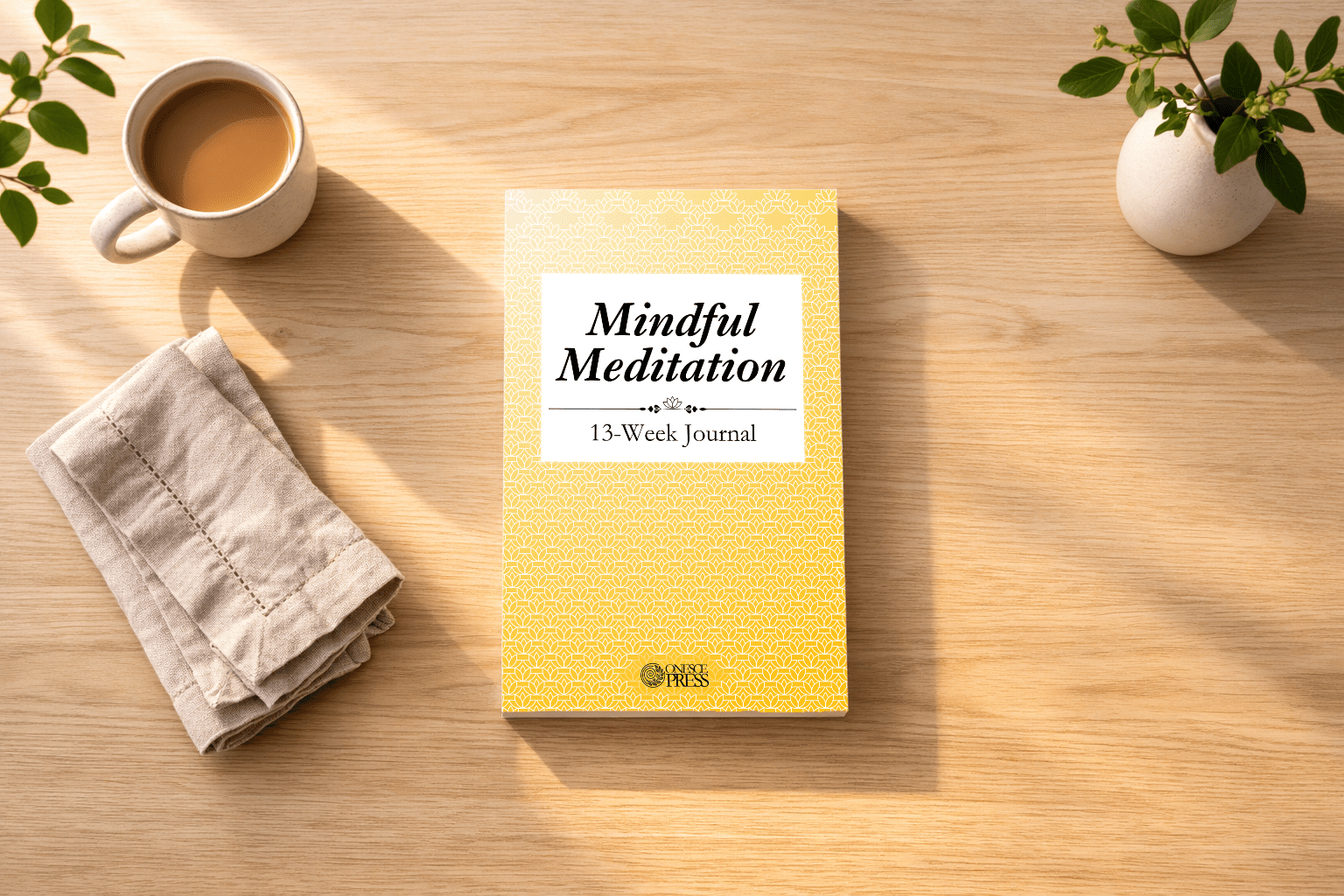
Mindful Meditation
Quiet your “monkey mind,” record your experiences, & deepen your practice.
Let’s explore how cultivating a mindful approach to difficulties can transform our relationship with them. From simple tools to everyday practices, we’ll discover practical techniques that can help us build resilience, deepen understanding, and meet life’s ups and downs with a more empowered presence.

Using Mindfulness to Overcome Challenges
When life becomes overwhelming, it’s easy to feel like we’re at the mercy of our circumstances. Yet, mindfulness offers us the opportunity to intentionally shift how we relate to stress, difficulty, and discomfort. At its core, a mindfulness practice is about learning to pause, observe, and respond to our circumstances with clarity rather than react from habit or fear.
Rather than ignoring or resisting what’s hard, mindfulness asks us to stay with ourselves through it. When we bring awareness to our thoughts, emotions, and bodily sensations in the midst of adversity, we begin to see patterns that might otherwise go unnoticed. This kind of presence fosters emotional regulation.

We build resilience by holding space for our feelings, instead of suppressing them. As we sit with our difficult experiences, not rushing to fix them or flee from our discomfort, we create an inner stability that helps us overcome challenges with self-empowerment. In these ways, mindfulness practice becomes a pillar of support in our everyday lives—especially during the moments that challenge us most.
With consistency, we strengthen our ability to handle the stress of life through understanding, and give ourselves space to move away from reactivity. The more we practice, the more familiar we become with our responses, and the more empowered we are to meet them with choice. This is how mindfulness turns difficulties into doorways, leading us into greater self-compassion, personal growth, and a deeper trust in our inner strength.

The Core Benefits of Mindfulness
Science continues to affirm what many ancient traditions have long known: mindfulness cultivates real, lasting benefits for both mind and body. True, when stress piles up or challenges feel relentless, it can be difficult to remain centered. However, mindfulness practices have been shown to help us not only manage these pressures, but grow through them.
Enhanced Emotional Regulation
One of the most well-documented benefits of mindfulness is its role in emotional regulation. Regular practice strengthens the prefrontal cortex (the part of the brain responsible for executive function and impulse control) while reducing reactivity in the amygdala (our emotional alarm system). This shift helps us pause before reacting, process emotions more clearly, and stay grounded in stressful situations.
Decreased Overwhelm
The emotional steadiness that mindfulness supports ultimately contributes to a decrease in overwhelm. By anchoring attention to the present moment, mindfulness interrupts the spirals of rumination and worry that often fuel anxiety. Studies have shown that even brief mindfulness training can significantly lower perceived stress levels and increase psychological flexibility.

Build Resilience
Over time, these internal shifts contribute to improved resilience. Mindfulness doesn’t make life less difficult, but it does help us become more capable of meeting life as it is—challenges and all. We develop the ability to recover more quickly after setbacks, adjust to changing circumstances with greater ease, and maintain a sense of agency even when we can’t control the outcome.
Develop Self-Compassion
Mindfulness also supports increased self-compassion, which is foundational for anyone seeking to overcome challenges without suffering burn out. When we approach our own struggles with curiosity instead of criticism, we foster emotional safety within ourselves. Furthermore, research by Dr. Kristin Neff suggests that self-compassion not only reduces self-judgment but also increases motivation and persistence during hardship.

How to Overcome Challenges Mindfully
Challenges don’t wait for convenience. They show up in the middle of our busy schedules, our tender moments, or when we’re already running low on energy or willpower. That’s why a regular mindfulness practice gives us something solid to return to. It offers us a peaceful place of presence within ourselves that isn’t dictated by what’s happening outside.
Rather than becoming swept up in frustration, worry, or overwhelm, we’re invited to simply witness these emotions as they arise. That simple act of noticing creates space, allowing for response rather than reaction. We become more capable of handling things calmly, not because the emotions go away, but because we no longer feel like they are in control of us.

This is how we build resilience. By bringing gentle attention to our difficult experiences, we learn that we can meet discomfort without being broken by it, that we can face pain without abandoning ourselves, and that we can move through uncertainty with self-compassion. This kind of resilience comes not from “toughening up” or “powering through,” but from softening into presence.
The more we learn how to hold space for our struggles without judgment, the more empowered we become to meet life with grace. We stop seeing challenges as personal failures and start recognizing them as natural, even meaningful parts of our growth. Sure, mindfulness practices don’t make life easier, but they can help us meet life more courageously.

Build Resilience with Mindfulness Practices
Resilience is cultivated in small, intentional moments. A consistent mindfulness practice doesn’t need to be complicated to be effective. In fact, it’s often the simplest habits that help us overcome challenges most reliably over time. Let’s consider some accessible, everyday techniques that can help us begin to anchor more fully into presence.
Pause and Breathe
One of the simplest ways to start practicing mindfulness is to give more attention to your breath throughout the day. A few slow, conscious breaths during moments of tension can gently interrupt reactive patterns and help regulate your nervous system. This practice of emotional regulation doesn’t erase stress, but it equips us to meet it with more steadiness.
Additionally, regardless of the circumstances we find ourselves in, we can always take a moment to pause and breathe. By taking a few deep, slow breaths, we can give ourselves the time and space to respond instead of react. This is how breathing can help to ground us, calming the mind and body, even when we’re actively facing difficulties.
Observe with Curiosity
We can also turn everyday activities into mindful opportunities. Things like washing the dishes, taking a walk, or sipping tea can all become spaces for presence when we bring our full attention to the experience. These small pauses not only calm the mind, they remind us that we always have the ability to return to ourselves.

During challenging situations, we can notice the thoughts and emotions that arise for us without judgment. Instead of getting caught up in them, we simply observe them with curiosity and acceptance. This allows us to recognize that these thoughts and emotions are temporary experiences, and that they do not define who we are.
Practice Self-Compassion
We can be kind and compassionate towards ourselves when facing stress and challenges. Treating ourselves with the same care and understanding we would offer to a friend. We embrace self-compassion by acknowledging our difficulties, offering ourselves words of encouragement, and recognizing that imperfections are a natural part of the human experience.
Over time, this extension of grace to ourselves builds inner trust. We start to see that we can face discomfort and still choose groundedness, and that we can feel anger or grief without losing ourselves in them. We learn that we don’t have to resist our feelings, and that by learning to stay with them gently through consistent mindfulness practice, we actually build resilience.
Embrace the Present Moment
Shifting our focus to the present moment helps us to fully engage with what is happening. Through that active engagement, we avoid dwelling on past events or worrying about the future. By embracing whatever is going on right now, we equip ourselves to respond to life more effectively, allowing ourselves to make responsible choices rather than behave reactively.

Integrate Mindfulness into Daily Life
To fully experience the benefits of mindfulness, it’s important to integrate it into our daily lives. Sure, if we’re able, it’s ideal to set aside some dedicated time each day for more formal practices too, such as meditation or mindful breathing. However, as we’ve seen, we can easily bring mindfulness into our everyday activities.
There are lots of other ways to incorporate more presence in our days as well, such as mindful eating, mindful walking, and mindful communication. Regardless of the techniques that work best for us, cultivating mindfulness throughout the day reinforces an attitude of self-empowerment, making us more response-able.

Conclusion: Our Mindful Presence is the Foundation of Our Resilient Strength
Resilience doesn’t require the absence of difficulty, because it’s the ability to meet life’s challenges with clarity, flexibility, and inner steadiness. Mindfulness practices teach us how to develop that skill, and that strength isn’t something we force or fake, but rather, something we cultivate. By coming home to ourselves again and again, especially in the moments that test us most, we nurture our personal power in ways that become increasingly sustainable over time.
Each time we pause to breathe, notice a thought without judgment, or choose presence over reaction, we’re developing more emotional regulation. These small moments of awareness are not insignificant. They are the quiet, consistent returns to self-empowerment, and serve to remind us that we can choose how to meet life—even when it feels out of control.
As we continue this journey, let’s be gentle with ourselves. Growth doesn’t require perfection. What matters most is our willingness to return to ourselves, again and again. Let’s learn to trust our own pace, our inner wisdom, and show up with presence no matter the circumstances. In doing so, we will uncover the steady, grounded resilience that has been within us all along.
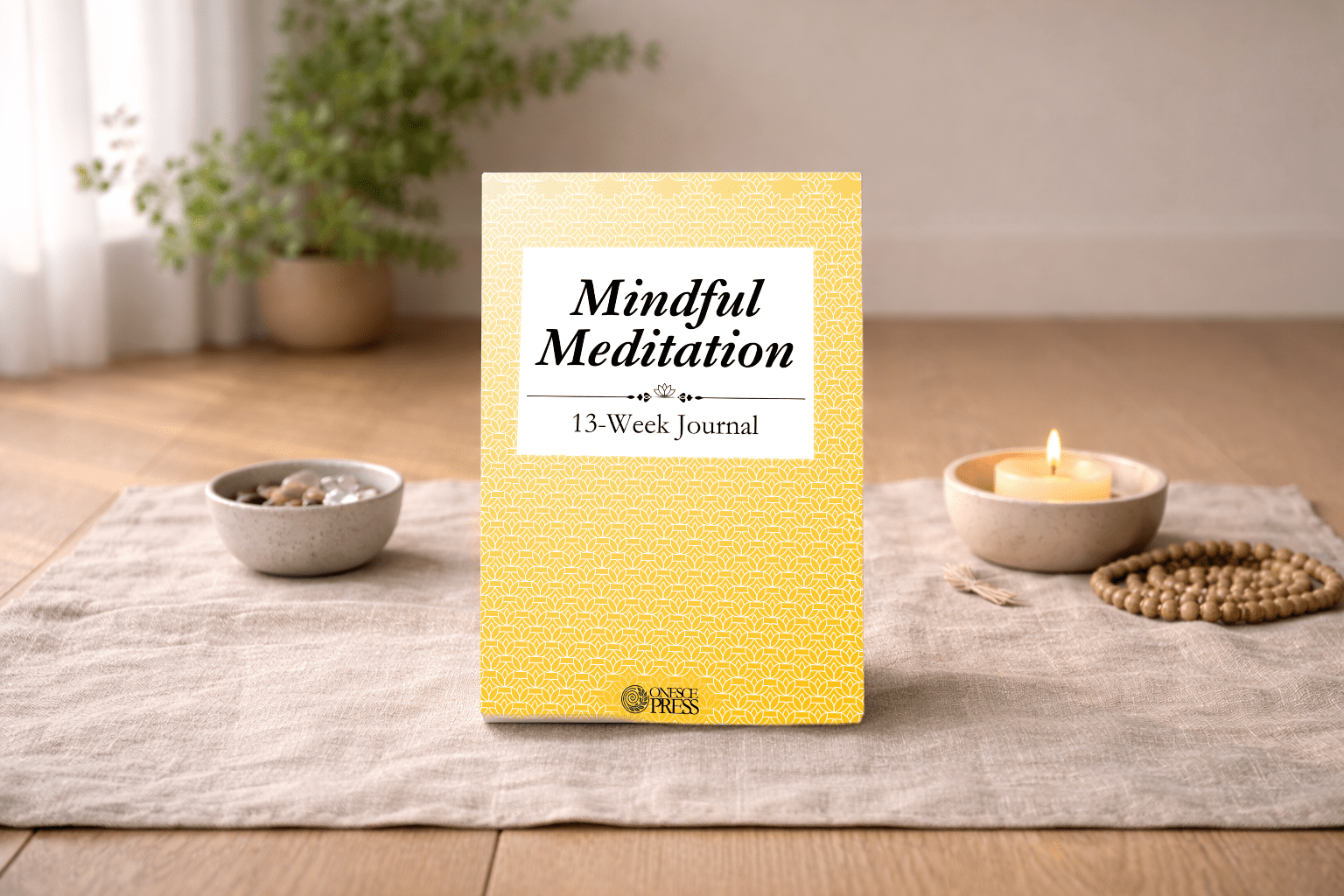
Mindful Meditation
JOURNAL FEATURES:
- Your companion on a 13-Week journey of discovery and personal growth.
- Soothe the “monkey mind” and record details about your meditation experiences.
- Honor responsibilities and distractions, then tap into what your subconscious is doing.
- Watch your new devotional practice grow organically as you give yourself the grace to show up, just as you are.
Give yourself the gift of more mindfulness. You can also find this journal on Amazon!