


Have you ever considered mindfulness for wellbeing? Life pulls at us from every direction via expectations, responsibilities, and even our inner doubts. It’s easy to feel disconnected, overwhelmed, or unsure of how to center ourselves with so much going on all the time. In the midst of this noise, we may start to lose sight of our own needs, our clarity, and our sense of empowerment.
That’s where this simple practice comes in. It’s not another task to perfect, instead offering a gentle return to presence regardless of the tasks we’re engaged in. Mindfulness is about noticing what’s happening within and around us, without judgment or urgency. It’s a way to pause, breathe, and reconnect with what’s real and true.
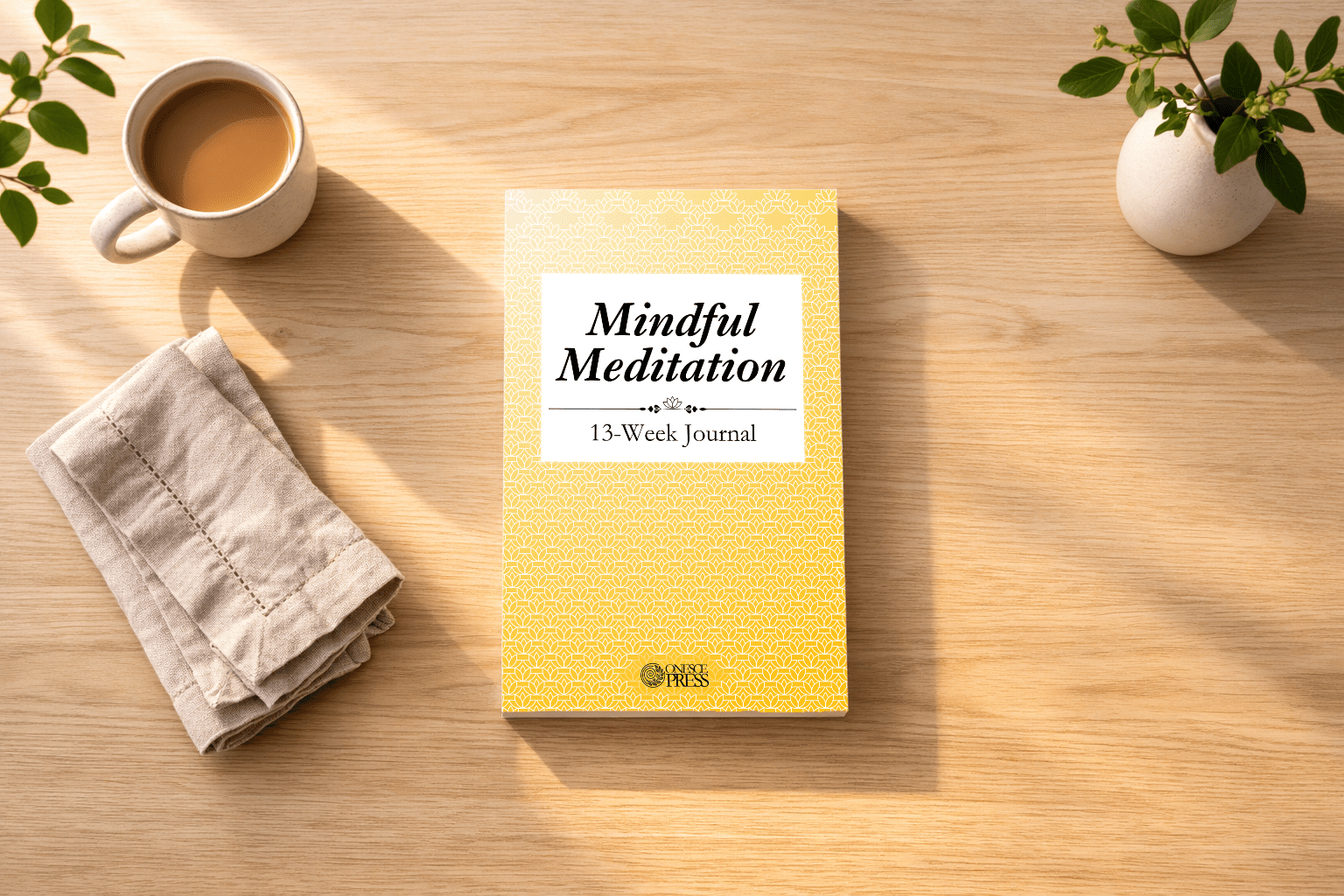
Mindful Meditation
Quiet your “monkey mind,” record your experiences, & deepen your practice.
Through even the simplest mindfulness techniques, we can begin to shift how we move through the world. It helps us to build greater self-awareness, harness emotional steadiness, and exercise our ability to respond rather than react. With time, mindfulness becomes a foundation for personal empowerment and sustained wellbeing; moreover, it continually offers us a path to inner peace, no matter the circumstances.
Let’s explore what mindfulness really means and how to begin practicing it. We’ll also consider why it matters, as well as some simple ways in which we can begin weaving it into our daily lives—starting exactly where we are.

What Is Mindfulness?
Mindfulness is the practice of paying attention to the present moment with openness, curiosity, and compassion. It’s not about clearing your mind or achieving perfection; however, it is about becoming more aware of what you’re experiencing, right now, without needing to fix or change it.
At its core, mindfulness invites us to witness our thoughts, emotions, and physical sensations with honesty and gentleness. This awareness helps us pause before reacting, see situations more clearly, and respond in ways that are aligned with our values. It’s a quiet kind of strength, the kind that builds over time through consistent attention and care.

In a world that often pulls us toward distraction, performance, and pressure, mindfulness helps us come back to ourselves. It gives us the space to slow down, notice what’s really happening, and choose how we want to engage with our lives. This is how mindfulness supports wellbeing: by reconnecting us with the present and empowering us to live more intentionally.
As we develop this skill, we become more grounded in personal awareness. We learn to recognize old patterns, navigate emotions with grace, and honor our inner wisdom. Mindfulness doesn’t ask us to escape discomfort, but it does teach us how to stay with ourselves through it and to grow stronger because of it.

Why Use Mindfulness for Wellbeing?
Mindfulness isn’t just a feel-good trend, it’s a grounded, research-backed practice that supports mental, emotional, and physical wellbeing. When we give ourselves permission to pause and pay attention, even briefly, we create the necessary space for healing, insight, and resilience to emerge.
Consistent mindfulness practice has been shown to reduce stress and anxiety by calming the nervous system and decreasing the intensity of reactive thought patterns. It also helps us regulate emotions more effectively, offering a way to acknowledge whatever we’re feeling without being overwhelmed or defined by it.
Mindfulness also enhances clarity and focus. By training our attention to return to the present, we improve our ability to concentrate, make decisions, and notice what’s truly important. It encourages a steadier, more centered way of being, which is one that supports both productivity and peace.

On a deeper level, mindfulness fosters self-empowerment. When we become more aware of our internal experience—our beliefs, our habits, and our responses—we begin to see that we have choices. This personal awareness helps us to shift out of autopilot. We quickly discover that we can interrupt cycles that no longer serve us, and with that knowledge, we can start creating lives that are rooted in self-compassion and conscious choice.
These benefits don’t require hours of silent meditation or years of study either. Just a few moments of mindfulness each day can begin to reshape the way we relate to ourselves and the world around us.

Practical Mindfulness Techniques
Mindfulness isn’t something we have to master all at once, it’s something we can grow into, moment by moment. By weaving simple practices into our daily rhythm, learning along the way what works best for us, we begin to experience its benefits organically. Truly, it’s the small shifts in awareness, repeated over time, that can have the most profound impact on our wellbeing and self-empowerment.
Mindful Breathing
One of the most accessible mindfulness techniques is simply tuning in to the breath. At any point during the day, we can pause, close our eyes if it feels right, and notice the sensation of each inhale and exhale. This practice brings us back to the present and helps interrupt stress responses. It’s especially powerful in moments of overwhelm, conflict, or transition.
Mindful Reflection

Journaling or silent contemplation allows us to explore our thoughts and emotions without judgment. We can ask questions like:
- What am I feeling right now?
- What am I avoiding?
- What needs my attention?
Over time, this allows us to build a deep, honest relationship with ourselves, supporting personal awareness.
Body Scans
Taking a few minutes to gently scan the body from head to toe increases physical awareness and helps release stored tension. As we notice areas of tightness or discomfort, we bring breath and attention to those spaces, allowing ourselves to soften what’s being held and honor what’s being felt. Body scans are grounding, especially when practiced at the start or end of our day.
Gratitude Awareness
Mindfulness for wellbeing also includes noticing what’s good in our lives, and taking the time to acknowledge them. By reflecting on even just one thing we’re grateful for each day—no matter how small—we shift our perspective. In this way, gratitude invites more appreciation and resilience, helping us to create a sense of abundance, even in challenging times.

Mindfulness in Relationships
Mindfulness for wellbeing doesn’t end with our personal practice, naturally extending into how we relate to others. When we bring mindfulness into our relationships, we create the conditions for deeper connection, clearer communication, and more authentic presence.
Relationships often reflect back our inner world. When we’re distracted, reactive, or disconnected from ourselves, it’s easy to misinterpret others or fall into habitual patterns. However, when we’re grounded in mindfulness, we automatically show up with more empathy, clarity, and intention.

Meditation Practice
Take your practice to the next level, & the next… With a Year and a Day commitment.
One of the most powerful ways to practice mindfulness in our relationships is through mindful listening. This means giving someone our full attention without planning our response while they speak or mentally drifting away. It involves being present with their words, their body language, and even the space between sentences. When we listen like this, people naturally feel seen, heard, and valued.
Mindfulness also helps us notice our internal reactions as they arise, helping us to pause before acting on them. In the middle of a disagreement, we might feel anger or defensiveness; however, rather than responding automatically, mindfulness gives us a brief moment of choice. It reminds us that we can take a breath, ground ourselves, and respond with more care.

We can also use mindful speaking by pausing before we express ourselves and asking: is what I’m about to say true? Is it necessary? Is it kind? This simple practice reduces misunderstandings and fosters more honest, compassionate dialogue.
Relational mindfulness empowers us to bring more intention into how we connect, set boundaries, and resolve conflict. It invites us to engage from a place of awareness rather than assumption, which naturally leads to more respectful and fulfilling interactions.
Ultimately, the more we practice mindfulness within ourselves, the more gracefully we show up in the world around us. Every relationship becomes an opportunity to be present with others, as well as to grow more present with ourselves.

Develop a Daily Mindfulness Practice
Mindfulness for wellbeing doesn’t require a dramatic lifestyle shift, it begins with small, intentional moments of awareness. Whether you’re new to mindfulness or returning after a break, the key to sustaining your practice is making it accessible, adaptable, and rooted in what feels meaningful to you.
Start with what’s doable. Just two to five minutes of mindful breathing each day can make a noticeable difference. You might choose to begin your mornings with a few grounding breaths, pause during your lunch break for a body scan, or reflect quietly before sleep. What matters most is consistency, not duration.

Create cues in your environment that gently remind you to pause. A sticky note on your mirror, a notification on your phone, or a calming object at your desk can signal moments for mindful awareness. These subtle prompts help mindfulness become a part of your rhythm rather than an obligation on your to-do list.
If you already have a meditation practice, consider layering in mindfulness techniques like gratitude reflection or mindful journaling. If not, choose one practice—like breathing or body scans—and allow it to evolve naturally. Let the practice meet you where you are, adjusting to your energy and needs on any given day.
It’s also helpful to normalize the ebb and flow of practice. Some days will feel effortless, others may feel restless or disconnected. This is an important part of the path. The power of daily mindfulness practice isn’t found in perfection, but in returning to yourself again and again, with patience, presence, and compassion.
As mindfulness becomes integrated into your daily life, you may begin to notice a quiet shift: more space between stimulus and response, a softer tone in your self-talk, a greater sense of calm in the midst of chaos. These are signs of your self-empowerment taking root, your personal awareness becoming anchored, and your wellbeing improving.
Conclusion: Self-Empowerment Begins with Personal Awareness
In a world that often pushes us to keep moving, doing, and striving, mindfulness gently invites us to pause. It reminds us that wellbeing is something we can cultivate through presence, awareness, and the willingness to come back to what matters most.
Mindfulness for wellbeing supports self-empowerment by helping us reconnect with our breath, our body, our thoughts, and our relationships. Simple techniques like mindful breathing, body scans, gratitude, and reflection can ground us in personal awareness and emotional resilience. Mindfulness improves the way we relate to ourselves and others, enhancing communication and deepening these connections through presence and compassion.
Most importantly, mindfulness is a practice—not a performance. It meets us where we are, growing as we grow, and it gently teaches us that we are capable of navigating life’s challenges with more clarity, balance, and strength than we may have believed. Whether we begin with a few mindful breaths each morning or pause to listen more deeply during a conversation, we are already practicing.
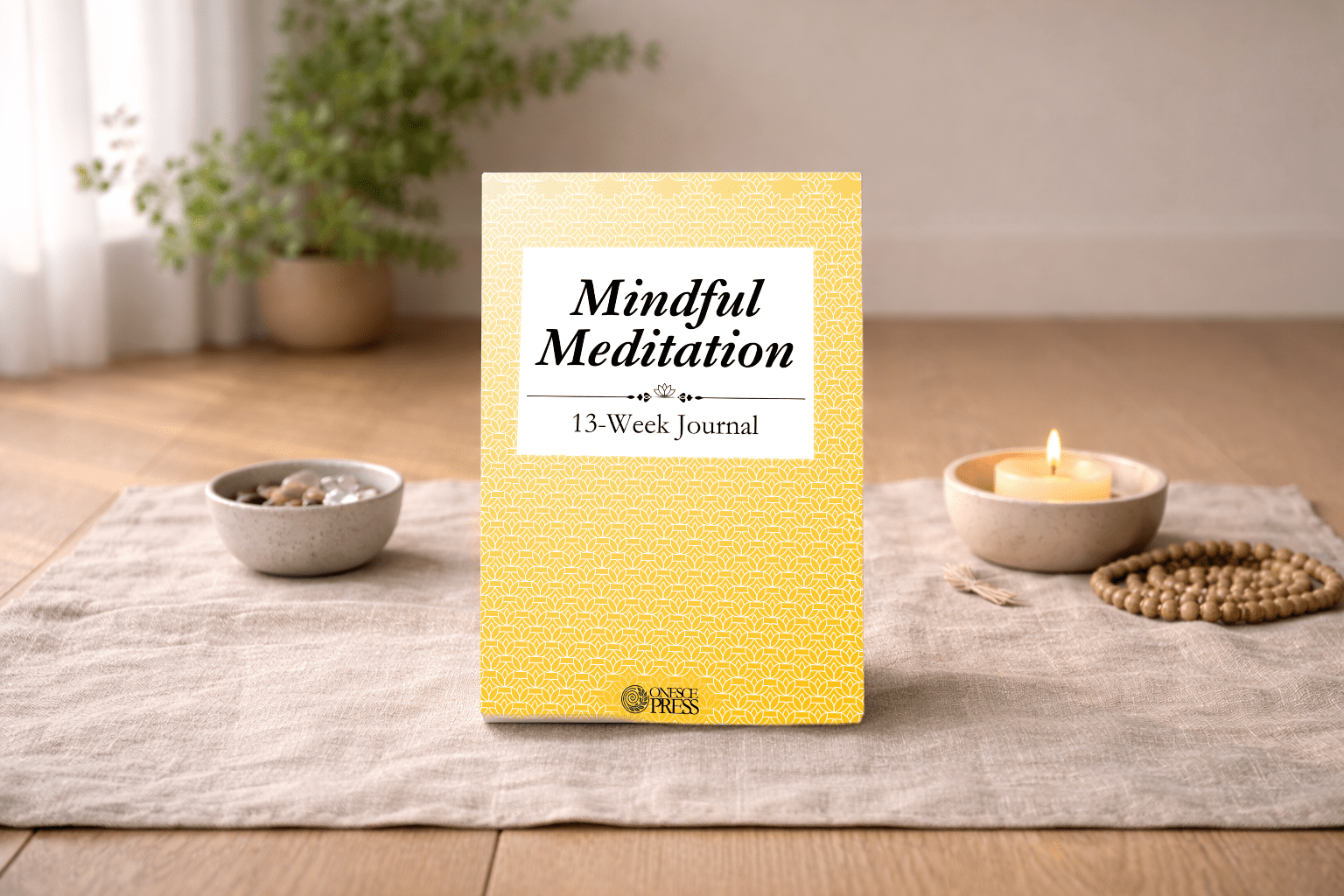
Mindful Meditation
JOURNAL FEATURES:
- Your companion on a 13-Week journey of discovery and personal growth.
- Soothe the “monkey mind” and record details about your meditation experiences.
- Honor responsibilities and distractions, then tap into what your subconscious is doing.
- Watch your new devotional practice grow organically as you give yourself the grace to show up, just as you are.
Give yourself the gift of more mindfulness. You can also find this journal on Amazon!