
Mindfulness is often introduced as a tool for relaxation, or a momentary pause from the demands of daily life, yet the power of meditation extends far beyond these brief respites. Consistent practice has been shown to shape the way we respond to challenges, engage with others, and even perceive ourselves. What begins as a few mindful breaths can grow into a profound path of transformation and lasting wellbeing.
Modern research highlights meditation’s ability to regulate the nervous system, support emotional balance, and foster resilience. Its effects accumulate over time, creating lasting shifts in wellbeing that touch every part of life, from clarity of mind and steady focus to restorative sleep and improved relationships. In these ways, meditation becomes less of an escape and more of a companion for growth and integration.
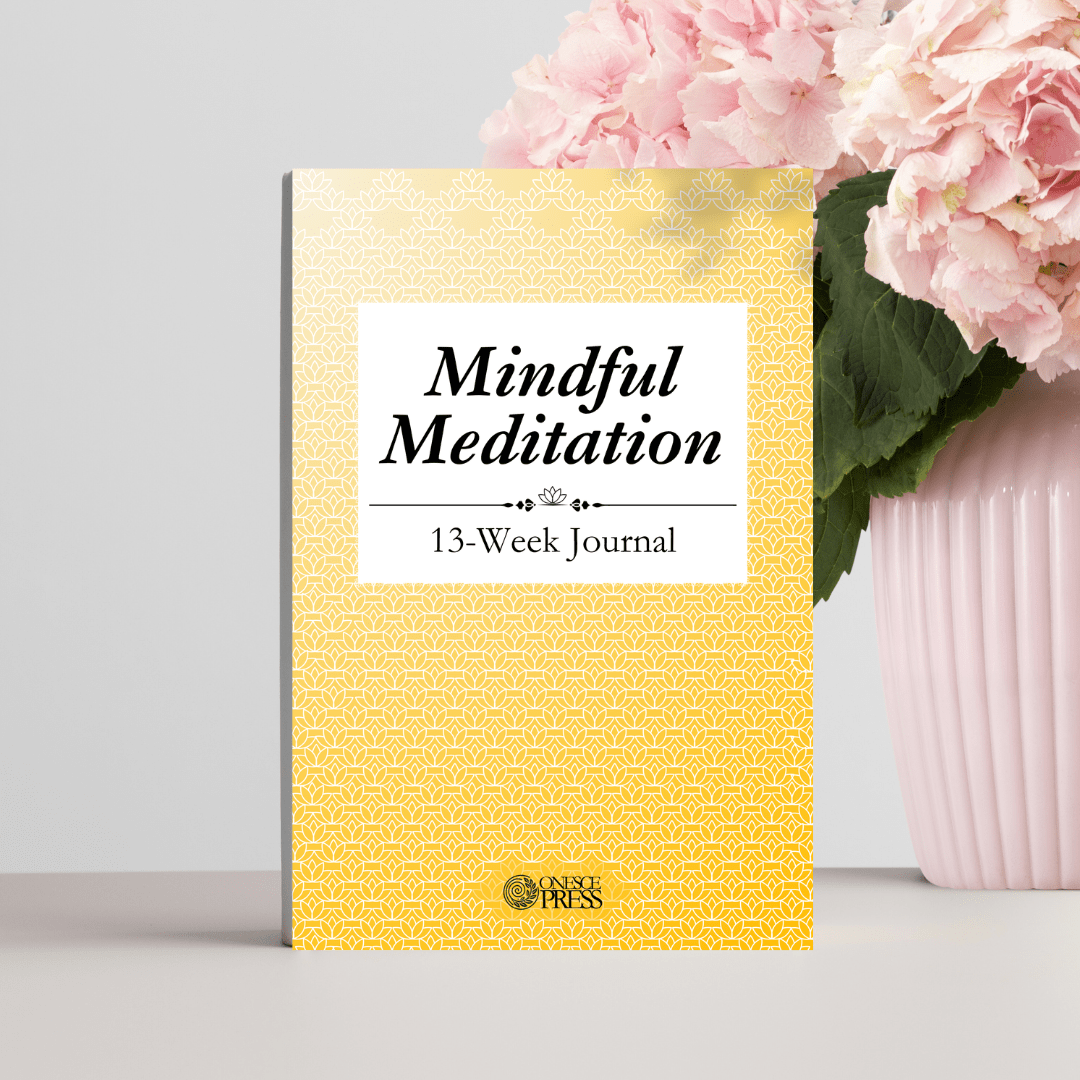
Mindful Meditation
Quiet your “monkey mind,” record your experiences, & deepen your practice.
Let’s explore how meditation nurtures lasting wellbeing by addressing the mind, body, and spirit holistically. We’ll discover why, rather than a quick fix, it is a lifelong practice that deepens with time. We will also look at the many ways meditation enriches life and how it can become a foundation for sustained wellbeing, offering us the capacity to meet life with greater calm, clarity, and compassion.

Calming the Nervous System
Stress is the body’s way of preparing us to face challenges, but when it becomes constant, it can overwhelm the nervous system and drain our vitality. Meditation interrupts this cycle by guiding us into states of rest and restoration. Through practices like deep breathing, mindful observation, and gentle concentration, the body shifts from the sympathetic “fight-or-flight” response into the parasympathetic “rest-and-digest” mode. This change not only lowers stress hormones like cortisol, but also steadies the heart rate and relaxes muscular tension.

Scientific studies affirm that regular meditation can reduce markers of stress, such as elevated blood pressure and heightened anxiety, while increasing resilience over time. It is not just about quieting the mind, but rather, retraining the body to return more quickly to balance after moments of strain. Over weeks and months of practice, meditators often find that what once triggered intense stress no longer has the same hold.
On a personal level, the calming of the nervous system creates space to respond rather than react. Instead of being swept away by tension or overwhelm, we learn to pause, breathe, and center ourselves. This inner steadiness also extends out into our daily interactions, fostering clarity in decision-making and patience in relationships. In these ways, meditation is more than a tool for stress relief and offers a foundation for resilient, grounded presence.

Training the Mind
In a world filled with distractions, the ability to focus has become one of the most valuable skills we can cultivate. Meditation offers a direct way to strengthen this capacity by training the mind to rest in one place rather than scattering its energy in many directions. Whether it is following the breath, repeating a mantra, or observing thoughts as they arise, meditation teaches us how to hold attention with gentleness and persistence.
This consistent practice refines mental clarity. Just as muscles grow stronger with repeated use, attention sharpens when exercised through meditation. Studies show that regular practice increases activity in brain regions associated with concentration and working memory, while reducing the mental clutter caused by overthinking. The result is a quieter, steadier mind that sees situations more clearly and responds with greater discernment.

Over time, this clarity moves beyond the meditation cushion into daily life. Tasks that once felt overwhelming become manageable because we approach them with steady attention. Decisions that seemed clouded become easier to navigate, guided by the presence we have cultivated. Rather than being pulled in countless directions, we learn to focus fully on the task at hand, bringing efficiency, creativity, and calm into even the busiest of days.

Meeting Life with Balance
Emotions are a natural part of being human, yet when left unchecked, they can easily sweep us into reaction rather than response. Meditation provides a steady ground from which we can observe and befriend our emotions without being consumed by them. Through practice, we learn to witness feelings as they rise and fall, much like waves on the ocean: temporary expressions of passing influence.

This perspective creates space between stimulus and response, allowing us to choose balance over impulsivity. Neuroscience research shows that meditation reduces activity in the amygdala, the brain’s center for fear and stress responses, while strengthening connections to the prefrontal cortex, which governs regulation and decision-making. This neurological shift supports greater emotional flexibility, helping us meet challenges with calm and adaptability.
It’s important to remember, we are not avoiding or suppressing emotions, instead engaging them with clarity and compassion. Anger can become energy for transformation, sadness a portal to deeper connection, and joy a reminder of the abundance available to us. Meditation empowers us to hold these experiences with balance, neither clinging nor resisting, so that we move through life with more equanimity and strength.
Over time, this balance extends to our relationships and communities. As we become less reactive, we bring steadiness to conversations, patience to conflicts, and compassion to shared challenges. Thus, emotional resilience cultivated through meditation becomes a gift, to both ourselves and to those around us.

Restorative Rhythms
Quality sleep is one of the most essential foundations of wellbeing, yet for many, rest feels elusive. Stress, overstimulation, and irregular routines can disrupt the body’s natural rhythms, leaving us tired and unbalanced. Meditation offers a powerful remedy by calming the mind, soothing the nervous system, and preparing the body for deep, restorative rest.
Studies show that meditation lowers cortisol levels, eases racing thoughts, and increases melatonin production, which supports the natural sleep-wake cycle. By practicing regularly, we train the body to shift from high-alert states into relaxation more easily, creating the conditions for sleep to arise naturally rather than through force or frustration.

Even a brief meditation before bed—such as mindful breathing, body scanning, or guided visualization—can act as a bridge between the activity of the day and the stillness of the night. These practices help release tension, quiet inner chatter, and signal to the nervous system that it is safe to rest.
Over time, meditation can re-establish a healthier circadian rhythm, allowing sleep to become more consistent and rejuvenating. As sleep deepens, we awaken with more energy, clarity, and resilience. Ultimately, this positive reinforcement creates a cycle in which meditation and rest continuously support each other.

Integrating Wholeness
Meditation is often thought of as a practice for the mind, yet its effects extend throughout the entire body. Ancient traditions and modern science both affirm that our thoughts, emotions, and physical states are deeply interconnected. When we cultivate inner stillness, the benefits ripple outward, improving not only mental clarity but also physical vitality and overall balance.

Meditation helps regulate the autonomic nervous system, shifting us from stress-dominant states into relaxation and repair. This physiological shift supports immune health, lowers blood pressure, and reduces inflammation. At the same time, it increases awareness of subtle bodily cues—like posture, breath, and tension—that often go unnoticed in daily life. By listening inward, we begin to align thought, feeling, and action in more harmonious ways.
Equally important, meditation creates space for us to experience wholeness. Rather than perceiving the mind and body as separate, we come to recognize their seamless integration. Each breath grounds the spirit in the body, and each moment of awareness strengthens the body’s capacity to heal and thrive. This sense of connection fosters not only health but also a deeper trust in ourselves, reminding us that wellbeing is not the absence of challenge but the presence of integration. By nurturing the mind-body connection, we tap into our innate potential to live with greater energy, coherence, and peace.

The Inner Shift
One of the most profound transformations meditation offers is the ability to soften our relationship with ourselves. Many of us carry an inner voice that is critical, demanding, or harsh. Left unchecked, this inner dialogue can perpetuate stress, self-doubt, and cycles of unworthiness. Meditation interrupts this pattern, replacing judgment with awareness and opening the door to compassion.
As we sit with ourselves in stillness, we begin to notice the stories we repeat and the emotions we resist. Instead of pushing them away or amplifying them, meditation invites us to witness them with gentleness. This act of presence is an expression of self-love. By observing without judgment, we learn to extend to ourselves the same kindness we might offer a friend in need.
Neuroscience supports this shift, showing that practices such as loving-kindness meditation (metta) can increase feelings of empathy, reduce self-criticism, and even alter brain regions linked to positive emotion. Over time, these practices help us build an inner environment where growth and healing are possible.

Self-compassion does not mean complacency. It is not about excusing mistakes or ignoring challenges. Rather, it empowers us to meet life’s difficulties with courage and understanding. This inner shift—from criticism to compassion—creates resilience, fuels motivation, and fosters a deeper sense of belonging within ourselves. By practicing meditation and opening to more compassion, for both ourselves and others, we awaken and affirm the truth that we are all worthy of love and respect.

Healing the Mind
Anxiety and depression often feel like relentless cycles of thought and emotion, pulling us away from the present moment and into spirals of fear, worry, or despair. Meditation offers a way to interrupt these cycles, creating space between what we feel and how we respond. Instead of being consumed by difficult thoughts, we begin to observe them, and are able to recognize that they do not define us.
Mindfulness-based practices are especially effective here. By focusing on the breath, bodily sensations, or sounds, we anchor ourselves in the present, gently guiding the mind away from overthinking. Over time, this builds the skill of noticing anxious or depressive patterns early, giving us a chance to respond with grounding rather than spiraling further.

Research supports meditation as a complementary tool in managing anxiety and depression. Studies have shown that mindfulness meditation can reduce symptoms of generalized anxiety disorder and prevent relapse in major depressive disorder by strengthening emotional regulation and increasing self-awareness. Meditation also lowers activity in the amygdala (the brain’s fear center) while strengthening regions connected to calm and resilience.
It is important to note that meditation is not a replacement for professional care. Rather, it serves as a healing companion, one that supports therapy, medication, and other forms of treatment. However, it’s also empowering to know that the simple act of sitting, breathing, and noticing can help us access moments of relief that expand into greater, lasting wellbeing. Through meditation, anxiety loses some of its grip, and depression some of its weight. Each practice session is a reminder that beneath the turbulence of the mind, there is a steady place of awareness—always present, always accessible—where healing can occur.

A Lifelong Tool
Meditation is not limited to a single stage of life or a particular challenge, and is truly a practice that grows with us, adapting to our changing needs. In youth, it can provide focus and emotional grounding as we navigate new experiences. In adulthood, it offers balance amidst responsibility, helping us manage stress, cultivate resilience, and deepen self-awareness. In later years, meditation supports acceptance, presence, and peace, guiding us into a gentler relationship with time and impermanence.
Its adaptability is what makes meditation such a powerful lifelong tool. Whether practiced through stillness, movement, mantra, or breath, meditation aligns with the rhythms of life. During seasons of growth, it nurtures clarity and confidence. During times of loss or transition, it provides solace and perspective. Even in moments of joy, meditation helps us savor the fullness of the present, reminding us to remain awake to life as it unfolds.

Research shows that consistent meditation can contribute to long-term brain health, reducing age-related cognitive decline and enhancing memory retention. More importantly, the practice fosters an inner continuity—a steady place of awareness we can return to, no matter how life’s circumstances shift. This means meditation isn’t just a tool we use, but a companion that evolves with us. When approached with openness, it becomes a lifelong friend, offering calm in the storms, strength in uncertainty, and joy in the quiet simplicity of being.

Conclusion: On Journeys of Lifelong Growth & Discovery, Meditation is a Constant Resource
Meditation is more than a stress-relief technique or a passing wellness trend, it’s a timeless practice that helps us meet life with greater presence, resilience, and compassion. From the simple act of slowing our breath to the profound stillness of deep contemplation, meditation opens space within us where clarity and peace can take root.
What makes meditation powerful is its persistence, no matter how imperfect our practice may be at times. Every moment we choose to sit, breathe, or simply notice the present, we are strengthening our connection to ourselves and to life itself. Over time, these small acts of awareness become a foundation of lasting wellbeing that carries us through challenges and amplifies our joys.

Meditation Practice
Take your practice to the next level, & the next… With a Year and a Day commitment.
As we move through the changing seasons of our lives, meditation reminds us that peace is not found by escaping the world, but by fully engaging with it: attuned, grounded, and awake. Over time, our practice transforms into a way of being that supports more depth, ease, and authenticity every day. It’s these fulfilling and sustainable qualities that make lasting wellbeing increasingly accessible and our meditation practice evermore enriching, all along the journey.
Thank you for joining us here on Onescence! If you enjoyed this article, please consider supporting our free, online periodical by purchasing one of our products through Onesce Press. Given your interest in meditation and wellbeing, perhaps you would benefit from:
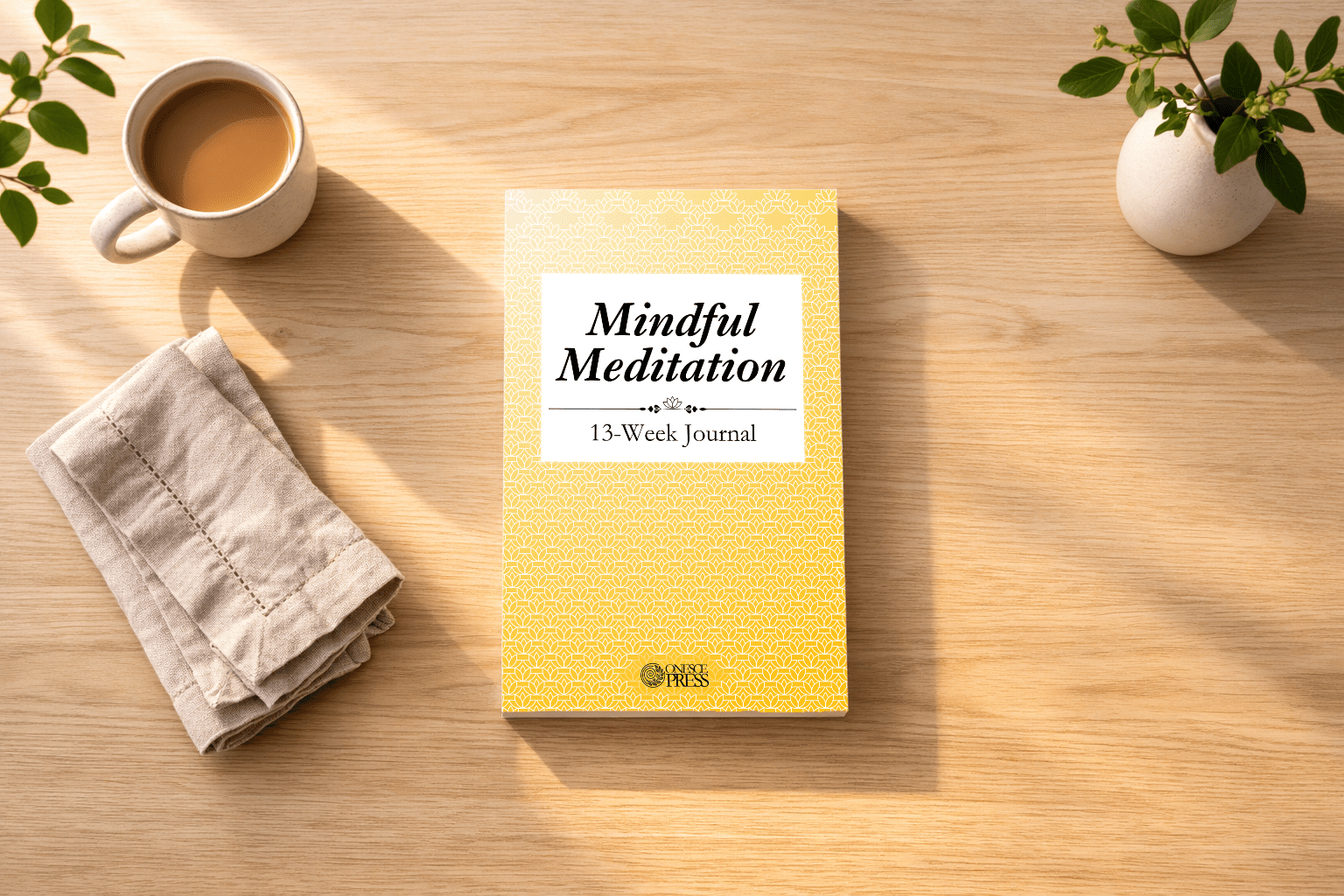
Mindful Meditation
JOURNAL FEATURES:
- Your companion on a 13-Week journey of self-discovery and personal growth.
- Soothe the “monkey mind” and record details about your meditation experiences.
- Honor responsibilities and distractions, then tap into what your subconscious is doing.
- Watch your new devotional practice grow organically as you give yourself the grace to show up, just as you are.
Give yourself the gift of more mindfulness:
Insiders:
*For Full Download Instructions, Visit Your Member Benefits Portal