


We often think of meditation as something that happens on a cushion, in silence, far away from the noise of modern life… But, what if meditation can meet us where we are? Developing meditation for daily life means that it’s woven into our morning routines, mealtimes, and even moments of waiting. Truly, the practice doesn’t have to be about adding something extra to our already full schedules, and can actually help us shift how we interact with each moment as they’re happening.
When we bring mindfulness into our routines, we begin to experience the familiar in a new way. Simple acts like sipping tea, walking to the mailbox, or even washing dishes can become nourishing rituals. Through this lens, presence becomes a daily ally, helping us feel more grounded, more aware, and more connected to ourselves and the world around us.
Meditation Practice
Take your practice to the next level, & the next… With a Year and a Day commitment.

Let’s explore practical ways to integrate mindfulness habits into our everyday rhythms. Whether we’re just beginning to explore meditation or looking to extend our current mindfulness routines, we’ll consider a diverse array of opportunities to integrate meditation into our days and create space for greater calm, clarity, and purpose—without altering our schedules.

#1 – Morning Moments: Prime for Peace
The way we begin our day often sets the tone for everything that follows. Starting with presence can shift our mindset from reactivity to intention. It’s a greate time to incorporate a traditional daily meditation practice, but morning meditation doesn’t need to be long or elaborate to be effective either. What matters most is consistency and presence.
You can try this first thing by sitting upright in bed before reaching for your phone or diving into to-do lists. Close your eyes, take a few slow breaths, and allow yourself to simply be. Notice the sensations in your body, the rhythm of your breath, and the atmosphere of the new day. Cultivating this quiet space, even if just for a few moments, invites us to listen inward before the world pulls our attention outward.

We can also use this time to choose a gentle affirmation for the day, like “I meet life with clarity and calm,” or to focus on a single intention such as patience, joy, or groundedness. If we have a little more time, we might also enjoy a brief visualization, like imagining light pouring through the crown of the head, filling the body with warmth and energy. Whatever form your morning mindfulness routine takes, the goal is simple: to begin in awareness.
Truly, there are any number of ways to integrate meditation into our mornings. Any small act of mindfulness at the start of the day sets us up to have our peace and presence ripple outward, helping us stay anchored through whatever comes. It reminds us that our practice isn’t something we chase, but rather something we cultivate from within, moment by moment.

#2 – Mindful Breaks: Pause for Presence
Even the busiest days offer pockets of pause. A mindful break doesn’t require a meditation cushion or silence, it only asks for our attention. Taking a moment to reset with breath can interrupt cycles of stress, reactivity, or overwhelm, helping us return to center.
Whether we’re between meetings, stepping away from the computer, or standing in line, we can gently close our eyes or soften our gaze and shift focus inward. Inhale slowly through the nose, allowing the breath to expand naturally. Exhale gently through the mouth, releasing tension from the shoulders, jaw, and mind. Just three conscious breaths can shift our nervous system from alertness to calm.

These moments don’t need to be long to be powerful. One deep breath before answering a phone call, a quiet pause during your lunch break, or a brief grounding breath before driving home all are meaningful. Over time, these small mindfulness habits accumulate, reminding us that we don’t need to wait for the perfect conditions to reconnect with ourselves. Rather than functioning as an escape from life, pausing for presence is a way of re-entering it with more attention, and allows us to integrate meditation into the flow of our days.

#3 – Mindful Eating: Savor Nourishment
Eating offers one of the most accessible and profound opportunities to practice mindfulness. When we bring our full attention to a meal, we transform it from a routine task into a sacred act of self-care and gratitude.
Before the first bite we can simply pause, take a breath, and offer a quiet thank you for the nourishment of our food. As we begin to eat, we allow our senses to fully engage in the process. This lets the aroma, texture, temperature, and flavor of each bite become part of the experience. We notice how the food feels in our mouth, how our body responds, and are more aware of when we begin to feel satisfied when utilizing this type of mindfulness routine.

By slowing down and savoring our food, we not only support better digestion and nutrition, we also deepen our connection to our bodies and the present moment. Eating mindfully helps us recognize emotional versus physical hunger, listen to our needs, and cultivate a healthier relationship with food.
Mindful eating doesn’t require perfection, it’s an invitation to be present and a great example of meditation for daily life. Whether enjoying a full meal or sipping a warm cup of tea, we can easily turn acts of everyday nourishment into a moment of peace, presence, and intentionality.

#4 – Walking Meditation: Move with Intention
Walking meditation is a simple yet powerful way to merge movement and mindfulness. It turns something we often do on autopilot into a grounding and energizing practice. Whether strolling through a forest, circling your neighborhood, or pacing slowly indoors, walking can easily become a form of moving meditation.
We begin this mindfulness routine by simply slowing down: bringing awareness to our posture, our pace, and the rhythm of our steps. With each movement, we focus on the sensation of our feet lifting and touching the ground. Our breath becomes a companion, syncing naturally with our steps. If thoughts arise, we acknowledge them and gently return our attention to the act of walking.

This practice can be deeply soothing. It connects us with our bodies and the earth beneath us. It reminds us that presence isn’t limited to stillness and can even be found in motion. Walking meditation invites us to move through life with more intention, grace, and awareness.
Whether we have five minutes or an hour, we can turn to this simple ritual to enhance our sense of presence and incorporate more meditation into our days. By walking with mindfulness, we shift from rushing to arriving, from distraction to connection, and each step becomes an opportunity to return to ourselves.

#5 – Mindful Transitions: Turn Gaps into Grace
Life is full of in-between moments, whether that’s waiting for a page to load, standing in line, commuting, or shifting from task to task. These gaps often go unnoticed or get filled with scrolling, rushing, or worry… But, within them lies a quiet, untapped power too. Mindful transitions turn these overlooked spaces into sacred pauses, allowing them to become small pockets of grace woven into our days.

Instead of rushing through them, we can use transitions as gentle invitations to come back to presence. A deep breath before entering a meeting, a moment of silence before picking up the phone, or feeling your feet on the floor as you rise from your desk are all examples of mindfulness habits that don’t require any extra time—just our awareness.
By honoring these liminal spaces, we begin to carry the benefits of meditation beyond our cushion. Stress softens, awareness sharpens, and we become more centered even while life continues to move. With each mindful transition, we give ourselves the gift of presence. Over time, those small moments become the scaffolding for a more grounded and intentional life.

#6 – Evening Reflection: Relax with Intention
As the day draws to a close, our minds often linger on what didn’t get done or rush ahead to tomorrow’s to-do list. Yet, the evening offers a powerful opportunity for integration and is another great time for a traditional, daily meditation practice. We can also use this time as an intentional space to process the day’s events, release anything that’s troubling us, and return to inner balance before we rest. Through mindful evening reflections, we can close each day with presence, grace, and clarity.
This process doesn’t need to be complicated either. Even a few quiet minutes before bed can help us review the day with compassion. We might ask ourselves:
- What moments brought joy?
- Where did I feel challenged?
- How did I show up for myself and others?
Let the answers rise without judgment, instead witnessing your experience with curiosity and kindness.

Pairing this reflection with deep breathing, soft candlelight, or gentle stretching can further soothe the nervous system as well. Journaling, gratitude lists, or guided meditations can also deepen the practice. Regardless of how we choose to engage it, winding down with intention helps us sleep more peacefully and strengthens our relationship with ourselves. Over time, evening reflections can become a nourishing mindfulness routine, as a sort of daily closing ceremony that honors both the triumphs and the tenderness of being human.

Conclusion: Mindfulness is Found in Whatever Moments We Choose to Show Up for Fully
Meditation doesn’t have to be separate from our daily lives, and can actually even become the way we live. By weaving mindfulness into our mornings, transitions, and evenings, we invite presence into the spaces we often overlook. These small, intentional moments are not insignificant. They are how we reconnect with ourselves, restore our balance, and reshape our relationship to time, stress, and purpose.
The beauty of daily meditation lies in its simplicity. We don’t need hours of silence or a perfect setting—we only need the willingness to pause, notice, and return. Whether it’s one conscious breath or a quiet walk between tasks, every mindful act is a powerful gesture of self-awareness.
Remember: presence isn’t about perfection. Living mindfully is about choosing to show up with care, again and again. Truly, as we infuse our routines with mindfulness, we transform the ordinary into something sacred. This is how sustainable inner peace grows and flourishes.
Mindful Meditation
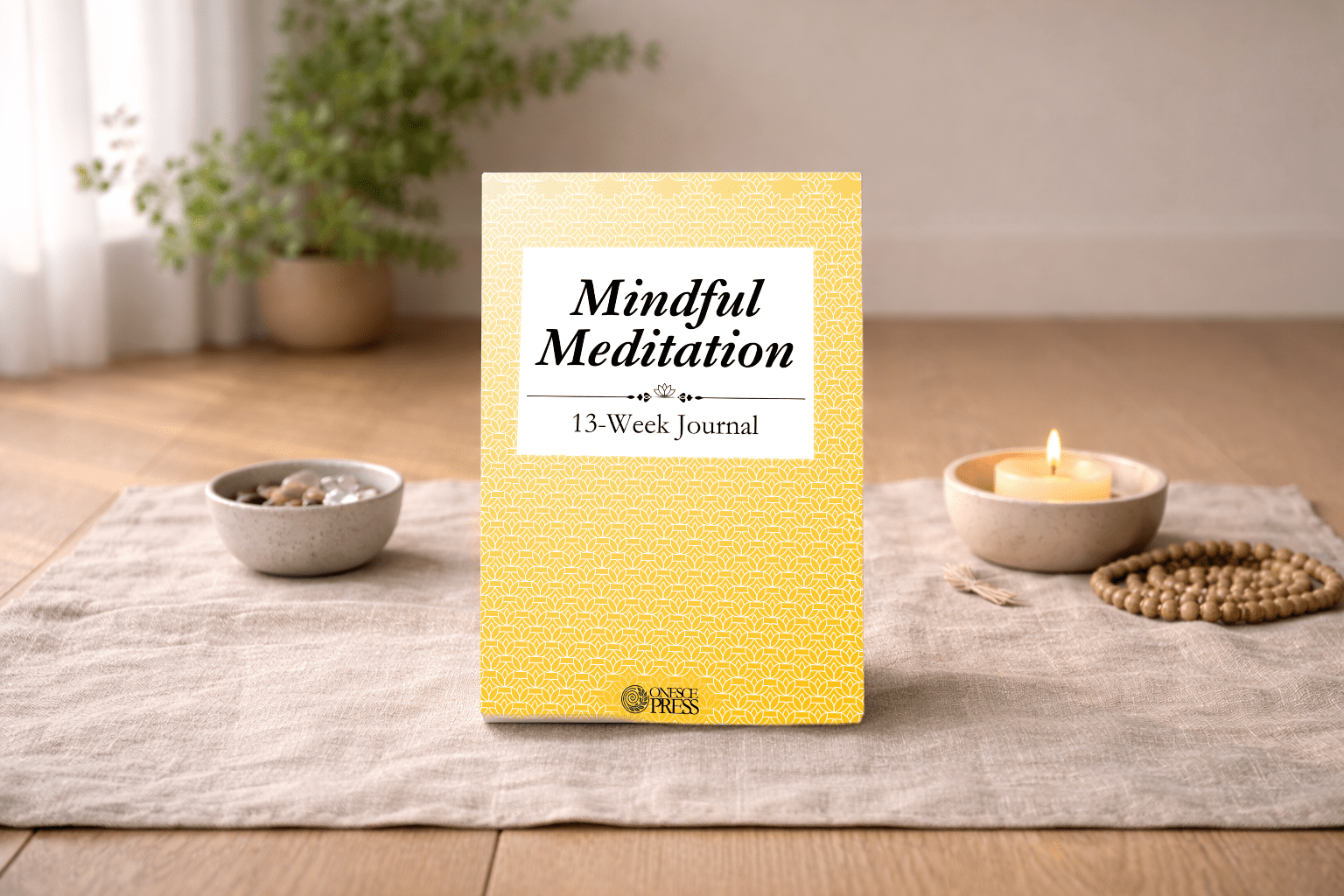
JOURNAL FEATURES:
- Your companion on a 13-Week journey of discovery and personal growth.
- Soothe the “monkey mind” and record details about your meditation experiences.
- Honor responsibilities and distractions, then tap into what your subconscious is doing.
- Watch your new devotional practice grow organically as you give yourself the grace to show up, just as you are.
Give yourself the gift of more mindfulness. You can also find this journal on Amazon!