

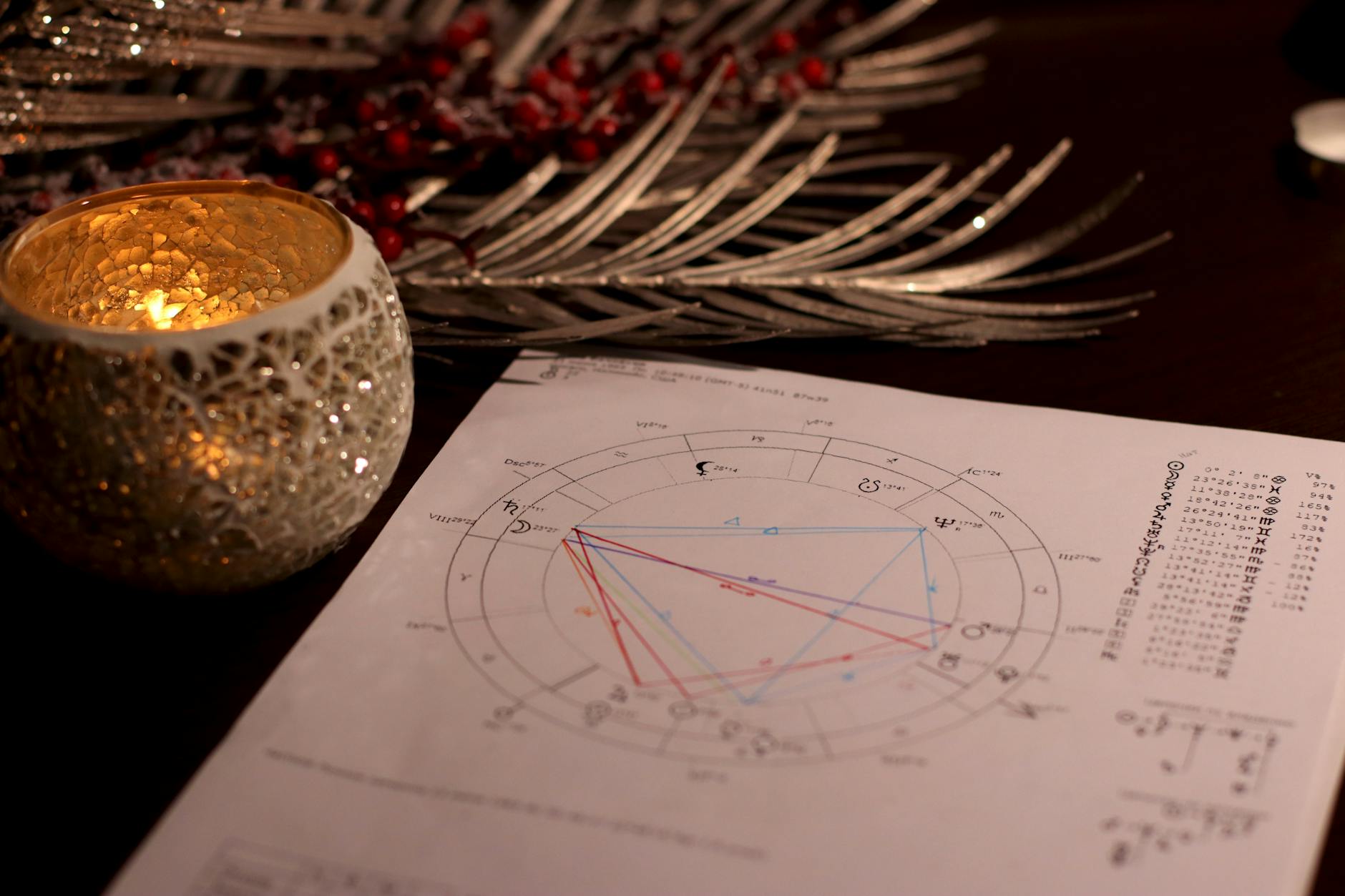
A natal chart is more than a static symbol of who someone is, it represents a blueprint of one’s own personal myth. While it begins with a moment in time, its wisdom unfolds across a lifetime, offering insight not just into who they are, but into how they grow, evolve, and respond to the shifting rhythms of the cosmos.
Many stop at the surface—sun sign, rising sign, a few personality keywords—but a birth chart holds far more than a list of traits. It reveals the archetypal architecture of a life: the key players, the underlying tensions, the cycles of renewal and release. When we learn to read it with intention, it becomes a trusted companion that grows alongside us.
Authentic Routines
Take regular, inspired, & adaptable steps towards your long-term goals!

Let’s walk through, step-by-step, a method for decoding natal charts with clarity and depth. We’ll learn how to identify the most influential placements, recognize patterns and planetary conditions, and build a meaningful foundation for interpreting transits and planetary timing in a way that is profoundly unique to every individual. This is about learning to recognize harmony at work in the cosmos, meeting life with greater insight, alignment, and trust.
What Does A Chart Say About Us?
If each chart is a cosmic script, the Sun, Moon, and Ascendant are its lead characters. These points, often called “The Big Three,” offer an immediate sense of how the native will show up, feel, and move through the world. They provide the foundation for interpreting the rest of a chart, and they shape one’s overall temperament more than any other placements.
The Big Three
The Sun placement reflects one’s vitality, purpose, and conscious identity. It’s how they radiate in the world and the source of their creative expression. We often grow into our Sun sign over time, especially as we begin to live with more agency and self-awareness.
The Moon‘s position speaks to our emotional world, instinctual reactions, and sense of internal security. It’s the rhythm of our moods and needs: what soothes us, what drives us to connect, and how we process life’s inner tides.

The Ascendant (also called the rising sign) marks the part of the zodiac that was on the eastern horizon at the moment of one’s birth. It sets the stage for their entire chart by making it’s sign that of the first house.
As the first house placement, the rising sign colors our personality, physical presence, and the way we instinctively approach life. It also determines the chart ruler—the planet that governs the Ascendant—and begins the sequence for all of the other house rulerships.
Together, these three placements give a natal chart an initial form. They answer questions like:
- How does the native see themself?
- How do they respond emotionally?
- How do others perceive them?
- What are they learning to embody more fully in this life?
Casting a Chart
Whether you’re advanced or just starting out in astrology, begin here. Look at the signs the Big Three fall in, and then notice the houses they occupy. A Sun in Aries in the 11th house feels different than one in Aries in the 4th. The Moon in Leo may be expressive and bold, but if it’s in the 12th house, that expression might take more reflection and solitude to emerge clearly. The nuance of house placement opens a deeper layer of personal meaning.
In Hellenistic astrology, it’s also helpful to consider chart sect, or whether the native was born during the day or at night. An easy way to tell is whether or not the Sun falls above (daytime or diurnal) or below (nighttime or nocturnal) the horizon line of the chart.
In daytime charts, the Sun tends to carry more weight. In nighttime charts, the Moon becomes more dominant. This small detail can shift how we read the Big Three in relationship to the rest of a chart.
Finally, don’t skip the chart ruler, or the planet that rules the Ascendant sign. This planet acts like a compass, directing the flow of your chart as a whole. For example, if you have Gemini rising, Mercury is your chart ruler. Its sign, house, and condition will influence how you navigate life, absorb information, and engage with change.
We’ll explore aspects, houses, and planetary conditions in more detail below, but for now: anchor the chart here. The Big Three will offer reliable insight again and again as we deepen our connection to our own charts and learn to track transits over time.
Which Planets Hold Power in a Chart?
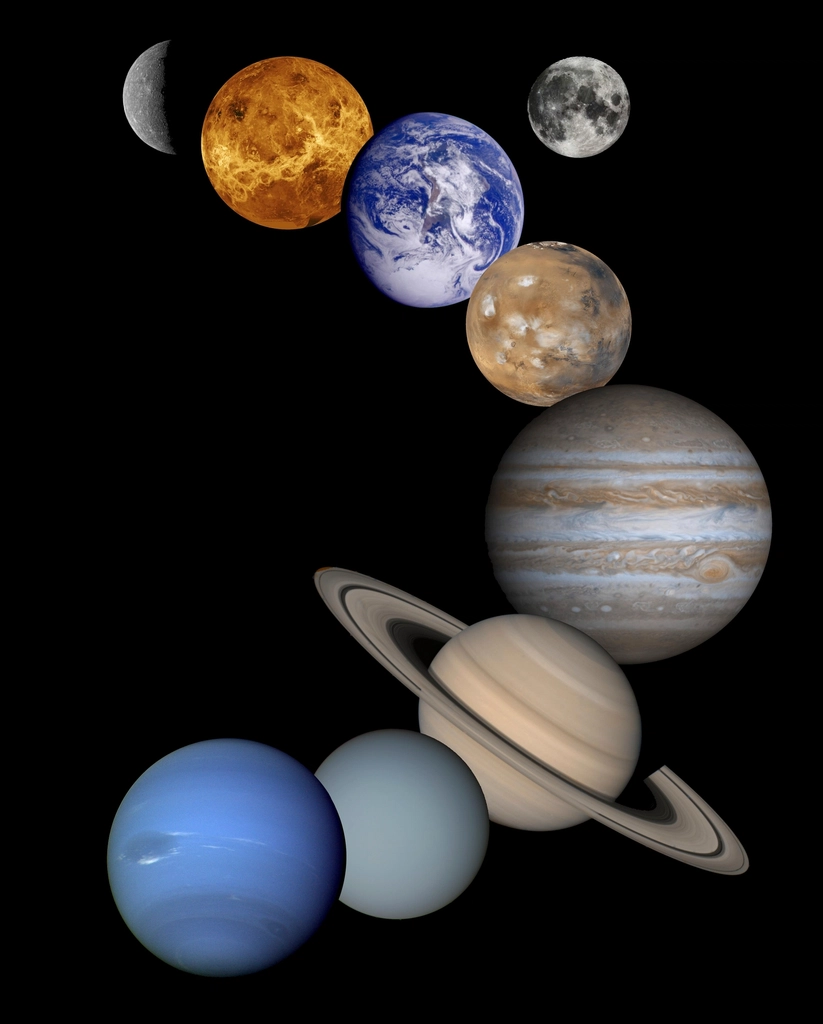
A birth chart can contain ten or more planetary bodies, but not all of them hold equal weight. Some act as central figures, their voices amplified by placement, condition, and rulership. Others may play more subtle roles, contributing to the chart’s overall harmony without dominating the narrative. To begin interpreting your chart meaningfully, it helps to identify which planets are most active, visible, and influential—they are the ones that carry the most weight.
Determining Planetary Significance
Several criteria can help determine which planets take on elevated importance in a given chart. No single factor tells the whole story. It is through the layering of dignities, positions, and relationships that a planet’s voice becomes clearer.
- Angular House Placement: Planets in the first, fourth, seventh, or tenth houses are said to be angular, or strongly positioned and more visible in a native’s life. These planets often manifest externally and play a public or embodied role.
- Rulership and Dignity: A planet located in its own sign (domicile) or exaltation is generally better resourced and more capable of expressing its nature cleanly. A planet in detriment or fall may still act powerfully but often brings complexity, tension, or inversion.
- Sect: As mentioned, in Hellenistic astrology, charts are considered either diurnal (day) or nocturnal (night). Benefics and malefics behave differently depending on the chart’s sect. For example, Jupiter is more constructive in day charts, whereas Venus will be in night charts; similarly, Mars is more challenging in day charts, while Saturn takes on that role in night charts.
- Aspects and Connectivity: A planet that aspects many other bodies in the chart (through conjunctions, squares, sextiles, oppositions, or trines) will have its influence woven throughout the chart’s dynamics. Such planets often mediate multiple narratives and act as bridges between themes.
- Rulership Chains: In addition to paying close attention to the chart ruler (the planet that rules the Ascendant sign), trace how it connects to other planets in the chart. The more frequently a planet appears at the top of a rulership chain, the more central it becomes in the chart’s architecture.
Not All Influence Is Obvious
Some planets operate behind the scenes. A planet in the twelfth house, for example, may still carry weight—especially if it rules the Ascendant or aspects the luminaries—even if it works subtly or unconsciously. Retrograde planets, too, may act differently than expected: inward-focused, slow to reveal, or tied to long-term learning arcs.
When examining planetary condition, remember that influence is not always synonymous with ease. A difficult placement may dominate the native’s experience, even as it complicates their sense of clarity, consistency, or self-expression. Just as a strong Mars can produce both courage and conflict, an afflicted Venus may give rise to both longing and depth.
Look for Resonance and Repetition
Often, the chart will emphasize a particular archetype through repetition. For example, a native may have the Sun, Mercury, and Venus all in Capricorn (Saturn ruled), with Saturn in the first house and another stellium in the tenth-house (also Saturn ruled). In this case, regardless of whether Saturn is angular or dignified, its archetypal signature will be loud. This kind of clustering (three or more planets in a sign is considered a stellium) tells a story of thematic emphasis, and should be interpreted with care.
Look also for repeated element, modality, or polarity. For example, several planets in fixed signs, or perhaps a dominance of water, would shape how energy is approached or processed. There is no need to force any significance though, as these themes often emerge more clearly through experience than theory.
Refining Interpretation Through Practice
Planetary condition becomes clearer over time, especially when tracking transits. Perhaps you notice that Jupiter transits are consistently impactful for you, even though Jupiter is not exalted in your chart, and then realize it’s because it rules key houses or aspects another prominent placement. Practice and reflection are the tools that bring these subtle influences to light, so give yourself time.
As we move forward, we’ll explore how house emphasis and planetary relationships deepen interpretation. Before continuing, take some time to identify which planets seem to carry the most weight in your chart. These are the archetypes that will rise repeatedly in transits, returns, and personal development. They are, in many ways, a chart’s central cast of characters.
Where Are Things Happening in a Chart?
Signs tell us how energy expresses itself. Planets tell us what archetypes are at work. The houses reveal where these forces show up in life and what areas of experience are emphasized, and how the native engages with them over time. In many ways, the houses anchor astrology to the tangible world. They represent life’s arenas: relationships, health, career, creativity, legacy, and more.
When interpreting a chart, recognizing which houses carry the most weight helps orient the narrative. It draws focus to where energy is most concentrated, or where things tend to happen, shift, repeat, or define the native’s sense of purpose.
Identifying Emphasis by House
A straightforward method is to observe planetary distribution across the twelve houses. Multiple planets in a single house will usually mark that area as central to the native’s lived experience. A first house stellium often signals a life shaped by identity work, embodiment, and personal assertion. A seventh house emphasis suggests that partnership (romantic or otherwise) will play a formative role in self-understanding and evolution.
Pay special attention to angular houses: the 1st, 4th, 7th, and 10th. Planets in these houses often speak the loudest. They manifest externally and are more easily seen or felt by others. Succedent houses (2nd, 5th, 8th, 11th) offer support and continuity, while cadent houses (3rd, 6th, 9th, 12th) relate to change, transition, and preparation.
It’s also important to remember that empty houses are not empty of meaning. They still participate through rulerships and transits. An unoccupied second house, for instance, might be ruled by a prominent Venus or Mars elsewhere in the chart, indicating that finances, values, or possessions are active themes even if no planet resides there natively.
Whole Sign vs. Quadrant-Based Systems
In traditional Hellenistic practice, whole sign houses are used, which means each sign constitutes an entire house (beginning with the Ascendant marking the first). This system emphasizes sign-based rulerships and offers structural clarity when tracking transits and planetary conditions. Modern astrology often uses quadrant-based systems like Placidus, which emphasize angularity and house division based on time and space.
Both systems offer valid insights, and many astrologers move between them fluidly depending on purpose. For those just beginning to work with transits and returns however, whole sign houses often provide a cleaner structure for timing techniques like profections, solar returns, and zodiacal releasing.
Thematic Clustering and Life Orientation
Some charts show clustering within hemispheres, either above or below the horizon, or concentrated in the eastern or western half. These configurations can signal introversion vs. extroversion, self-direction vs. relational orientation, or private vs. public development.
For example, a chart weighted in the bottom hemisphere (houses 1–6) often speaks to a life shaped by inner processes, personal growth, and foundational work. However, a top-heavy chart (houses 7–12) leans toward external engagement and social visibility.

These are not fixed rules, but patterns worth observing. The geography of the chart reveals how energy is distributed across life’s landscape.
Tracking Activity Across Time
The houses also serve as containers for transits and returns. As planets move through the sky in real time, they illuminate different houses and activate latent themes in our own charts. Knowing which houses hold power in our birth chart prepares the us to track the current transits and aspects more meaningfully, particularly when multiple astrological events converge on a single area or during a specific period of life.
Later, when we build a framework for navigating transits, we’ll return to the houses from the perspective of motion, change, and unfolding. For now, we can use them to observe where and how the chart is rooted. These significant houses are where life asks the most of the native and often also where it offers the most in return.
What Do Planets Say to Each Other?
Planets, like people, don’t exist in isolation. They form relationships; some harmonious, some tense, others complex and deeply transformative. These relationships are known as aspects, and they reveal how the various parts of the native’s psyche interact with one another.
When two planets form a geometrically significant angle, they are said to be in an aspect with one another. This connection can create resonance, resistance, amplification, or even distortion. The effects depend on the nature of the planets involved, the type of aspect, and the broader context of the chart. Understanding these planetary “conversations” is essential to grasping how the native experiences inner tension, ease, motivation, and conflict.
Major Aspects and Their Tones
The five classical aspects—conjunction, sextile, square, trine, and opposition—each carry distinct energetic signatures. A conjunction (planets are in the same place in the sky; 0° from one another) blends planetary forces, for better or worse. The energies entwine, sometimes fusing seamlessly, other times crowding or overpowering one another. A sextile (60° from one another) offers opportunity. This aspect is supportive, but subtle, often requiring activation to bear fruit. A square (90° from one another) introduces friction. The tension created by this connection is sometimes volatile, but can also be quite productive. A trine (120° from one another; in elemental accord) speaks of natural flow, ease, and unconscious competence. An opposition (planets are directly opposite one another in the sky; 180° from one another) reflects polarity, challenge, and projection.
In Hellenistic astrology, aspects were based on sign relationships, not their specific degree placements within signs. Planets were said to “see” each other if they occupied signs that formed whole-sign aspects, regardless of the orb of influence (often only 0-8° in modern considerations). This view adds architectural coherence to the chart, while modern techniques refine interpretation through their degree-based applications.
Applying vs. Separating
Another traditional principle worth noting is whether an aspect is applying (the faster planet is moving toward the exact aspect) or separating (it has already passed the exact angle). Applying aspects are often felt more intensely and may represent emerging dynamics in our lives. Separating aspects tend to be integrated, established, or still echoing in from the past.
This distinction becomes even more meaningful when working with transits or timing techniques. Knowing whether the aspect is upcoming or just passed helps to distinguish between themes that are rising to the surface and those that are completing or integrating.
Aspect Patterns and Narrative Cohesion
Beyond individual connections, aspects sometimes form patterns that give shape to the chart as a whole. A T-square, for instance, reveals dynamic tension among three planets, usually across modalities. It often reflects a driving challenge that compels the native toward growth and breakthrough.
A Grand Trine weaves together three planets in harmony across the same element, often marking innate talent or flow. A Yod, or “finger of God,” introduces karmic or fated pressure toward refinement, with one planet receiving energy from two others via quincunx (minor aspect; 105° apart). A configuration like that rarely goes unnoticed on one’s unfolding path.

These formations are not always immediately visible but are worth looking for. They often represent core dynamics that reappear during key transits, and help tie together otherwise disparate parts of the chart.
Relating Through the Chart
Aspects describe how we relate to both ourself and others. An internal square between Venus and Saturn may reveal tension between love and worth. A trine between Mercury and Uranus might mark a mind that leaps intuitively toward insight. Thus, aspects are psychological and architectural. They show where energy flows easily, where things start to twist, and where pressure builds.
Additionally, once you begin to observe transits and compare them to your birth chart, the aspects formed between the two will help guide your understanding of what’s being activated, how long it may last, and what kind of response is most aligned with your core structure. These conversations are already happening, we are simply trying to listen, tracing their echoes in our lived experience.

What About Life Trajectory?
The lunar nodes (North Node and South Node) are not planets, but they are among the most spiritually resonant points in a natal chart. They mark the intersection of the Moon’s orbit with the ecliptic and are traditionally known as the Dragon’s Head (North Node) and Dragon’s Tail (South Node). Together, they form the nodal axis, acting as a symbolic bridge between the past and the future, between instinct and aspiration, and between comfort and growth.
In modern interpretations, the nodes are often described as karmic indicators. The South Node reveals habits, patterns, and identities that come easily, often because they’ve been well-rehearsed (whether in this life or another). The North Node, by contrast, points toward unfamiliar territory. It represents the work of becoming, the stretch beyond the known. In practice, the nodal axis functions as a map of energetic evolution, whether or not one adheres to reincarnation frameworks.
South Node: Familiar but Limiting

The South Node is often described as a comfort zone and represents an area of life or theme that feels safe, natural, or even gifted… But, it may come with a cost if over-relied upon. It represents what the native is already good at but may need to release or reframe in order to grow.
For example, someone with the South Node in Leo may have a strong sense of self-expression and creativity, but may struggle with attention-seeking or needing validation. That strength need not be discarded, but it must evolve. The South Node isn’t a problem to fix; it’s a reservoir of experience that the North Node can reshape into new forms.
North Node: Unfamiliar but Meaningful
The North Node rarely feels easy. It points toward the kind of work that stretches the soul. It may feel awkward, risky, or unrewarding at first, especially early in life. But the more the native moves in that direction, the more aligned their life begins to feel. The North Node requires us to cultivate new skills, perspectives, and forms of participation; it asks us to develop what is underdeveloped, to move toward fulfillment, even when the path is unclear.
With a North Node in Aquarius, for instance, the native may be drawn toward collective causes, innovation, or systems-thinking… But perhaps only after releasing an attachment to being center stage. Each nodal path has its own tension, and each contains its own medicine.

Houses, Rulerships, and Nodal Expression
To interpret the nodes fully, look at their signs, their houses, and any ruling planets. A South Node in the second house may relate to comfort with material stability, while a North Node in the eighth suggests growth through emotional intimacy, shared resources, or transformation. Similarly, if the North Node is in a house or sign that is ruled by a strong, visible, or active planet, its call may be felt more urgently.
Transiting planets activating the nodal axis often bring karmic or catalytic experiences: crossroads moments, reversals, and revelations. Similarly, the nodal return, occurring every 18.5 years, invites a realignment with one’s soul path. The nodal opposition, on the other hand (around ages 9, 28, 46, etc.), tests our balance and integration by asking whether the native is swinging too far in one direction or avoiding a needed shift.
The Work of Integration
True nodal work is not about abandoning the South Node or idealizing the North. It is about integration and rebalancing. We can do this drawing on our existing strengths and applying them toward unfamiliar, but essential, directions. This is why the nodes mark a subtle but powerful undercurrent in the natal chart; they don’t shout, but they shape everything in time.
Their presence reminds us that astrology is not just a system of traits or timing tools, it is also a philosophy of becoming and a map for evolution. As we learn to walk this path between past and possibility, the chart begins to breathe more freely. This is the edge where astrology becomes alchemy.

Can a Chart Be Used to Navigate Time?
Once the natal chart has been anchored—its luminaries understood, planetary players identified, aspects mapped, and houses emphasized—it becomes more than a static portrait. It transforms into a compass. This is where astrology reveals its dynamic strength: as a tool for navigating time, change, and personal evolution.
Transits and planetary returns activate the natal chart. They draw forward latent potentials, challenge established patterns, and open windows of experience that can be navigated with awareness and grace. However, to work meaningfully with transits, we must first understand the basic architecture of our own chart. Without this foundation, planetary movements can feel arbitrary… But, with these landmarks fully understood, the sky becomes a legible map.
Begin with Current Transits
Transits occur when the planets in the sky make aspects to the features of our birth chart. These aspects—just like those within the birth chart itself—carry varying degrees of impact, duration, and tone.
Start simply. Identify which houses the current outer planets (Jupiter through Pluto) are moving through. These slow-moving bodies indicate long-term themes and provide context for the present moment. Then observe which natal (birth chart) planets are receiving aspects from transiting bodies.
For example, a square from Saturn to the natal Moon may mark a time of emotional endurance. In contrast, a trine from Jupiter to the natal Sun may coincide with growth, opportunity, or the return of confidence.
Most transits are felt in layers, especially when multiple planets activate the same house or aspect a natal stellium. The more familiar we become with our chart’s structure, the more intuitively we will begin to recognize patterns over time.
Track Personal Cycles with Returns
Returns occur when a planet returns to the exact degree it held at birth. Some are frequent and subtle (lunar returns), while others shape entire life stages (Saturn, the Nodes).
- A Solar return marks a new solar year (birthday) and can be studied for annual themes.
- A Mars return restarts a two-year cycle of action and desire.
- A Jupiter return every 12 years expands possibilities and tests the native’s capacity for growth.
- A Nodal return, at 18.5 years, realigns the native with their evolutionary path.
- A Saturn return (~29 years), especially the first, brings initiation into maturity and structure.
Each return is a reintroduction of the planet’s energy, and a review of how the native is working with its themes. These are moments of personal timing and they often signal the beginning of a new inner chapter, even if the outer circumstances remain unchanged.

From Forecasting to Dialogue
Working with transits is about participation, not prediction. A transit does not guarantee an event; it presents an atmosphere, a challenge, a blessing, or a question. Whether we meet that moment with resistance, curiosity, action, or reflection will shape the outcome we experience more than any planetary motion alone.
By learning to track transits and returns through the lens of our birth chart, we shift from passive observer to engaged participant. The chart becomes more than a map, developing into a method for navigating, relating, and understanding. This is how time can become something we move with more consciously, courageously, and creatively.

How to Read a Chart as a Whole
The natal chart is a system: intricate, interrelated, and alive. Each planet, sign, house, and aspect plays its part, but meaning deepens when the parts are read in relationship to each other. This final interpretive step isn’t about mastering complexity, but rather, returning to the chart again and again with a fresh eye and a deeper question: How does this configuration live in me now?
To synthesize the chart is to hold its components in dialogue. Resist the temptation to collapse them into a single narrative, and instead listen for their rhythms, their harmonies, and their friction. This is how astrology shifts from study to practice.
Start with Anchors, Then Follow Threads
Each interpretation begins with a focus. When reading your own chart, return to what’s already been established:
- Where are the luminaries placed, and how are they conditioned?
- What houses are emphasized?
- Which planetary voices speak the loudest?
- What patterns or tensions arise from aspects?

These questions form the core. From there, you follow threads. Perhaps your chart ruler is in a cadent house but tightly conjunct the Midheaven, asking: how does visibility emerge from hidden effort? Or maybe your North Node is ruled by a planet in exile but angular, and it wants you to consider: what lessons are being demanded through challenge?
There is no single right answer, only clearer resonance. Over time, repeated contact with the chart reveals themes that surface cyclically (often during transits, returns, or moments of deep reflection).
Build a Rhythmic Practice
Active astrology is practiced rhythmically, or cyclically. The chart opens up and reveals itself to us slowly, in layers, through the contextualization of our lived experience. A sustainable approach includes regular check-ins and will be guided by your own unique natal structure:
- Monthly, track the Moon as it moves through the houses and aspects key planets.
- Seasonally, observe how solstices, equinoxes, and cardinal ingresses activate angular houses.
- Annually, revisit your solar return and note which profected house is active.
These rhythms are not about control or certainty, they merely offer opportunities for increased attention. It is in attending to time with presence and reverence that we begin to understand how astrology shapes our experience not from above, but from within.
Use Reflection to Refine Understanding
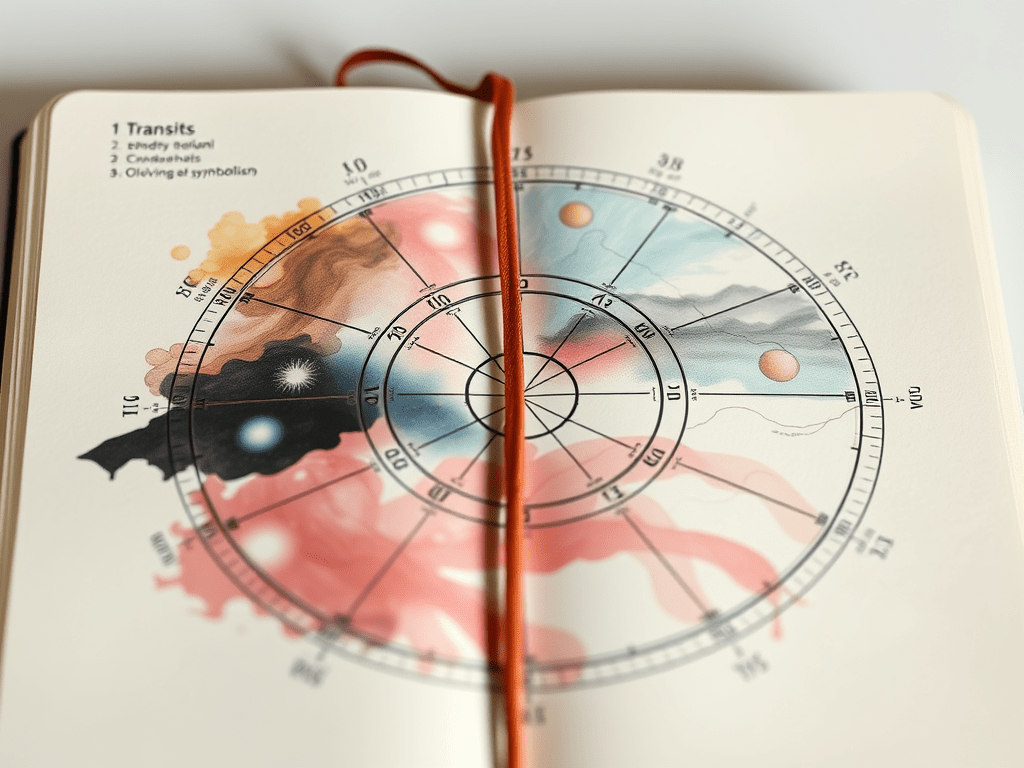
As insights arise during transits, dreams, rituals, or other moments of clarity, record them. Keep a transit journal, return to your chart with new questions, and let the symbolism evolve as you evolve. The natal chart is for from static; it reflects you, and you are always becoming.
Even the most seasoned astrologers find new meaning in old configurations. What once seemed like tension may later feel like initiation. What once looked like limitation may, in hindsight, mark the threshold of power. Interpretation deepens in cycles, not conclusions.
Astrology as a Language of Meaning
At its core, astrology is not a system of traits or predictions. It is a language of timing, story, and presence. It doesn’t offer answers so much as it reveals patterns, or rhythms that the soul recognizes before the mind does.
By learning to read charts with rhythm and relationship in mind, we start to see that life is not random. We begin to recognize that challenges have shape, gifts have timing, and the sky is not distant—it is deeply, intimately mirrored within us. Then, we be able to truly understand that a natal chart was never meant to define anyone. It’s merely a guide, like stars above a traveler, marking the way forward with light.

A Natal Chart Is More of a Mirror than a Mold
Our natal charts aren’t here to confine us. They aren’t boxes, verdicts, or destiny etched in stone. They offer a mirror; a cosmic reflection of potential, patterns, gifts, and ongoing growth. It can help to reveal the architecture of our experiences, not to limit our freedom, but to help us navigate life with more clarity and purpose. Thus, by learning to read charts rhythmically and relationally, we begin to move through life with greater awareness. We start to see how inner seasons align with planetary motion, how personal stories echo universal cycles, and how the cosmos whispers to us.
Truly, astrology is not about memorizing signs or mastering formulas; it’s an opportunity to cultivate relationships with the planets, with time, and even with ourselves. It’s about listening deeply and responding intentionally. It’s about returning—again and again—to the symbolic language that reminds us: we are part of something vast, beautiful, and alive.
Mindful Meditation
Quiet your “monkey mind,” record your experiences, & deepen your practice.
So as you return to your chart, let yourself explore it slowly. Let it become familiar, let it surprise you, and let its significance change as you change. Learn to track its rhythm, and you may find that life, too, becomes more readable—more meaningful—more yours.
Thank you for joining us here on Onescence! If you enjoyed this article, you can help support this free resource by becoming an Onesce Insider or purchasing one of our products through Onesce Press. Given your interest in transformation and personal sovereignty, perhaps you would benefit from:
Moon Cycle Journey

JOURNAL FEATURES:
- Learn about the rhythms of the lunar cycle and how to apply them to your own journey.
- Explore your cycle goals, developing and working with your own authentic intentions.
- Discover the power of personal feedback for enhancing and sustaining progress.
- Utilize daily/nightly journal prompts that are designed to bring out your best.
- Experiment with simple ritual ideas and when to employ them throughout the cycle.
- And so much more…
You can also get your copy on Amazon and begin your journey with the next moon cycle!