

Duration: 19 minutes
Fear can be both a protector and a prison. It warns us of danger but can also keep us stuck—especially when it comes to psychedelics and plant medicine. Fear around these substances exists on two levels: external fear, rooted in misinformation and stigma, and internal fear, which surfaces as unresolved emotions and subconscious resistance during a journey.

For decades, psychedelics were vilified, with claims that they cause psychosis, addiction, or irreversible harm. Modern research tells a different story. Studies reveal that psilocybin and ayahuasca can ease depression, reduce anxiety, and help people process trauma in ways that traditional therapy often cannot.
Even with science on its side, plant medicine still presents another kind of fear—the fear of facing ourselves. Psychedelics often bring suppressed emotions and unresolved trauma to the surface, forcing us to confront the shadow self, a term coined by Carl Jung to describe the parts of us we reject or suppress. Still, this confrontation, while uncomfortable, can be deeply healing. Fear isn’t just an obstacle, it’s an invitation to transformation—when we stop running from it, we discover just how much freedom lies on the other side.

Plant Medicine Companion
Support for your journey of transformation, from planning through to integration:
Let’s explore how fear shows up on this path—both in the misconceptions that keep people away and in the inner challenges that arise during the journey itself. Along the way, we’ll break down what the science actually says, look at how plant medicine helps us face our shadow-selves, and share some practical ways that we can move through fear with trust and courage.
Dispelling Myths and Misconceptions
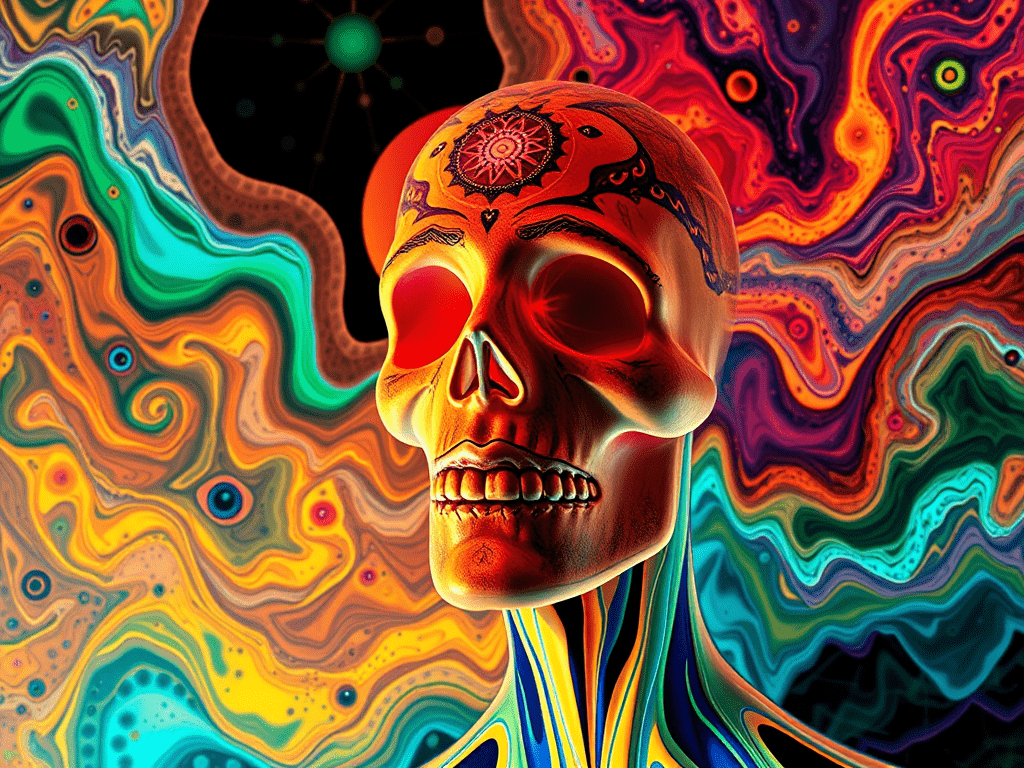
For decades, psychedelics have been wrapped in layers of fear, not just on a personal level but in public perception. Many of us have heard the same warnings repeated: “Psychedelics cause psychosis,” “They’re addictive,” or “They fry your brain”—but how much of that is actually true?
Much of this fear comes from the War on Drugs era, a time when psychedelics were swept into a wave of anti-drug propaganda that ignored their actual effects and traditional uses. Research was shut down, misinformation spread, and an entire generation was led to believe that these substances were inherently dangerous. Now, with the return of clinical studies, we’re finally seeing a shift. Studies published in Scientific Reports and undertaken by researchers have been proving what many traditional cultures have known for centuries: psychedelics can be powerful tools for healing.
Unfortunately, sensationalism and fear have a way of sticking around in our psyches though. Let’s go ahead and consider some of the biggest myths surrounding plant medicine and see what the science really says:
Plant Medicine Integration
Capture insights, record experiences, & integrate your medicine journey.

Myth #1: Psychedelics Cause Psychosis or Permanent Harm
It’s understandable to feel cautious about something that alters perception so profoundly. Many worry that psychedelics could trigger psychosis or cause lasting damage to the brain. However, large-scale studies show no increased risk of schizophrenia, psychotic breaks, or psychiatric hospitalization among psychedelic users compared to the general population.
TRUTH: It’s complicated. Psychedelics do amplify what’s already there, meaning that for someone with an existing predisposition to schizophrenia or bipolar disorder, these substances could heighten those vulnerabilities. However, for the vast majority of people, psychedelics don’t create psychosis—they help process deep emotions in a way that can be profoundly healing.
Myth #2: Psychedelics Are Addictive
The idea that psychedelics are addictive comes from a broad misunderstanding of how addiction works. Unlike drugs like opioids or alcohol, which flood the brain with dopamine, psychedelics primarily work through the serotonin system, meaning they don’t create chemical dependency.
TRUTH: Psychedelics are being studied as a way to break addiction cycles. Research shows that psilocybin therapy has helped people quit smoking and drinking at far higher success rates than conventional treatments. Meanwhile, ibogaine has shown remarkable potential in helping people overcome opioid dependence. So, rather than causing addiction, these substances can actually help rewire the brain to break free from it.
Myth #3: Psychedelics “Fry” the Brain
We’ve all heard the stereotype—someone takes too many psychedelics and “melts their brain,” but modern neuroscience tells a different story. Instead of causing damage, psychedelics appear to enhance brain function.
Research has also found that psychedelics promote neurogenesis, the growth of new neurons, by increasing levels of brain-derived neurotrophic factor (BDNF)—a protein essential for brain health and learning.
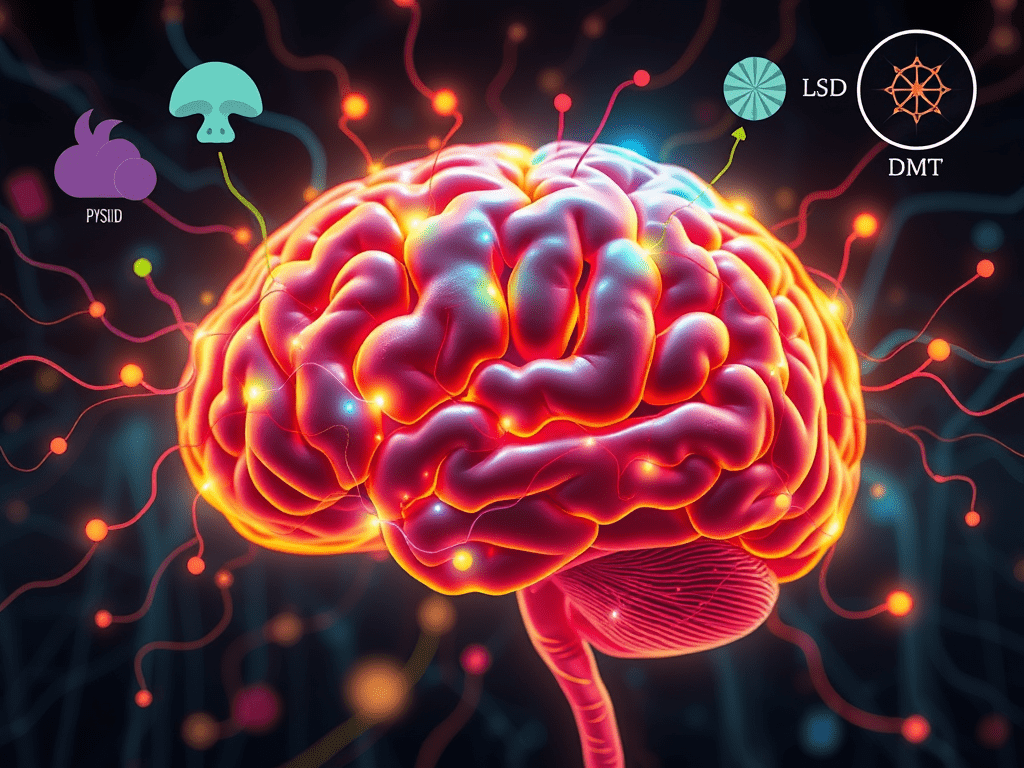
TRUTH: Rather than “frying” the brain, psychedelics seem to be helping it grow, adapt, and heal in ways that traditional treatments often can’t reach.

Plant Medicine Preparation
Plan your entire journey, from travel & expenses to intentions & integration.
From Fear to Curiosity
As the research continues to debunk old myths, psychedelics are slowly stepping out of the shadows. Oregon has legalized psilocybin therapy, Canada is approving exemptions for psilocybin in end-of-life care, and MDMA and psilocybin therapies are on the verge of FDA approval in the U.S.. The world is finally catching up to what Indigenous traditions and underground therapists have known for years—these substances aren’t the problem. Fear, misinformation, and improper use are.
But even as we move beyond external stigma, there’s another challenge waiting: the fear that arises from within when we embark on a plant medicine journey. It’s one thing to accept that psychedelics are safe—it’s another to face the emotions, memories, and truths that they bring to the surface.
For most, the real question isn’t just “Are psychedelics dangerous?” It’s “What happens when they show me something I wasn’t ready to see?” We’ll look into that now.
Facing the Shadow Self

Even when we move beyond the myths and misinformation surrounding psychedelics, another kind of fear remains—the one that comes from within. Once we set aside external doubts and commit to a journey, plant medicine often leads us straight into the deepest, most hidden parts of ourselves.
Unlike conventional therapies, which tend to work in layers over time, psychedelics have a way of cutting through mental defenses and surfacing emotions, memories, and patterns we may not have been ready to face. This is why people often describe plant medicine as a teacher rather than just a substance. It doesn’t show us what we want to see—it shows us what we need to see, and sometimes… What we need to see is our own darkness, trauma, and pain.

What Is the Shadow Self, and Why Does It Show Up?
Psychologist Carl Jung coined the term “shadow self” to describe the parts of ourselves that we repress, deny, or ignore. It’s things like buried trauma, unresolved grief, unacknowledged fears, or the parts of our personality we don’t want to admit exist that end up in the shadow.
Psychedelics, particularly substances like ayahuasca, psilocybin, and iboga, tend to bring this shadow into focus. Under their influence, emotions we’ve long buried can rise to the surface, sometimes in the form of intense visions, physical sensations, or overwhelming feelings. It’s not uncommon for people to experience:
- A surge of emotions—Grief, anger, fear, or love they didn’t know was there.
- Repressed memories resurfacing, usually tied to childhood or past trauma.
- A confrontation with self-destructive patterns, seeing clearly how their own thoughts or behaviors have been holding them back.
This can feel terrifying in the moment. Yet, it’s important to remember that the shadow self isn’t our enemy—it’s just the parts of us we’ve avoided for too long. Often, the greatest healing occurs through something like defragmentation, in which users are finally able to reconnect with themselves, beginning the process of authentic and sustainable healing.
Plant Medicine Companion
Support for your journey of transformation, from planning through to integration:
Why Do Psychedelics Bring Up Fear?
Fear during a psychedelic journey isn’t just about what we see—it’s about our resistance to seeing it. The ego, the part of us that controls our identity and perception of reality, often fights to hold onto its familiar framework. When psychedelics start dissolving that framework, it can trigger feelings of panic, confusion, or even existential dread.
This is why people sometimes describe difficult psychedelic experiences as “bad trips.” In reality though, these moments are often where the deepest healing happens. Research suggests that the ability to lean into discomfort during a psychedelic experience is a strong predictor of positive outcomes. When we stop resisting, the fear often transforms into understanding, release, and emotional integration.
In fact, studies on ayahuasca have found that participants who experience intense emotional purging often report the greatest long-term psychological benefits, including reduced depression, increased emotional resilience, and greater life satisfaction. So, the fear isn’t a sign that something has gone wrong—it’s a sign that something important is happening and an invitation to go deeper.
Surrendering to the Process
One of the biggest lessons plant medicine teaches is trusting the process. Fear thrives on resistance, and the more we fight what’s surfacing, the more intense the experience becomes.
When we lean in, breathe, and allow whatever needs to come up to unfold, we often find that the fear dissolves on its own. Shamans and experienced facilitators often remind participants of simple but powerful truths: “The only way out is through,” and “If it’s coming up, it can be cleared.”
By surrendering, we open ourselves to insights, breakthroughs, and the release of emotional burdens we may have been carrying for years. The shadow isn’t something to be feared—it’s something to be integrated. When we embrace it, we become more whole. Still, surrendering to the unknown isn’t easy, which is why having tools and strategies to navigate fear—before, during, and after a journey—can make all the difference. Let’s explore those next.
Overcoming Fear—Before, During, and After a Plant Medicine Journey

Fear isn’t something we eliminate—it’s something we learn to navigate. Whether it’s the fear of the unknown before taking plant medicine, the fear of losing control during a journey, or the fear of integrating difficult truths afterward, having the right tools can make all the difference.
Before the Journey: Preparing Intentionally
Educate Yourself
Knowledge helps dissolve unnecessary fear. Read, research, listen to personal accounts, and understand what plant medicine does neurologically and emotionally. Psychedelics don’t create hallucinations out of nowhere—they amplify what’s already within us— so taking measures to prepare the body, mind, and spirit before a journey is essential for creating a mindset that will facilitate the most beneficial outcomes.
Set a Clear Intention
Fear thrives in uncertainty. Before a journey, take time to ask yourself:
- Why am I doing this?
- What am I seeking to heal or understand?
- Am I ready to surrender to what arises?
Intentions serve as an anchor, helping you stay grounded when the experience feels overwhelming.
Plant Medicine Preparation
Plan your entire journey, from travel & expenses to intentions & integration.
Choose the Right Environment and Support
Whether you’re participating in a ceremonial setting, a guided retreat, or an intentional solo experience, ensure that you’re in a safe, supportive environment. Having an experienced guide, therapist, or trusted sitter can provide reassurance if fear arises.
During the Journey: Navigating Fear in Real-Time
No matter how much preparation we do, fear can still show up once we’re in the experience. The key is knowing how to work with it rather than fight against it. Let’s consider some ways we can work through our fears during a journey:
Breathe Through It
When fear rises, the nervous system responds with fight-or-flight mode. A simple but effective way to counteract this is with slow, intentional breathing. Try the 4-7-8 method: inhale for four seconds, hold for seven, exhale for eight. This will signal to the body that it is safe and soothe the nervous system.

Shift the Perspective
Our anxiety might try to overwhelm our minds with fearful thoughts during a journey, making the experience overwhelming. Instead of thinking, I’m losing control, try reframing:
- This is an opportunity to learn something important.
- I’m not in danger, I’m in transformation.
- What is this fear trying to show me?
Often, fear is just the threshold to a breakthrough. Recognizing this, we can pass through it easily, like a portal or invitation to a new, more liberating perspective.
Use a Mantra
Simple phrases can act like lifelines in difficult moments. Some powerful ones include:
- “I surrender.”
- “I trust myself.”
- “This is temporary.”
- “Thank you Mama.”
Repeating a mantra grounds the mind and provides a focal point when the experience feels overwhelming. This can also be a great way to infuse your journey with your intentions if you create/use a mantra that specifically helps to remind you of them.
Plant Medicine Integration
Capture insights, record experiences, & integrate your medicine journey.
Connect to the Body
Clinging to our mental disposition towards understanding can be a method fear uses to maintain control too. If thoughts become too chaotic or demanding, shift your awareness to the physical senses:
- Press your hands against your heart.
- Feel the ground beneath you.
- Sip water and notice the sensation (if allowed for your medicine tradition).
Grounding in the body can help bring a sense of stability when the mind feels like it’s spinning. The medicines often work holistically, addressing both psychological and physiological needs, so allowing our minds to rest and tuning into the body can bring additional insights as well.
Call for Guidance
If working with a shaman, guide, or therapist, don’t hesitate to reach out for support. Even in solo settings, simply asking internally for guidance—whether from the medicine, your own intuition, or a higher source—can bring unexpected clarity.

After the Journey: Integrating What You’ve Learned
Fear doesn’t always disappear once the journey ends. Sometimes, the real challenge is understanding and applying what was revealed. Integration is where the deepest healing takes place, and having a plan helps ensure that the experience isn’t just intense—it’s transformative.
- Journal and Reflect – Write down key emotions, insights, or visions from your journey. Even if they don’t make sense immediately, patterns often emerge over time.
- Talk About It (With the Right People) – Find a trusted friend, integration coach, or therapist who understands plant medicine. Sometimes, saying an experience out loud helps solidify its meaning.
- Engage in Grounding Practices – Psychedelics open doors to expanded awareness, but life continues afterward. Practices like meditation, time in nature, yoga, or creative expression help integrate the experience into daily reality.
- Act on Your Insights – If the medicine showed you something important—a relationship that needs healing, a habit that needs to change, a truth you need to accept—take action. Real transformation happens when we apply what we’ve learned.
Moving Through Fear With Trust
Fear isn’t a sign to turn back—it’s a sign you’re at the edge of something important. Whether it’s the fear of letting go, the fear of what you might see, or the fear of change itself, plant medicine teaches us that the only way out is through.
With the right preparation, tools, and mindset, fear doesn’t have to be something we run from—it can be something we learn from. When we do, we step into the freedom waiting on the other side.

Conclusion: Plant Medicines Facilitate Moving Through Fear, Into Freedom
Fear is a natural part of transformation. It warns us, protects us, and—when we learn to navigate it—it leads us to deeper healing. Whether it’s the fear of misinformation and stigma, the fear of facing our own darkness, or the fear of surrendering to the unknown, plant medicine brings us to the edge of what we think we can handle and invites us to step through.

Psychedelics challenge both external and internal fears—reshaping our understanding and guiding us into the depths of the subconscious. The science is clear: plant medicine isn’t about escaping reality; it’s about engaging with it in a way that helps us heal, grow, and reconnect to ourselves. While the journey may be uncomfortable at times, it’s often in those moments of discomfort that the most profound breakthroughs occur.
Understanding fear isn’t enough though—we must know how to work with it. With the right preparation, tools, and mindset, we can approach plant medicine with curiosity instead of apprehension and courage instead of resistance. When we stop fighting the experience and start trusting the process, fear no longer holds us back—it becomes part of the transformation itself.
So the real question isn’t “How do I avoid fear?” but rather, “How can I allow it to teach me?” Since truly, when faced with openness, fear doesn’t stay fear for long. It becomes wisdom. It becomes clarity. In the end, it becomes freedom.
Want the Full Experience?
Navigate your journey with
Plant Medicine Companion
Packed with thoughtful worksheets; from pre-journey research and intentions, through ceremony logs and recording experiences, to symbolism research and support considerations after you’re done.
Includes reflective pre- and post-journal prompts designed to deepen your planning and integration, supporting ongoing transformation.
This holistic tool will elevate your plant medicine journey, every step of the way. Enrich each phase of your life-changing adventure with awareness—Order your copy today!
Insiders:
*For Full Download Instructions, Visit Your Member Benefits Portal
