

Friday the 13th has long been cloaked in mystery, superstition, and dread. For centuries, it has been regarded as an unlucky day, steeped in bad omens and misfortune. But where does this idea truly come from? Is it merely an artifact of old wives’ tales and folklore, or is there something more significant behind the reputation of this infamous day?
When we dig into the roots of Friday the 13th, a much deeper and far more empowering story begins to emerge. As we trace the transformation of Friday the 13th from reverence to superstition, we uncover how cultural narratives reshape spiritual memory, replacing cyclical understanding with linear control, and intuition with anxiety. Forgotten narratives and modern distortions reveal how this day has a lot less to do with bad luck and far more to do with the suppression of feminine spirituality than we’ve all been led to believe. By taking a more careful look at the myths surrounding this day, we can finally begin our own explorations of its meaning… And potential.
Moon Cycle Journey
Enhance your life with lunar wisdom, attuning to the rhythms of nature.

Let’s explore how a day once honored as sacred became recast through fear, power shifts, and forgotten wisdom. We’ll consider how its deeper roots reveal a living rhythm that is tied to lunar cycles, feminine embodiment, and humanity’s original relationship with nature’s flow. Along the way, we will reconnect with ancient systems of sacred timekeeping, goddess traditions, and the regenerative wisdom that still moves through our bodies, seasons, and lives—inviting us all to remember this day as a portal of transformation, renewal, and reclaimed feminine power instead of something to fear.

Challenging the “Unlucky” Narrative
Our modern world has inherited the belief that Friday the 13th is a day of misfortune, one marked by accidents, anxiety, and an almost reflexive sense of caution. Plans are postponed, risks are avoided, and the date itself carries a subtle emotional charge (often even among those who claim not to believe in superstition). Yet, when we look beneath this cultural reflex, we find that fear rarely arises in isolation. Across history, moments once held as sacred have often been reshaped through dominant narratives, transforming reverence into avoidance. In this way, Friday the 13th reflects not an inherent danger, but a forgotten relationship with sacred time itself.

Rather than emerging purely from random folklore, many historians and cultural scholars suggest that the “unlucky” reputation of this day developed alongside major social and religious shifts that sought to centralize authority and redefine spiritual practice. As goddess traditions, cyclical calendars, and earth-based wisdom were gradually displaced, symbols connected to the feminine, transformation, and the rhythms of nature were reframed as chaotic, suspicious, or dangerous. Superstition became a subtle tool of control, discouraging engagement with older spiritual systems by wrapping them in fear. What had once represented intuition, renewal, and sacred flow was slowly recoded as something to avoid.
When viewed through this lens, Friday the 13th begins to look less like a cursed date and more like a cultural echo of suppressed spiritual memory. The anxiety surrounding it points not to bad luck, but to humanity’s growing disconnection from cyclical living, embodied wisdom, and the natural rhythms that once guided daily life. By questioning the narrative we have inherited, we create space to reclaim time as something sacred rather than threatening, and to recognize that what was labeled “unlucky” may, in truth, have always been a doorway to transformation, balance, and deeper intuitive power.

Origins of Friday the 13th Superstition
Friday: The Sacred Day of the Goddess
To understand why Friday itself carries such spiritual weight, we can look to the ancient cultures that once organized life around sacred time rather than rigid schedules. In many early traditions, each day was imbued with symbolic meaning, reflecting cosmic forces, natural rhythms, and divine archetypes. Friday, in particular, was closely associated with love, fertility, creation, and the nurturing power of the feminine. Among the Norse peoples, the day took its name from Frigg, a revered figure connected to marriage, home, and maternal wisdom, whose presence symbolized harmony and protection within both family and community life. Time itself was viewed as alive and sacred, offering moments specifically attuned to certain energies and forms of devotion.
A similar reverence appeared in Roman tradition, where Friday was linked to Venus, the embodiment of beauty, sensuality, attraction, and generative force. Rather than being seen as indulgent or dangerous, these qualities were honored as essential expressions of life’s creative power. Love, pleasure, fertility, and connection were not separate from spirituality but central to it, woven directly into how societies understood both the cosmos and the human experience. Friday became a recurring invitation to align with these life-giving currents, celebrating relational harmony, emotional depth, and the sacredness of creation itself.

As dominant religious and political structures shifted across Europe, however, this relationship with sacred time began to change. Goddess traditions were gradually displaced by belief systems that prioritized linear progress, centralized authority, and male spiritual leadership. Qualities once revered in feminine deities—sensuality, intuition, fertility, and emotional wisdom—were increasingly reframed as disorderly, tempting, or morally suspect. In this cultural transformation, Friday’s sacred associations softened and then darkened, slowly absorbing negative meanings that replaced reverence with caution. What had once been a day of spiritual alignment and feminine celebration became, over generations, a subtle symbol of unease.

The Number 13: A Symbol of Feminine Power
Long before the number 13 became associated with bad luck, it held deep spiritual significance across many ancient cultures as a marker of transformation, renewal, and connection to natural cycles. Rather than representing chaos or misfortune, 13 reflected the rhythm of the moon, which completes approximately thirteen cycles each year. These recurring phases shaped early calendars, agricultural practices, and spiritual observances, anchoring communities in a living relationship with time as something cyclical rather than linear. Within this worldview, numbers were not abstract concepts but symbolic expressions of cosmic order, each carrying meaning rooted in the patterns of the natural world.

This lunar rhythm also mirrored the feminine body, with menstrual cycles aligning closely to the moon’s monthly phases. In many pre-Christian societies, this connection was honored as a sacred expression of life’s creative power, linking women directly to fertility, intuition, and the regenerative forces of nature. Thirteen thus became a number associated with embodiment, birth, death, and rebirth—the ongoing spiral of transformation that governs all living systems. Rather than being feared, it was revered as a reminder of humanity’s intimate relationship with the cosmos and the wisdom embedded within the body itself.
As dominant cultures shifted toward solar-based calendars and hierarchical structures focused on stability and control, this cyclical symbolism gradually lost its sacred standing. Linear timekeeping emphasized predictability and uniform order, while numbers tied to transformation and fluidity came to be viewed as disruptive or dangerous. Over generations, 13 was slowly recast from a symbol of feminine power into one of unease and superstition. What had once represented life’s natural rhythms became framed as something to fear. This reflects not a flaw in the number itself, but a deeper cultural departure from cyclical wisdom, embodied spirituality, and the sacred patterns that once guided human life.
The Role of the Templar Knights
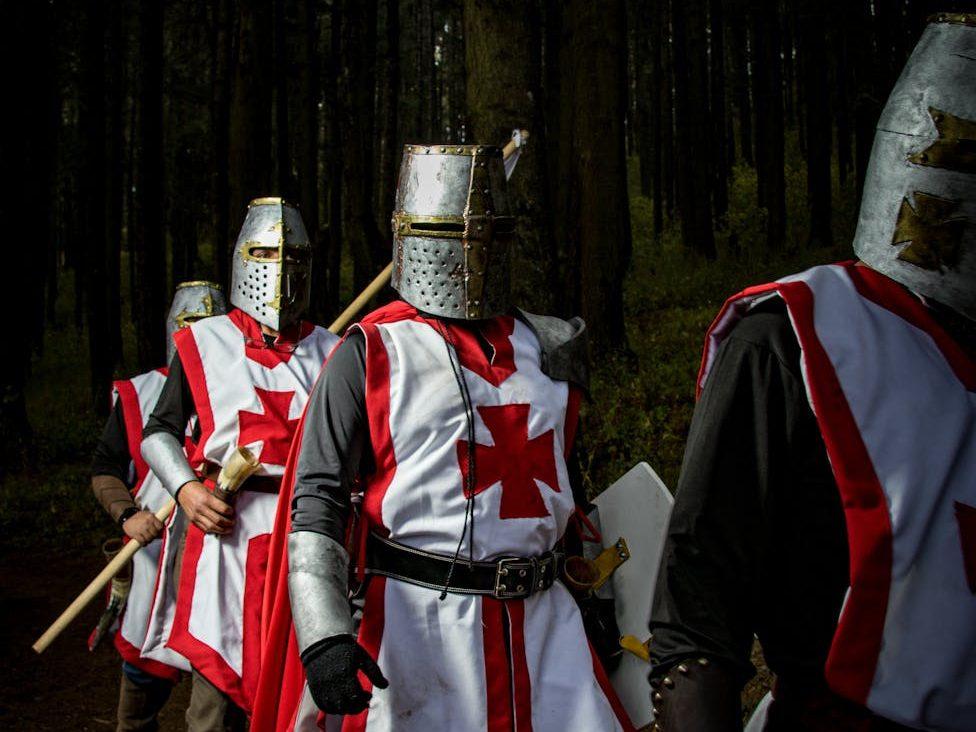
One of the most frequently cited historical events linked to Friday the 13th occurred on October 13, 1307, when King Philip IV of France (with the religious backing of Pope Clement V) ordered the mass arrest of members of the Knights Templar. The Templars had risen to significant wealth and influence during the Crusades, operating as both military defenders and financial stewards across Europe and the Holy Land. Accused of heresy, blasphemy, and other charges that many historians now view as politically motivated, hundreds were imprisoned, tortured, and later executed. While this event did not singlehandedly create the superstition surrounding Friday the 13th, it powerfully reinforced the association of that date with betrayal, downfall, and misfortune in the collective imagination.
Beyond the surface of political rivalry, the suppression of the Templars reveals a broader historical pattern: when institutions accumulate independent influence, especially influence rooted in alternative spiritual interpretations or financial autonomy, dominant authorities often respond with force. The Templars were not merely soldiers; they were custodians of sacred sites, participants in pilgrimage networks, and stewards of esoteric knowledge traditions that blended Christian devotion with mystical symbolism. Whether or not later legends about hidden wisdom are fully substantiated, the cultural narrative that grew around their persecution amplified the idea that Friday the 13th marked a dramatic rupture in spiritual and political stability.

Over time, traumatic historical moments such as this tend to crystallize into symbolic folklore. Collective memory simplifies complex power struggles into cautionary myths, and specific dates become shorthand for danger or doom. In this way, October 13, 1307 contributed to the growing unease attached to the number 13 and to Fridays more generally. Rather than representing inherent bad luck, however, the story of the Templars reflects how fear, propaganda, and political consolidation can shape spiritual symbolism. The date’s reputation emerged not from cosmic misfortune, but from human conflict and the enduring tendency to encode power struggles into the language of superstition.

Witchcraft, Women, & Fear
The clearest expression of how feminine wisdom came to be feared and suppressed appears in the witch hunts that swept across Europe and North America between the fifteenth and eighteenth centuries. During this period, tens of thousands of people—most of them women—were accused of witchcraft, imprisoned, tortured, and executed. These women were not targeted at random. Many were healers, midwives, herbalists, and community elders who held deep knowledge of plants, birth, illness, and the natural rhythms of life. Their work placed them in direct relationship with the body, the earth, and cyclical time, making them living embodiments of the very feminine wisdom that dominant religious systems increasingly sought to control.

Rather than being rooted in genuine superstition alone, historians now recognize the witch trials as emerging from a convergence of social fear, political instability, religious authority, and anxiety over women’s independence and influence. As centralized institutions worked to define acceptable forms of knowledge and spirituality, practices passed down through ancestral and nature-based traditions were labeled dangerous or demonic. Even intuition became suspect. Earth-based medicine became heresy. Spiritual authority outside sanctioned structures became a threat to the structures of religious control that were being built. The persecution of so-called witches functioned not only as moral panic, but as a systematic dismantling of feminine-led knowledge systems that had sustained communities for generations.
In this wider cultural context, the fear surrounding Friday the 13th begins to mirror the fear projected onto women themselves. Both became symbols of disorder, mystery, and danger precisely because they were connected to cycles, transformation, and embodied wisdom. The “unlucky” day and the “dangerous” woman emerged from the same narrative impulse to distance society from intuitive, cyclical, and feminine ways of knowing. What was once revered as life-giving and sacred was reframed as something to be controlled or eliminated. In recognizing this pattern, we begin to see superstition not as random belief, but as the cultural shadow of suppressed power and an echo of the deep spiritual authority women once openly carried.

Perspectives from Other Cultures
While much of the modern Western world associates Friday the 13th with fear and misfortune, many ancient cultures viewed the number 13 as a symbol of completion, transformation, and spiritual ascent. Rather than representing something broken or unlucky, it often marked a threshold, or a passage from one state of being into another. In societies that understood life as cyclical rather than linear, numbers reflected stages of growth, decay, and renewal. Thirteen became linked not to danger, but to evolution itself, a sacred step beyond the familiar into expanded consciousness and rebirth.
In ancient Egyptian cosmology, for example, life was understood as a spiritual journey composed of stages of development, with the thirteenth phase representing the soul’s transition into the afterlife and eternal transformation. Rather than fearing this stage, it was revered as the culmination of spiritual maturation: the moment where earthly experience ripened into divine continuation. Transformation was not loss, but fulfillment. Similarly, time was not something to race against, but a rhythmic progression of becoming, where endings naturally opened into new forms of existence.
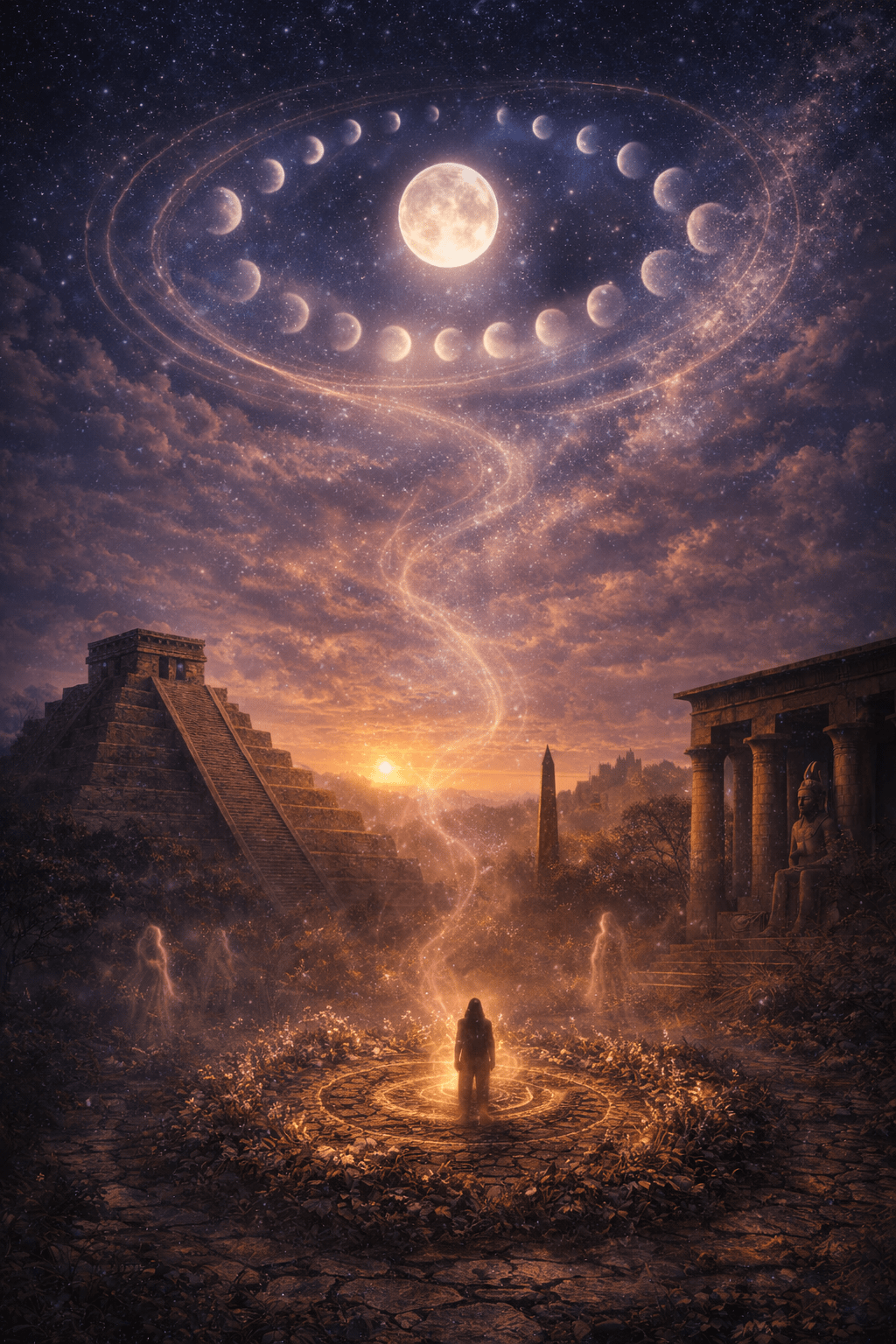
Among the Maya, the number 13 held equally profound significance, woven directly into their sacred calendar systems and cosmological worldview. Their spiritual timekeeping honored thirteen repeating cycles that reflected both lunar movement and the layered structure of the heavens. These rhythms guided ritual life, agricultural practices, and spiritual alignment, reinforcing humanity’s intimate relationship with cosmic flow. In this context, the number symbolized harmony between earth and sky, body and spirit, human life and universal order.

Reclaiming Friday the 13th
When we release the inherited fear surrounding Friday the 13th, what emerges is not danger, but opportunity. This day offers us all a sacred pause within the rhythm of time, inviting more reflection, renewal, and reconnection. Across ancient cultures, moments tied to lunar cycles and transformation were not avoided, but honored as portals of change. In this light, Friday the 13th becomes a threshold rather than a threat, offering space to realign with intuition, embodied wisdom, and the natural flow of becoming. It reminds us that transformation is not something to resist, but rather, a living process woven into every cycle of life.

Reclaiming this day does not require rigid ritual or prescribed practice. Instead, it invites personalization, presence, and gentle awareness of our own inner rhythms. The purpose is not performance, but reconnection—allowing intuition to guide what feels meaningful. Here are a few ways you might reclaim the magick of Friday the 13th:
- Create a Moon Ritual: Since the number 13 is closely tied to lunar cycles, use this day to connect with the moon. Perform a simple moon meditation or create a ritual that honors the moon’s power and your own intuition.
- Honor the Goddesses: Take time to learn about the goddesses associated with Friday, such as Frigg and Venus. You can create an altar or offer a prayer to honor their qualities of love, beauty, and transformation.
- Embrace Transformation: Friday the 13th is a day for embracing change. Reflect on areas of your life where you’re ready for transformation. Journal, meditate, or engage in a creative practice to set intentions for personal growth.
Ultimately, reclaiming Friday the 13th is an act of cultural remembrance and personal empowerment. It invites us to step beyond superstition and into a deeper relationship with cycles of change, creativity, and renewal. By honoring this day as sacred rather than unlucky, we gently dissolve narratives rooted in fear and replace them with awareness, reverence, and self-trust. In doing so, we participate in a broader restoration of feminine wisdom as a living force that continues to shape how we heal, grow, and move in harmony with the natural world.

Conclusion: Reclaiming Friday the 13th Means Reclaiming the Divine Feminine
What may begin as a day wrapped in superstition reveals itself, upon deeper reflection, to be a forgotten expression of sacred rhythm. It now provides us an opportunity to see beyond fear, offering us the chance to become rooted in the timelessness of lunar cycles, embodied knowledge, and humanity’s original relationship with transformation. True, reverence slowly gave way to fear as cyclical wisdom was replaced by rigid narratives of control. Yet, beneath those layers of cultural rewriting, the sacred meaning has and will always endure (as truth does).
As we remember the goddess traditions that honored Friday, the lunar symbolism woven into the number thirteen, the historical moments that reinforced superstition, and the suppression of feminine-led wisdom, a clear pattern emerges—not of bad luck—of power displaced and reframed. Each myth surrounding this day mirrors humanity’s broader departure from intuitive living and sacred relationship with nature. However, in recognizing this shift, we can consciously choose a new relationship with time, transformation, and our own inner wisdom.
Meditation Practice
Take your practice to the next level, & the next… With a Year and a Day commitment.

May we all learn to meet Friday the 13th not with hesitation, but with reverence. May we allow it to serve as a gentle reminder that cycles guide growth, transformation births renewal, and intuition holds ancient intelligence. For truly, as we step back into harmony with sacred rhythm, we restore not only forgotten traditions, but our own capacity to live with more awareness, trust, and grace. Through remembrance, reclamation, and embodied connection, we participate in the quiet healing of cultural memory—honoring feminine wisdom as the living, regenerative force it has always been.
Thank you for joining us here on Onescence! If you enjoyed this article, please consider supporting our free, online periodical by purchasing one of our products through Onesce Press. Given your interest in ancient wisdom and personal sovereignty, perhaps you would benefit from:
Moon Cycle Journey
JOURNAL FEATURES:
- Learn about the rhythms of the lunar cycle and how to apply them to your own journey.
- Explore your cycle goals, developing and working with your own authentic intentions.
- Discover the power of personal feedback for enhancing and sustaining progress.
- Utilize daily/nightly journal prompts that are designed to bring out your best.
- Experiment with simple ritual ideas and when to employ them throughout the cycle.
- And so much more…
You can also get your copy on Amazon and begin your journey with the next moon cycle!