

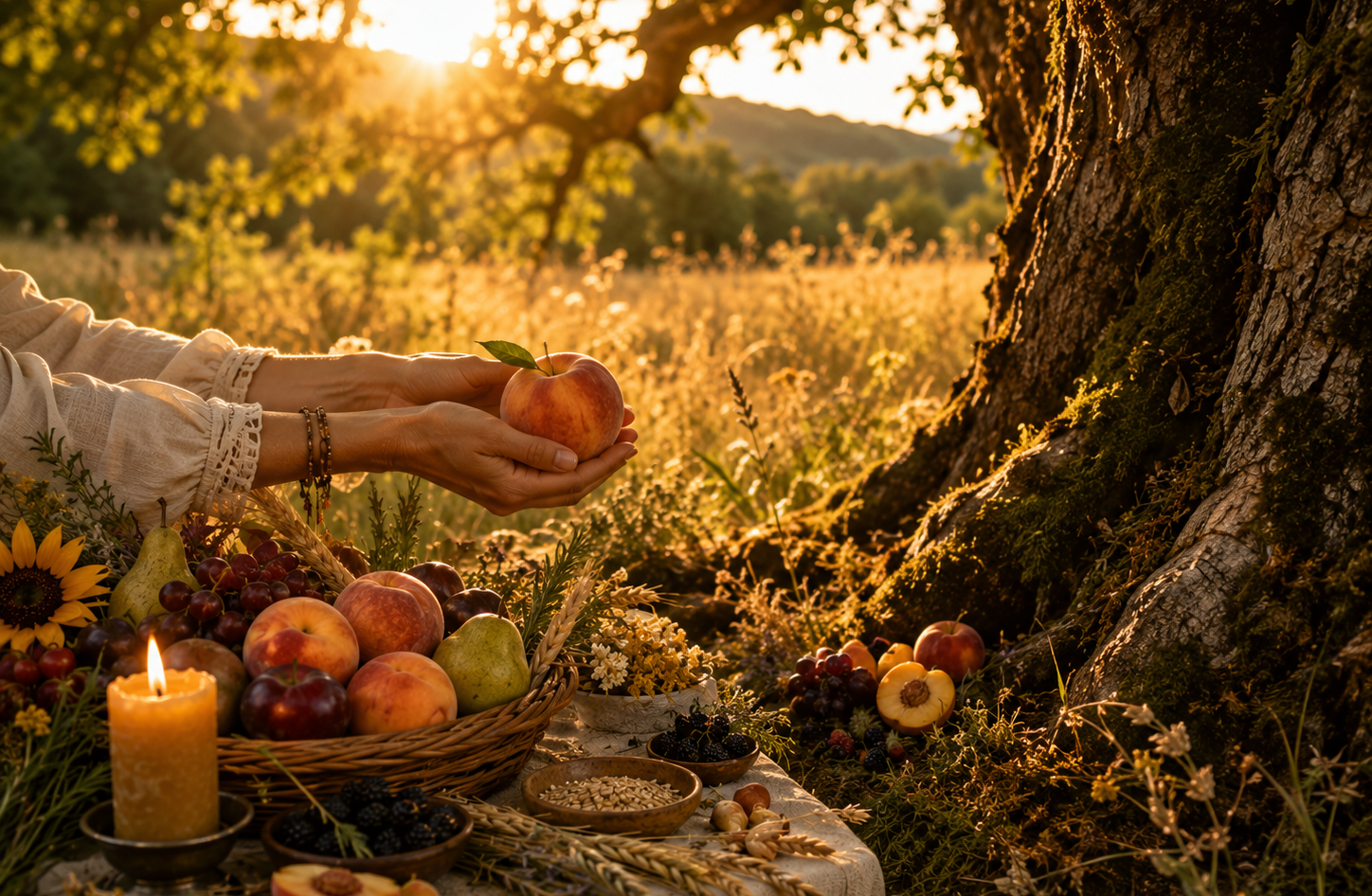
The rhythm of the seasons becomes deeply comforting when we allow ourselves to flow with them and honor them. This is especially true as summer begins to soften and the first signs of harvest appear. The fruits are ripe, the fields are full, and the light carries a golden warmth that reminds us how much life has offered us in this vibrant season. Lughnasadh, the festival of the first harvest, invites us to pause and recognize that abundance.
One of the most heartfelt ways to celebrate this seasonal turning point is with a personal First Fruits Ceremony. Rooted in ancient agricultural customs and spiritual reverence, this ritual honors the earth’s generosity while helping us reconnect with our own intentions, gratitude, and growth. Whether practiced outdoors or in a quiet corner of your home, it’s a chance to slow down, say thank you, and mark the moment in a sacred way.
Sabbat Activity Booklet
Get your free copy of this printable PDF, designed to help you explore any of the Pagan Sabbats!
Let’s explore each step of creating our own ceremony, from preparing our space to offering the fruit with intention. Whether you’re new to seasonal rituals or simply seeking a meaningful way to celebrate the first harvest, this practice offers a gentle, grounding invitation to honor the cycle of giving and receiving.

Preparing for the Ceremony
Before beginning your First Fruits Ceremony, take some time to prepare both your surroundings and your mindset. The atmosphere you create will help shape the energy of your ritual, allowing you to feel present, open, and aligned with the deeper meaning of the season.
Choose a space that feels peaceful and intentional. This could be an outdoor location like a garden, forest clearing, or park bench where the sounds, scents, and sights of summer can surround you. If you’re indoors, set up near a window or bring nature in with flowers, fruits, or symbolic items that connect you to the season. Wherever you are, let your space reflect your reverence for the season.

Once you’ve chosen your spot, create a simple altar or focal point using seasonal elements. Wheat stalks, sunflowers, grasses, or handmade decorations can help anchor the theme of the first harvest. A cloth in earthy tones, a candle to represent the lingering strength of the sun, and a bowl or basket for your fruit offerings can all add meaning without needing to be elaborate.
As you arrange your space, begin to attune to your intention. You might light a candle or waft some gentle incense to cleanse the space and signal the beginning of something sacred. Take a few deep breaths. Settle into the energy of late summer. This ceremony is a quiet but powerful celebration that offers us a chance to listen to the land, honor our journeys, and mark the shifting of seasons with presence and gratitude.

Gather Your First Fruits
The heart of a First Fruits Ceremony is, quite literally, the fruit. These offerings represent the gifts of the earth, the culmination of seasonal cycles, and the visible rewards of patience and care. Choosing them with thoughtfulness brings deeper meaning to the ritual.
Look for fresh, local produce if possible, choosing items that reflect the land where you live and the moment in time you’re honoring. Berries, apples, grapes, peaches, or plums are all traditional, but what matters most is their connection to your environment and their resonance with the season. Even a single piece of fruit, selected with intention, can serve as a powerful symbol.
As you gather your offerings, consider their colors, textures, shapes, and scents. A golden peach might represent joy or fulfillment. A cluster of grapes could symbolize community or abundance. You may choose fruits that align with personal milestones, emotional growth, or creative harvests you’ve experienced in recent months. Let each item become a mirror of something you’re grateful for.

If you wish, you can add herbs, seeds, or grains to your collection as tokens of the harvest that extend beyond fruit alone. A sprig of rosemary for remembrance, a handful of oats for sustenance, or a few garden vegetables can enrich the symbolic depth of your altar. The goal is not perfection, but presence.
As you gather your first fruits, do so with a spirit of mindfulness and respect. These offerings will carry your gratitude, your prayers, and your celebration. Let them speak of the season’s generosity, and of your readiness to receive it.

First Fruits Ceremony
Once your space is prepared and your offerings gathered, you’re ready to begin. This ceremony unfolds in three sacred segments: centering yourself in presence, expressing your gratitude, and returning blessings to the earth.
Step 1: Center Yourself & Open the Ceremony
Begin by taking a comfortable seat near your altar or in your chosen space. Allow your body to settle and your mind to relax into presence. With eyes closed or softly focused, take several deep, even breaths. Feel your connection to the earth beneath you and the season around you: the warmth in the air, the scent of the ripe fruit, and the hum of late summer life.

Silently or aloud, speak an invocation to open the space. You might call on the energy of Lughnasadh, the spirit of the land, your ancestors, deities, or simply the wisdom of nature itself. If no words come, your intention is enough. This is your threshold moment, a turning point from everyday awareness into sacred celebration.
Step 2: Offer the Fruits with Gratitude
Pick up your first fruit and hold it in both hands. Observe its color, weight, and texture. As you breathe in its scent, reflect on what this fruit represents for you. It might symbolize a goal reached, a lesson learned, a relationship nourished, or a harvest of the heart. Speak your gratitude aloud, whisper it into the air, or simply feel it in your body.
Repeat this process with each offering, placing the fruits one by one on your altar or central space. Allow this to be slow and intentional. Each placement is a gesture of reverence, serving as a way to say thank you to the earth, to your efforts, and to the unseen forces that support you. With our presence and intentions, this simple ritual becomes a symbolic representation of our blessings.
Step 3: Return the Gifts to Nature
When your offerings are complete, take a portion of the fruits (small slices, seeds, peels, or whole pieces) and prepare to return them to the earth. If you’re outdoors, gently place them at the base of a tree, into the soil, or in a natural body of water if appropriate. As you do, offer your thanks, either aloud or silently. Imagine your gratitude flowing back into the land, feeding the cycle from which it came.

If you’re indoors, visualize this act as clearly as you can. You might place part of your offering in a bowl to later compost or dispose of respectfully. You can also pair this moment with an affirmation or blessing, such as: “As I give back, I honor the balance of receiving and releasing.” This step is a reminder that what we receive, we must also return. It’s a gentle act of reciprocity and as such, an offering not only of fruit, but of love, humility, and belonging.
The ritual is now complete: you’ve opened your heart to the season, honored the cycles of growth and harvest, and offered your gratitude back to the world that made it possible. These steps bring the ceremony into full expression: grounded in presence, rich with symbolism, and woven with intention.

Reflections & Blessings
After your offerings are made and your gratitude has been expressed, let the ceremony come to a close with some stillness. Allow yourself time to absorb the energy you’ve cultivated, tended, and harvested from your own heart to return to the earth with love and appreciation. Notice how you feel and offer a final blessing in whatever form feels right to you. It might be a spoken prayer, a whispered affirmation, a simple bow of the head, or a heartfelt “thank you” directed to the land, the season, or life itself.
You may choose to thank any energies, deities, or symbolic presences you invoked at the beginning of your ritual. You might also close with a gesture—extinguishing a candle, ringing a bell, or touching the earth—to mark the transition from ceremony back into everyday life. If you’d like, take a few minutes to reflect in a journal.

Consider asking yourself:
- What are you harvesting, both physically and spiritually?
- What are you ready to share?
- What are you still tending?
Let these insights guide your next steps throughout the late summer season, carrying this clarity with you as a thread of intention that can be woven into your daily rhythm. Your First Fruits Ceremony is not just about this one day, but rather, serves as an ongoing reminder to keep honoring what you’re growing, receiving, and returning all year long.

Celebrating with First Fruits Means Expressing Our Gratitude for Nature’s Abundance
The First Fruits Ceremony is a practice of presence, gratitude, and sacred participation in the ongoing dance of life. By honoring the first harvest through intentional offerings and reflection, we align ourselves with nature’s rhythms and recognize the quiet abundance that surrounds us.
Lughnasadh reminds us that every harvest, no matter how large or small, is worthy of celebration. Whether you’re gathering fruits from the land or insights from your journey, this ceremony offers a space to pause, give thanks, and reconnect with the deeper meaning behind what you’re cultivating.
Sabbat Activity Booklet
Get your free copy of this printable PDF, designed to help you explore any of the Pagan Sabbats!
As you move forward, let the energy of this ritual stay with you. Let it inspire your choices, nourish your spirit, and root you in the understanding that your life is part of something sacred and cyclical. The more we honor these moments, the more fully we step into our own season of abundance with open hands, full hearts, and a renewed sense of connection to the world that holds us. Blessed Lughnasadh, and may your harvest continue to ripen with joy!
Thank you for joining us here on Onescence! If you enjoyed this article, you can help support this free periodical by becoming an Insider Member or purchasing one of our products through Onesce Press. Given your interest in transformation and personal sovereignty, perhaps you would benefit from:
Meditation Practice
LOGBOOK FEATURES:
- Your companion on a 366-Day adventure in devotion and commitment.
- Developed with the Year and a Day framework to challenge and inspire.
- Simple and straightforward logging with space for key intentions and reflections.
- Enjoy the benefits of tracking your progress and the details of your practice in one place.
You can also get your copy on Amazon. Don’t wait, take your practice to the next level:
