


Duration: 12 minutes
Even when we know we need a break, finding effective stress relief in the middle of life’s many challenges can feel like just another task on a never-ending list. On top of that, stress doesn’t always show up as chaos, sometimes it arrives quietly: building tension in our shoulders, tightening our chest, or fogging up our thoughts until we feel disconnected from ourselves. That’s where accessible and effective breathing exercises come in to provide much needed calm and relaxation.
Our breath is a powerful ally in helping us navigate difficulties. It’s always with us, always available, and surprisingly effective. Through mindful breathing techniques, we can shift our internal state in a matter of moments. It’s been shown to quiet the mind and sooth the nervous system, signaling to our bodies that we are safe to relax.
Need Stress Relief Right Now? Try:
Let’s explore five simple breathing techniques for stress relief. Whether you’re feeling overwhelmed, restless, or just need a mental reset, these practices are easy to learn, quick to use, and deeply restorative. You don’t need a special setting or any prior experience, just a few minutes and your breath.

#1: Deep Belly Breathing
When stress rises, our breath is often the first thing to change—becoming shallow, rapid, or held without our awareness. Deep belly breathing, also known as diaphragmatic breathing, invites us to reverse that pattern. It grounds us in the body, slows down the mind, and activates the parasympathetic nervous system (our body’s natural state of calm and relaxation).
To begin, find a comfortable seated or lying position. Place one hand on your chest and the other on your belly. Inhale slowly through your nose, allowing your belly to expand under your hand as the breath fills all the way into your lower lungs. Then, exhale gently through your mouth, feeling your belly fall as tension leaves the body with the breath. Let the pace of your breathing be smooth, even, and unforced, as you continue this pattern for a few minutes.

This type of breathing helps shift awareness out of the thinking mind and into the body. It can ease physical tension, lower heart rate, and bring a sense of presence during moments of overwhelm. Even just a few minutes of deep belly breathing can re-center your energy, helping you meet the next moment with more clarity and control.
Try practicing this technique when you wake up, during a midday reset, or before bed. The more often you return to it, the more natural it becomes. With each breath, you remind your body that it’s safe to relax, and that calm is always within reach.

#2: Box Breathing
When stress leaves you feeling scattered or unsteady, box breathing offers structure and calm. This simple technique brings balance back to the breath—and, in turn, to the mind—by guiding it through four equal phases: inhale, hold, exhale, hold. It’s like tracing the sides of a square with your breath (hence the name), and offers a sense of rhythm or containment in moments that feel overwhelming.
To begin, inhale slowly through your nose to a count of four. Hold your breath gently at the top for another count of four. Exhale slowly through your mouth to the same four-count, and then hold your breath out for four more. That completes one round. Repeat the cycle for three to five minutes, or until you begin to feel your thoughts slow down and your body relax.
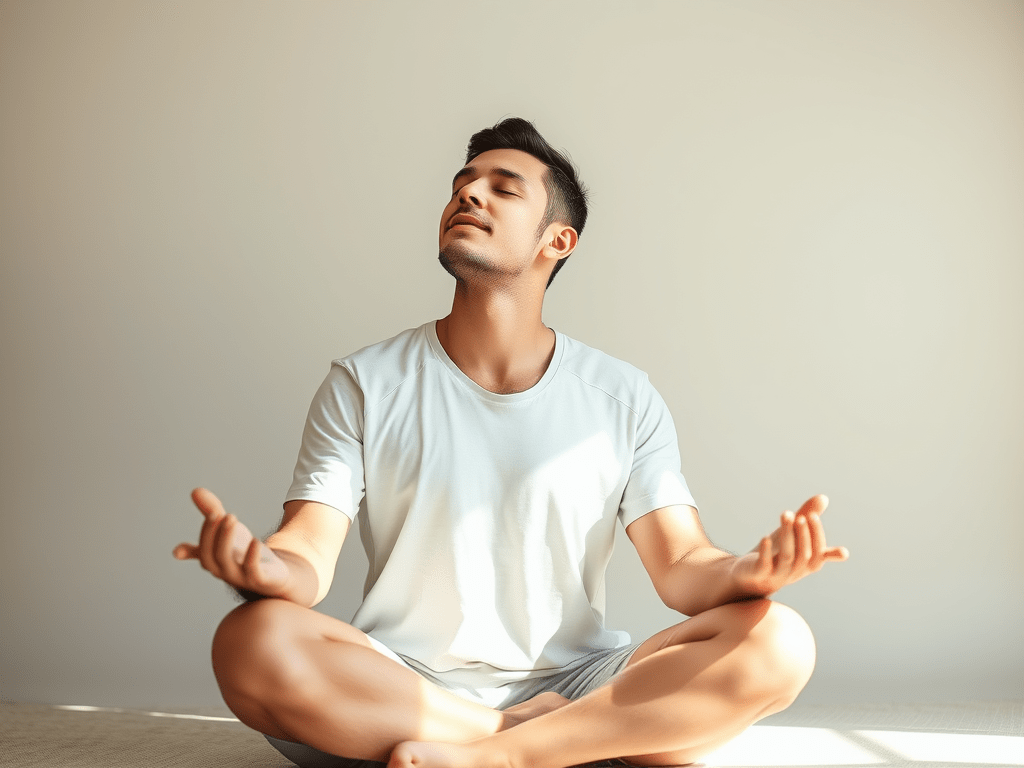
Box breathing is a favorite among high-performers, from athletes to first responders, because it helps restore focus and reduce reactivity under pressure. It’s also just as useful in everyday situations, like: before a meeting, during a stressful conversation, or while winding down after a hard day.
The steady rhythm of this practice helps train your nervous system to find safety in stillness. Each breath becomes a reassuring frame, acting as a gentle boundary, and reminds you that you are safe, centered, and in control.

#3: 4-7-8 Breathing
When stress becomes overwhelming or anxiety feels close to the surface, extending the exhale can offer immediate relief. The 4-7-8 breathing technique slows the heart rate, quiets racing thoughts, and helps ease the body into a more relaxed state—often within just a few cycles.
To begin, sit comfortably with your spine tall and shoulders relaxed. Inhale gently through your nose for a count of four. Then, hold the breath in for a count of seven. Finally, exhale slowly and completely through your mouth for a count of eight, allowing the breath to leave the body with a soft whooshing sound. That completes one round. Repeat this pattern three to four times, keeping your attention on the calming rhythm of the breath.
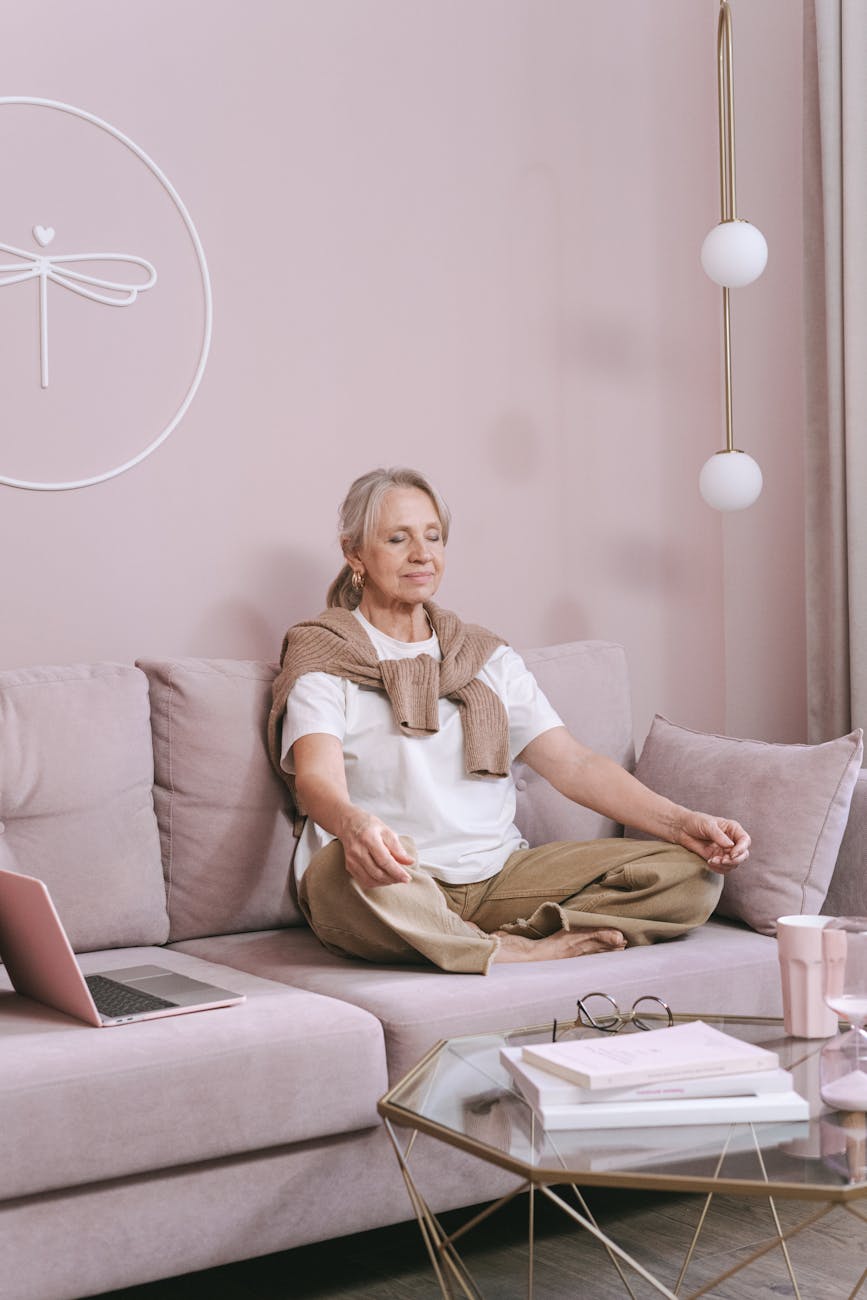
The power of this technique lies in its extended exhale, which activates the body’s parasympathetic response and helps release built-up tension. Holding the breath in the middle of the cycle also gives the mind a moment of stillness, teaching us how to pause between reactions, and creating space where clarity can return.
4-7-8 breathing is especially effective in the evening, when transitioning from stimulation to rest, or anytime you need to reset after a stress-triggered reaction. Think of it as a gentle internal shift, guiding you from effort to ease, and from tension to trust.

#4: Alternate Nostril Breathing
Sometimes stress throws us off-center, leaving us feeling either scattered and anxious or sluggish and unmotivated. Alternate nostril breathing, a technique rooted in yogic pranayama tradition, helps restore internal balance by guiding the breath evenly through both sides of the body and brain. It’s a simple yet powerful way to bring clarity, calm, and energetic equilibrium into our experiences.
To begin, sit comfortably with your spine upright. Gently close your right nostril with your right thumb and inhale slowly through your left nostril. Then, close your left nostril with your ring finger, release the right nostril, and exhale fully through the right. Next, inhale through the right nostril, close it, and exhale through the left. That completes one round. Continue this alternating pattern for several minutes, breathing slowly and evenly throughout.

This breathing exercise quiets the mind while regulating the nervous system. Many people notice a gentle shift in their energy, often feeling more calm and centered within just a few cycles. For additional support, you can also try some variations: breathing only through the left nostril to promote coolness and calm, or only through the right nostril to generate warmth and motivation.
Alternate nostril breathing can be especially helpful during transitions, like: before meetings, after travel, or when you need to ground yourself emotionally. It reminds the body that balance isn’t something we have to chase, it’s something we can simply breathe into, one moment at a time.

#5: Counted Breathing
Not every moment of stress requires a complex technique. Sometimes, the simplest practices are the most powerful. Counted breathing offers an easy, accessible way to shift your focus, anchor your attention, and invite calm and relaxation into your body—no matter where you are or what you’re facing.
To begin, inhale slowly through your nose to a count of four. Hold the breath gently at the top for a count of four, then exhale through your mouth to a count of six. Repeat this rhythm for several rounds, adjusting the counts if needed to match your natural breath. As you settle into a pattern, notice how your attention begins to steady and your body starts to release tension.

This technique is effective because it gives the mind something clear and consistent to follow. The longer exhale helps calm the nervous system, while the act of counting keeps mental distractions at bay. It’s a simple invitation back into the present moment, helping us navigate our way out of reactivity and into calm awareness.
You can practice counted breathing anytime: in a moment of anxiety, during a pause between tasks, or as part of your morning or evening routine. With each breath, let yourself acknowledge that stress relief doesn’t have to be complicated, it only requires us to be intentional.

Conclusion: Empowerment Lives in Every Breath
Stress may be part of life, but how we respond to it is something we can choose. Every time we pause to breathe with intention, we interrupt the cycle of overwhelm and return to a more grounded, capable version of ourselves. These breathing exercises offer simple, reliable ways to create that space—whether we’re using deep belly breathing to settle in, box breathing to find stability, or 4-7-8 breathing to let go of tension.
In moments when we feel scattered or overstimulated, alternate nostril breathing can bring us back into balance, while counted breathing gives us something steady and soothing to focus on regardless of the circumstances we might find ourselves in. That’s the beauty of breath: each technique meets us where we are, offering peace and clarity without needing anything more than a few quiet minutes.
Calm and relaxation are not things we have to do, they’re gifts of self-care that we can create, even when we have no other tools available to us but our breath. You don’t need the perfect setting or a lengthy routine. Truly, even one intentional breath can be the beginning of real change. Start with what feels easy, stay curious, and let your breath guide you.
Mindful Meditation
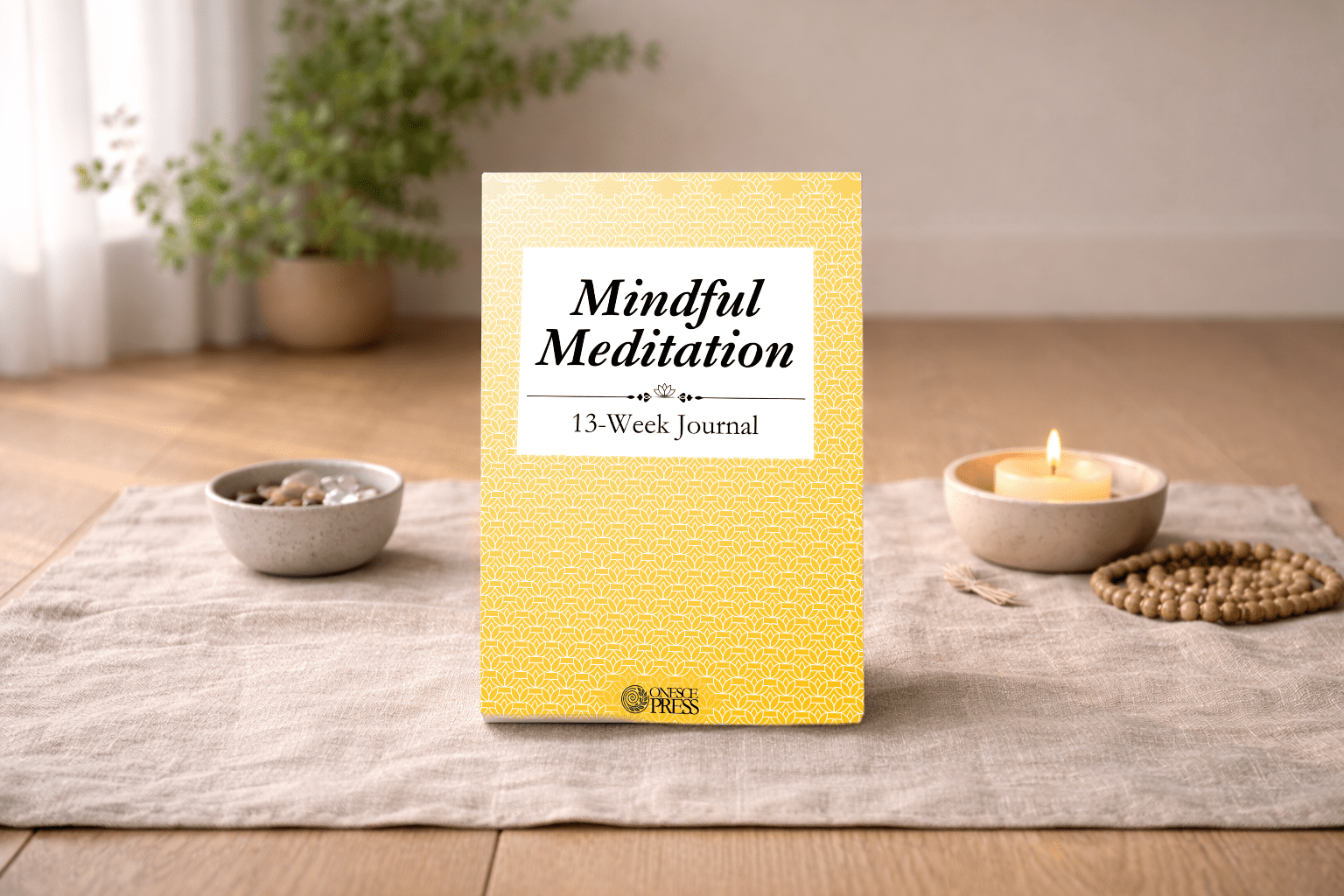
JOURNAL FEATURES:
- Your companion on a 13-Week journey of discovery and personal growth.
- Soothe the “monkey mind” and record details about your meditation experiences.
- Honor responsibilities and distractions, then tap into what your subconscious is doing.
- Watch your new devotional practice grow organically as you give yourself the grace to show up, just as you are.
Give yourself the gift of more mindfulness. You can also find this journal on Amazon!