
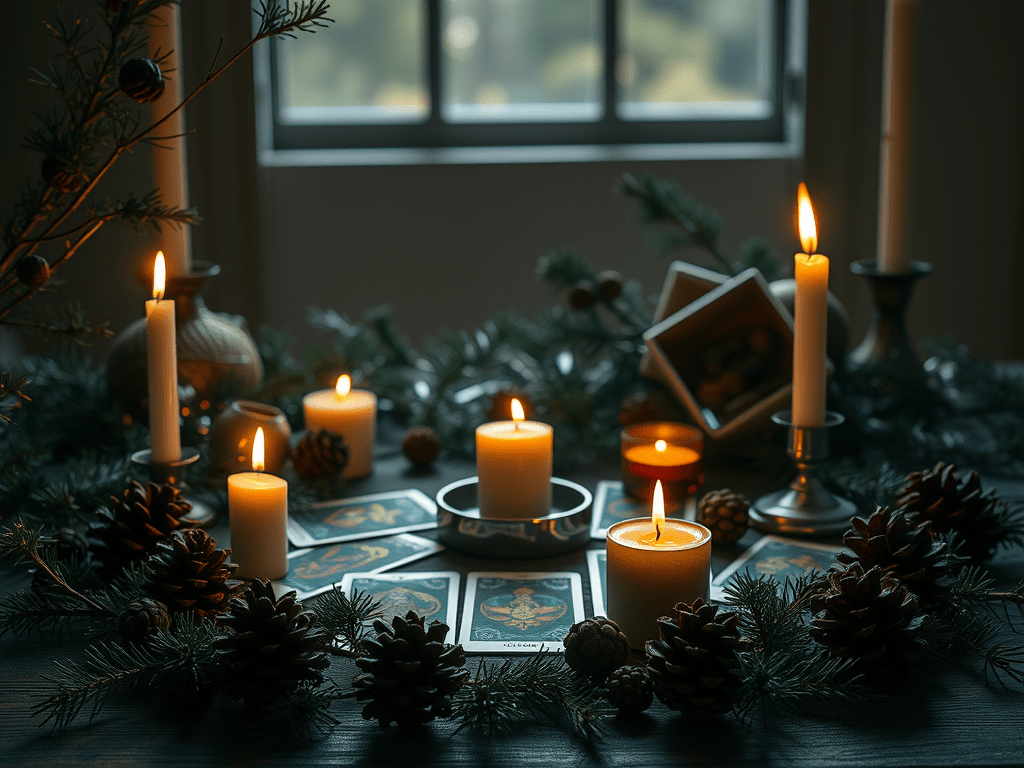
The transition from Yule to the New Year is a powerful time for reflection, intention, and renewal. As the Wheel of the Year turns, we are invited to honor the themes of letting go and welcoming new beginnings. These dual energies—release and renewal—mirror the natural cycles of light and dark, offering us a chance to realign with the rhythms of life.
Let’s keep exploring the symbolism of this pivotal season, including some guidance for crafting our own personal New Year’s ritual. As a bonus, we’ve also included a New Year’s tarot spread at the end to help inspire both insight and clarity for you this season.

The Symbolism of the Season
Letting Go: The Dark Half of the Year
As Yule marks the Winter Solstice, we are reminded of the darkest night of the year and the importance of embracing stillness and introspection. This is a time to reflect on the past year, acknowledge lessons learned, and release what no longer serves us. Just as the sun begins its return, we too are invited to shed burdens and make space for growth.
Welcoming New Beginnings: The Return of Light
Yule celebrates the gradual increase in daylight following the Solstice. Traditionally, this rebirth of the sun symbolizes hope, renewal, and the potential for transformation. Hence, why this is a season of setting intentions, planting seeds for the future, and envisioning the year ahead with optimism and clarity.
By blending these contrasting themes of release and renewal, we can create meaningful personal rituals that bridge the reflective nature of Yule with the forward-looking energy of the New Year. This delicate balance is both reflective and intentional, honoring what’s gone and what’s yet to come, just as many of the sacraments of old have sought to do.
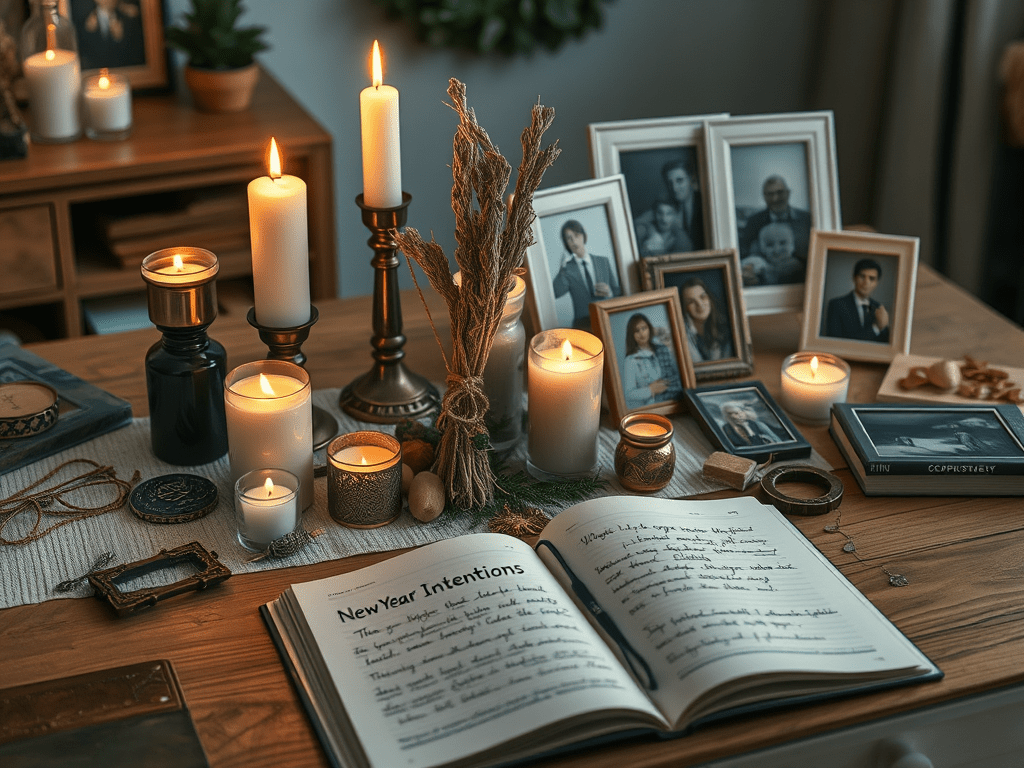
Crafting a Ritual for the New Year
A New Year’s ritual provides a sacred space to honor the past, celebrate the present, and set intentions for the future. Below you’ll find detailed guidance for crafting a ritual tailored to your own personal or group needs.
Tools and Preparations
Here are some ideas that you can use for your ritual, as well as to create an intentional and sacred atmosphere:
- Sacred Space: Choose a quiet and comfortable location where you won’t be disturbed. Decorate with seasonal elements like evergreen branches, pinecones, or Yule symbols.
- Candles: Representing the returning light. Choose colors that resonate with your intentions (e.g., white for clarity, green for growth, gold for abundance).
- Herbs or Incense: Sage, cedar, or lavender for cleansing; cinnamon or frankincense for blessings.
- Journal and Pen: For reflection and intention-setting.
- Crystals: Sunstone, citrine, or clear quartz to amplify energy.
- Bowl of Water or Salt: For purification.
- Tarot or Oracle Cards: For divination and insight.

Basic Ritual Structure
1. Cleansing and Grounding
- Begin by cleansing your space with smoke, sound, or visualization. Light your chosen herbs or incense, and move through the space with the intention of releasing stagnant energy.
- Ground yourself by sitting comfortably and taking three deep breaths. Visualize roots extending from your body into the Earth, anchoring you in the present moment.
2. Reflection
- Light a candle and spend time journaling about the past year. Consider the following prompts:
- What challenges did I face, and what lessons did I learn?
- What am I ready to release as I move forward?
- What moments brought me joy, growth, or connection?

3. Release
- Write down anything you wish to release on a small piece of paper. Burn it in a fireproof dish or cauldron, watching the smoke carry your burdens away.
- Speak or think an affirmation, such as: “I release what no longer serves me and make space for new possibilities.”
4. Intention-Setting
- Light another candle to symbolize the returning light. Reflect on what you wish to invite into your life in the coming year.
- Write your intentions in your journal or on slips of paper to place on your altar. Use affirmations to anchor these intentions, such as: “I welcome growth, abundance, and clarity into my life.”

5. Celebration and Gratitude
- Conclude the ritual by expressing gratitude for the lessons of the past and the opportunities ahead. Speak your gratitude aloud or write it in your journal.
- If in a group, invite each participant to share a reflection or intention, creating a circle of support and connection.
6. Closing the Ritual
- Snuff out the candles and offer a closing affirmation, such as: “The cycle continues, and I step forward with trust and hope.”
- Spend a few moments in stillness or meditation to integrate the experience.

Ideas for Group Ceremonies
- Create a playlist of calming or inspirational music to set the mood.
- Incorporate movement, such as yoga or dancing, to embody the energy of release and renewal.
- Open with a shared cleansing ritual, such as passing around a bowl of water for each participant to symbolically wash away the past.
- Guide the group through visualization techniques to help them imagine their intentions taking root and growing throughout the year.
- Include a circle of reflection, where each person shares a word or phrase that captures their hopes for the New Year.
- Collaborate on a communal altar, adding symbols, offerings, or intentions contributed by each participant.

A New Year Tarot Spread
Tarot is a powerful tool for reflection and intention-setting. This New Year spread incorporates the cycle of the year and the energy of the Sabbats, offering insights into what lies ahead in a spiraling and dynamic pattern.
Card Placement and Meanings
Refer to the image above for clarity on the card placements when/if necessary.
- Center (Reflection Card): Represents the energy you are carrying into the New Year as reflections of this past solar cycle.
- Right (Ostara): The first quarter-day Sabbat, carrying the potential for growth and awakening. Representing either the time of year around the Spring Equinox (March 20th in the Northern Hemisphere), what you are nurturing/encouraging to grow this year, or perhaps both.
- Bottom (Litha): The second quarter-day Sabbat, carrying the energy of fulfillment and the peak of energy. Representing either the time of year around the Summer Solstice (June 21st in the Northern Hemisphere), what climax in energy you can expect this year, or perhaps both.
- Left (Mabon): The third quarter-day Sabbat, symbolizing balance, gratitude, and release. Representing either the time of year around the Fall Equinox (September 20th in the Northern Hemisphere), what you are balancing/releasing this year, or perhaps both.
- Top (Yule): The fourth quarter-day Sabbat, carrying the potential for renewal and the return of light. Representing either the time of year around the Winter Solstice (December 21st in the Northern Hemisphere), what you are completing and celebrating this year, or perhaps both.
- Top Right (Imbolc): The first cross-quarter-day Sabbat, symbolizing inspiration and preparation. Representing either the time of year around this first fire festival (February 1st in the Northern Hemisphere), what you are seeding with your intentions this year, or perhaps both.
- Bottom Right (Beltane): The second cross-quarter-day Sabbat, carrying the energies of passion and connection. Representing either the time of year around this second fire festival (May 1st in the Northern Hemisphere), what you are excited by or partnering with this year, or perhaps both.
- Bottom Left (Lammas): The third cross-quarter-day Sabbat, symbolizing harvest and abundance. Representing either the time of year around this third fire festival (August 1st in the Northern Hemisphere), what you can expect to “harvest” as a result of your work this year, or perhaps both.
- Top Left (Samhain): The final cross-quarter-day Sabbat, carrying the energies of reflection and ancestral wisdom. Representing either the time of year around this final fire festival (October 31st in the Northern Hemisphere), what the outcome of your intentions will be this year, or perhaps both.
- Crossing Card (Intentions): Placed perpendicularly across the first, center card, it represents the overarching intentions you should have for the entire year. This will also add further insights into how to make the best use of the reflections of the past.
Using the Spread
- Lay out the cards in the order described, forming a spiraling circular pattern with the center card finally crossed by the tenth card.
- Reflect on each card’s placement and meaning, journaling your insights as you go.
- Use the last, crossing card to tie your intentions together; look for a guiding theme for the year ahead and consider several possible messages for each card placement.

Final Thoughts: A Personal New Year Ritual Can Deepen Our Connection to Both Past and Future
The New Year is a time of transformation, offering us the chance to honor the past, embrace the present, and step confidently into the future. By crafting a personal ritual and using tools like the tarot, we align ourselves with the natural cycles of renewal and light.
As you welcome the New Year, may your rituals bring clarity, connection, and inspiration. May we all embrace the cycles of life, and let each turning point guide us toward our highest potentials. Wishing you a bright and blessed New Year, filled with intention and joy!