

In the ancient Egyptian world, Ma’at was more than a goddess, representing the very principle of harmony that held creation together. Symbolized by the ostrich feather that crowned her head, Ma’at embodied truth, justice, and balance. Her presence ensured that the sun rose each day, that the Nile flowed in its season, and that the universe remained ordered rather than collapsing into chaos. To live in alignment with Ma’at was not only a spiritual aspiration but a sacred duty, binding both rulers and ordinary people to the same laws.
As the personification of universal order, Ma’at is as much principle as personality, existing simultaneously as divine being and cosmic law. She appears in the judgment scenes of the Book of the Dead, where the hearts of the departed were weighed against her feather to determine their destiny. In this role, she reminds us that balance is the very measure of a life well-lived.
Authentic Routines
Take regular, inspired, & adaptable steps towards your long-term goals!

When we turn to the heavens and the cycles of the year for guidance, we find echoes of Ma’at’s truth. The scales of Libra, the equal light of the Autumn Equinox, and its threshold of descent into darkness all continue to reflect her archetypal wisdom. She presides over the cosmic order of ancient Egypt, but also represents wisdom that extends far beyond any one time or ideology, presiding over the universal rhythms of harmony, reciprocity, and truth that guide the bounds of life itself.
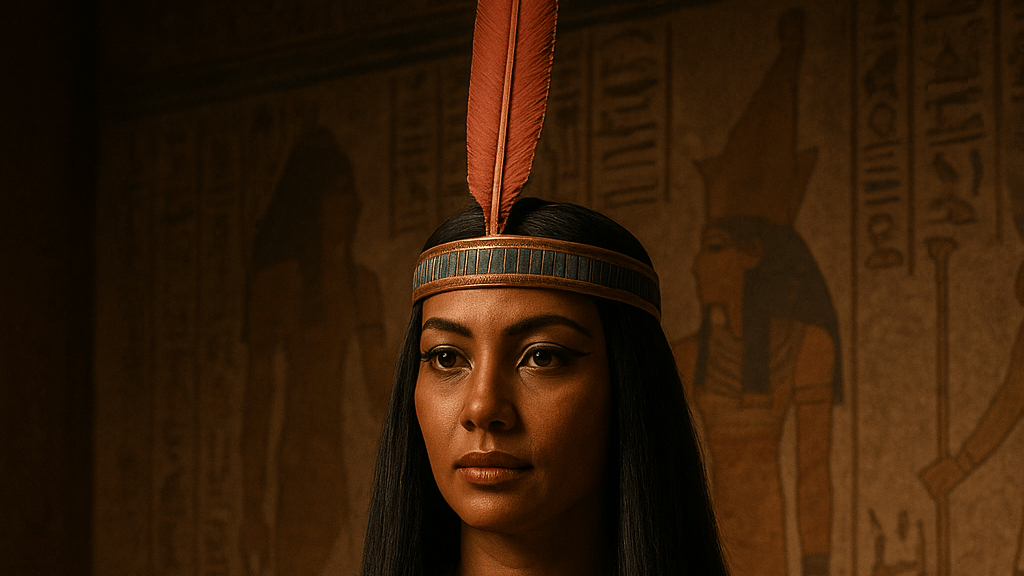
Ma’at’s Essence: The Feather of Truth
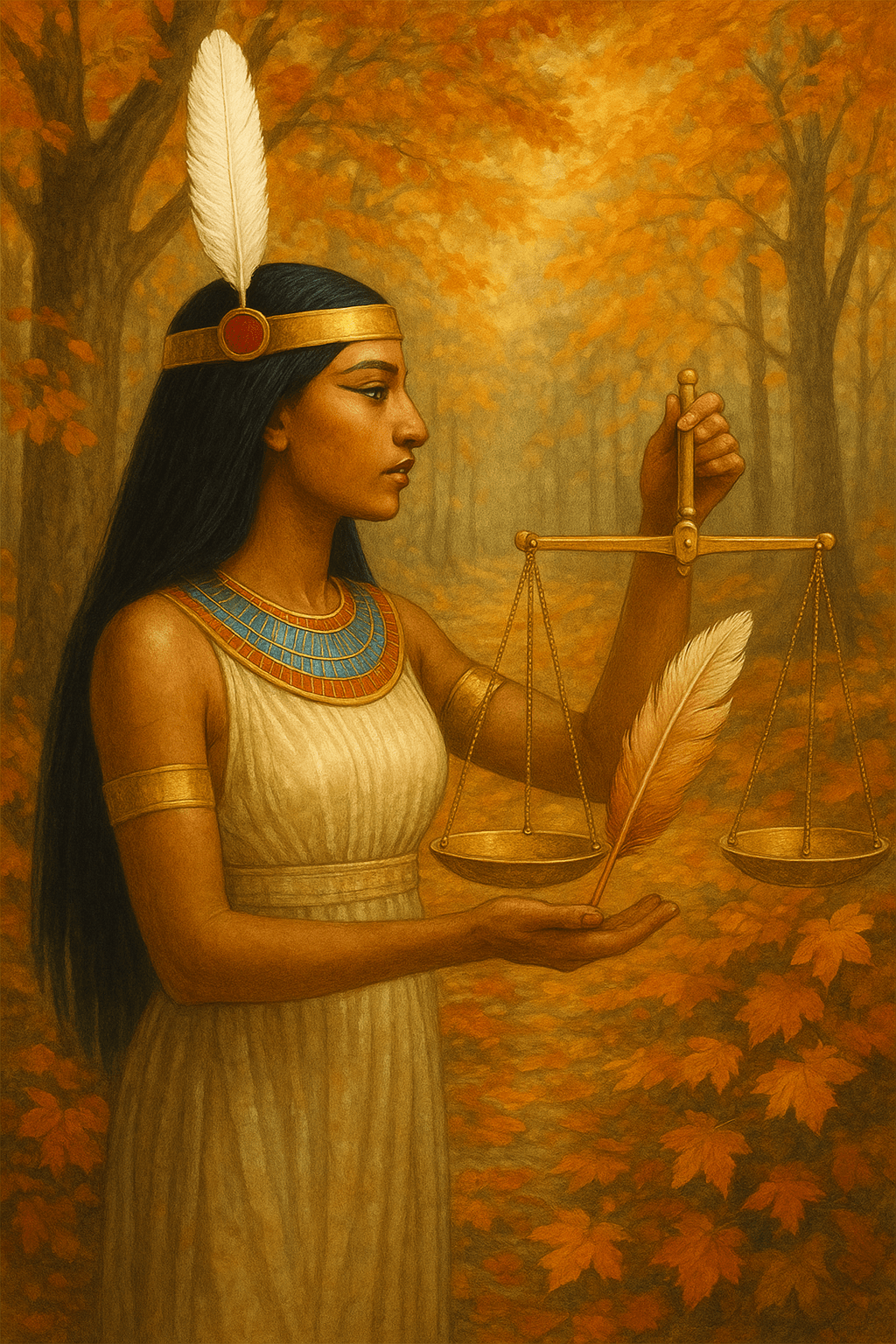
At the heart of Ma’at’s archetype lies her feather, an ostrich plume that both adorns her as a crown and serves as her defining emblem. In Egyptian cosmology, the feather is not a mere ornament but the living symbol of truth, balance, and alignment with the eternal order of the cosmos. Light yet steady, delicate yet powerful, it represents the principle that even the vast weight of human destiny can be measured by the simplest expression of truth.
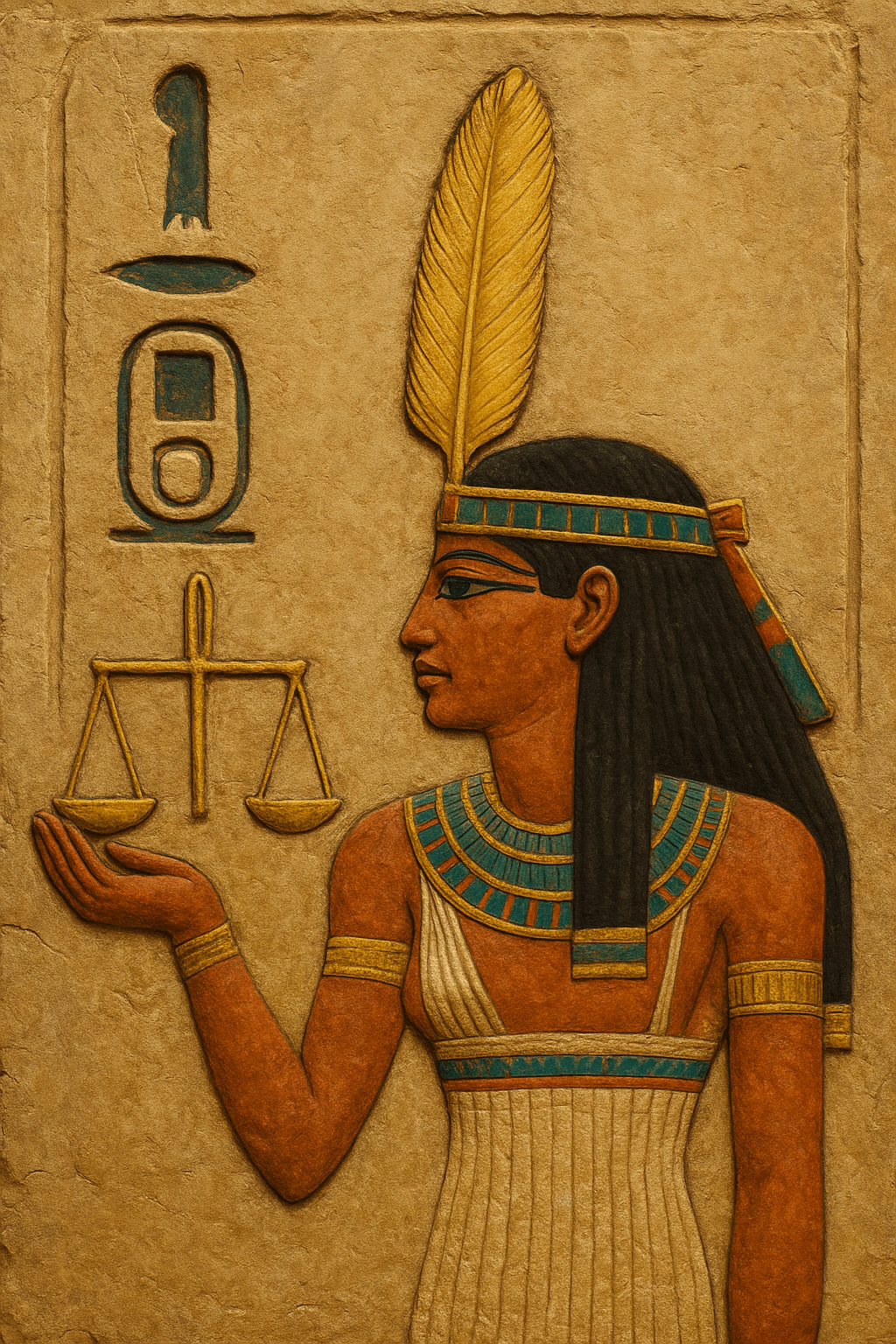
In the Book of the Dead, the feather is placed upon the scales in the Hall of Two Truths, opposite the heart of the deceased. If the heart is free from deceit, its weight equals that of the feather, granting the soul passage into eternal life. If it is heavy with falsehood, imbalance, or injustice, it tips the scale, consigning the soul to dissolution. Here, the feather becomes more than symbol, serving as the threshold of immortality and the eternal measure of whether one has lived in harmony with Ma’at.
Yet, this weighing is not only for the dead. The feather invites us, in life, to continually examine what burdens we carry and whether our actions reflect integrity. Ma’at’s feather is the call to live lightly: without deceit, without injustice, and without unnecessary weight upon the heart. It reminds us that truth is not a rigid law but a balancing act, an ongoing alignment between self, others, and the cosmos.
Mirrors of Ma’at: Libra & the Scales
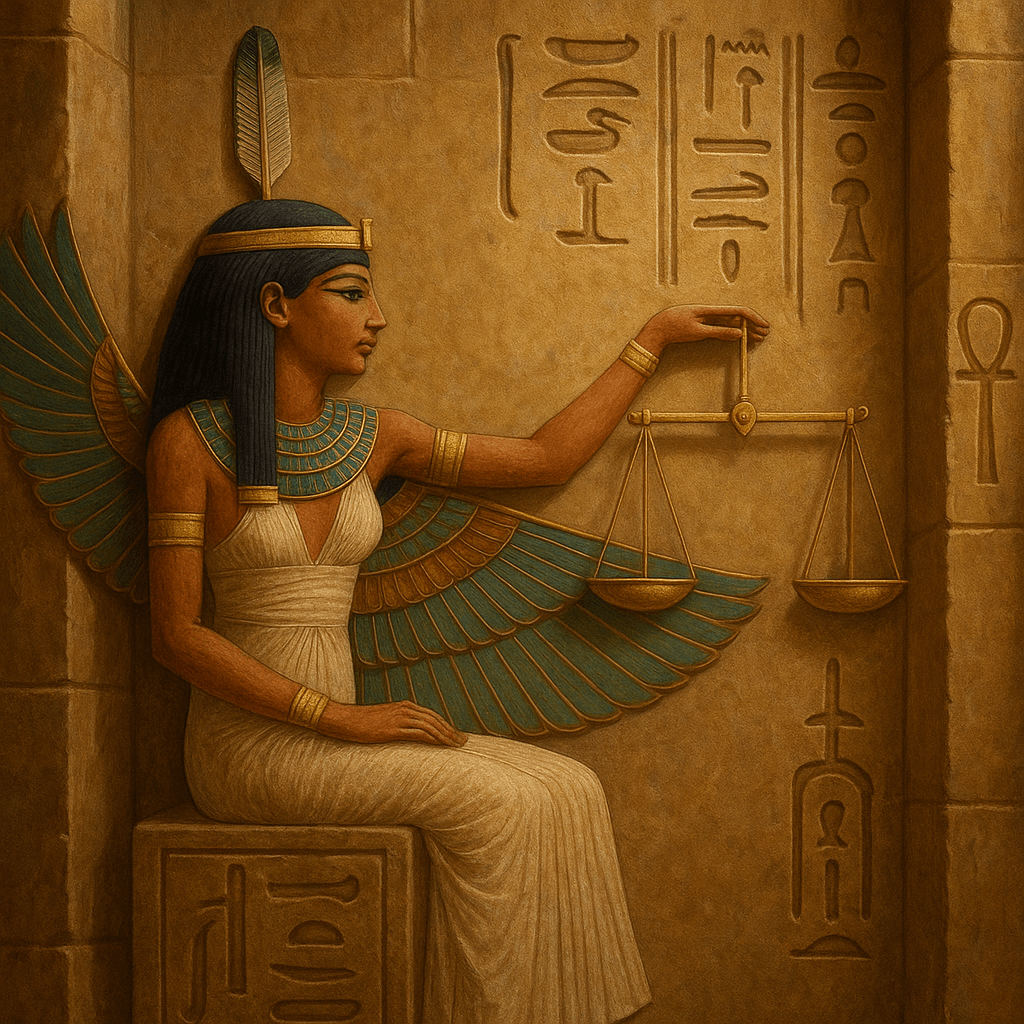
Across cultures, Ma’at’s essence is reflected in other archetypes of balance and order, and among the most striking is Libra, the zodiac sign symbolized by the scales. In Hellenistic astrology, Libra marks the Autumn Equinox, a moment when day and night stand equal before the gradual descent into darkness. This turning point in the solar cycle mirrors Ma’at’s eternal task: weighing, balancing, and maintaining harmony in a world that constantly shifts between order and chaos.
Libra’s scales are not only symbols of fairness in human affairs but also of cosmic reciprocity: the give and take between light and dark, growth and rest, expression and retreat. Just as Ma’at’s feather measured the weight of the heart against truth, the balance of the heavens in Libra season measures the alignment of our lives with the rhythms of the natural world. It reminds us that balance is not a static state but an active, ongoing negotiation, a continual re-centering of the scales.
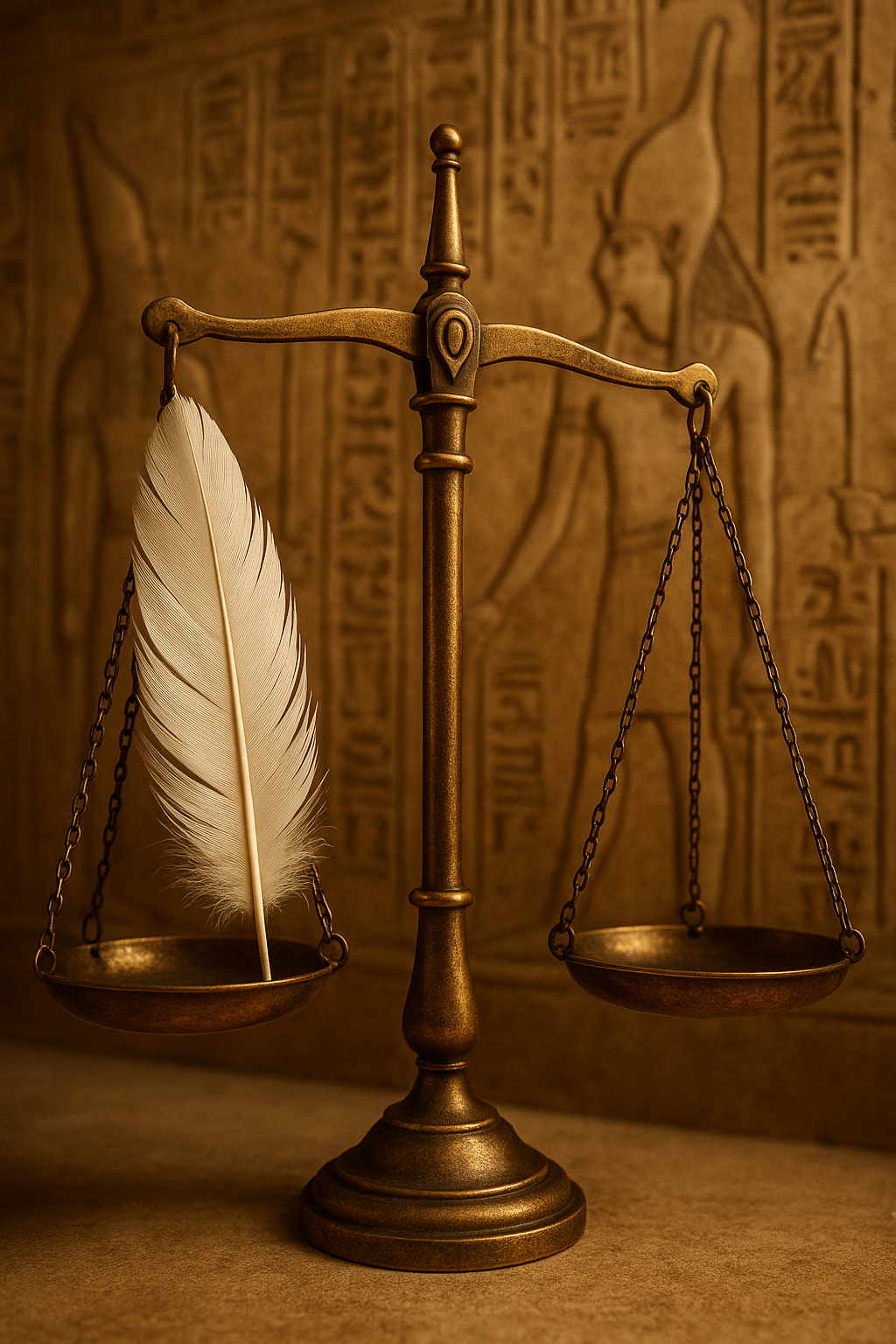
Through the archetype of Libra, Ma’at’s principles are still brought into dialogue with the cycles of the sky. Both teach that justice and harmony are not abstract ideals, but living realities found in the interplay of opposites. The equinox is fleeting, just as the scales of judgment are in constant motion, yet both reveal the beauty of balance when truth is honored and reciprocity upheld.
Ma’at at Autumn’s Threshold
As the Wheel of the Year turns toward the fall, we encounter a liminal period where light and darkness briefly share the sky in equal measure. The Autumn Equinox is a moment of balance, yet also of transition, as the waning sun yields to the growing night. Within this descent lies an echo of Ma’at’s archetype: the cosmic principle that harmony is not sustained through permanence, but through continual recalibration.
In the season of harvest, the image of weighing becomes vivid. Crops are gathered, measured, and stored, just as our own efforts and intentions are assessed before entering the darker half of the year. This is the time when Ma’at’s feather rises before us as symbol and guide. What do we carry forward that lightens the heart? What burdens weigh too heavily, tipping the scales toward imbalance?
The autumn threshold is not only a turning of seasons, it’s an invitation to consider truth. Just as the souls of the dead were measured against Ma’at’s feather, we pause to measure our lives in this moment of equilibrium. The fruits of our labor reveal where we have lived in alignment and where we may have strayed from harmony. The darker months ahead are not punishment but preparation, an opportunity to realign, to release, and to root more deeply into authenticity before the next cycle of light returns.
Working with Ma’at’s Archetype
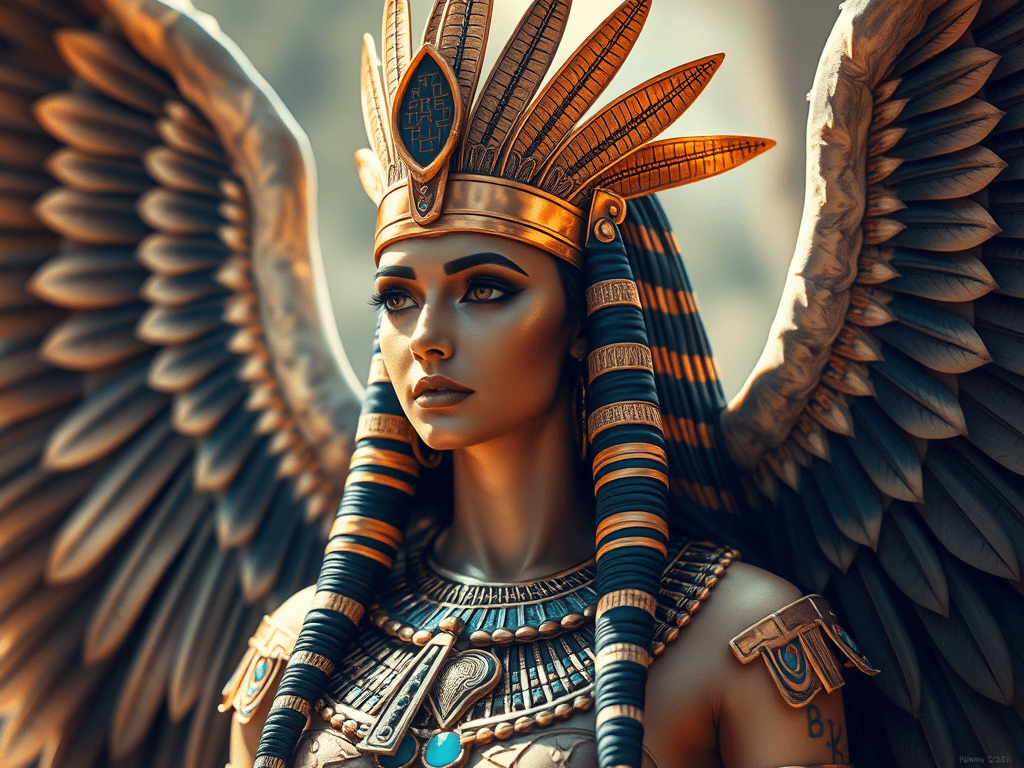
Though born from the sands and temples of ancient Egypt, Ma’at’s wisdom still speaks directly to our modern lives. Her feather of truth is more than myth, acting as an invitation to live with integrity, clarity, and reciprocity in a world that often feels chaotic and divided. To embody Ma’at today means seeking harmony not only in the grand, cosmic sense but also in the simple choices of daily living.
Living lightly, as the feather suggests, begins with honesty, with both ourselves and with others. This can take the form of truth-telling in relationships, acknowledging where imbalance has crept in, and making amends where needed. In a practical sense, it also means discerning what weighs us down: unnecessary obligations, toxic patterns, or the heaviness of self-deception. Just as the heart is weighed against the feather, we are invited to notice what keeps us from living in alignment with our highest truth.

Ma’at also teaches that balance extends beyond the personal. She calls us into community, where justice and fairness require us to consider the needs of others alongside our own. Acts of generosity, fairness in decision-making, and respect for reciprocity all echo her principle of cosmic harmony. In a culture that often praises excess and imbalance, Ma’at reminds us that true strength lies in equilibrium.
Her archetype also encourages reflection and ritual practices. Journaling about how we can create more harmony in our lives, creating a symbolic “weighing of the heart” meditation, or meditating on the balance of light and dark can help us anchor her wisdom into tangible action. Each of these practices turns Ma’at from a distant goddess into a living guide who encourages us to move through life with grace, truth, and a steady heart.
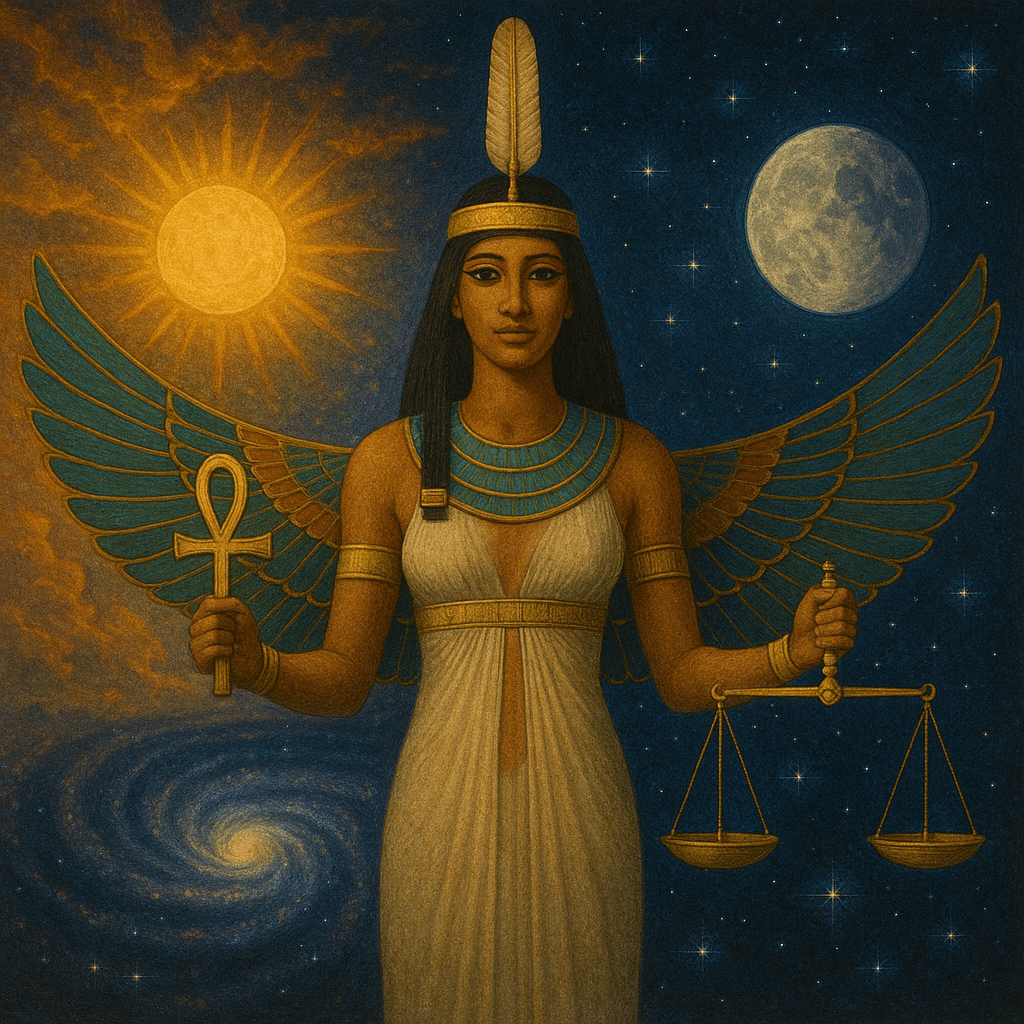
The Universality of Balance
Ma’at’s wisdom does not belong only to Egypt’s past, nor is it confined to the symbolism of Libra or the equinox. Her archetype reveals a universal truth: all of existence is sustained by balance. Across cultures, we find echoes of her feather and scales, symbols of her archetypal principles of reciprocity, justice, and harmony that hold communities together and connect humanity to the cosmos.
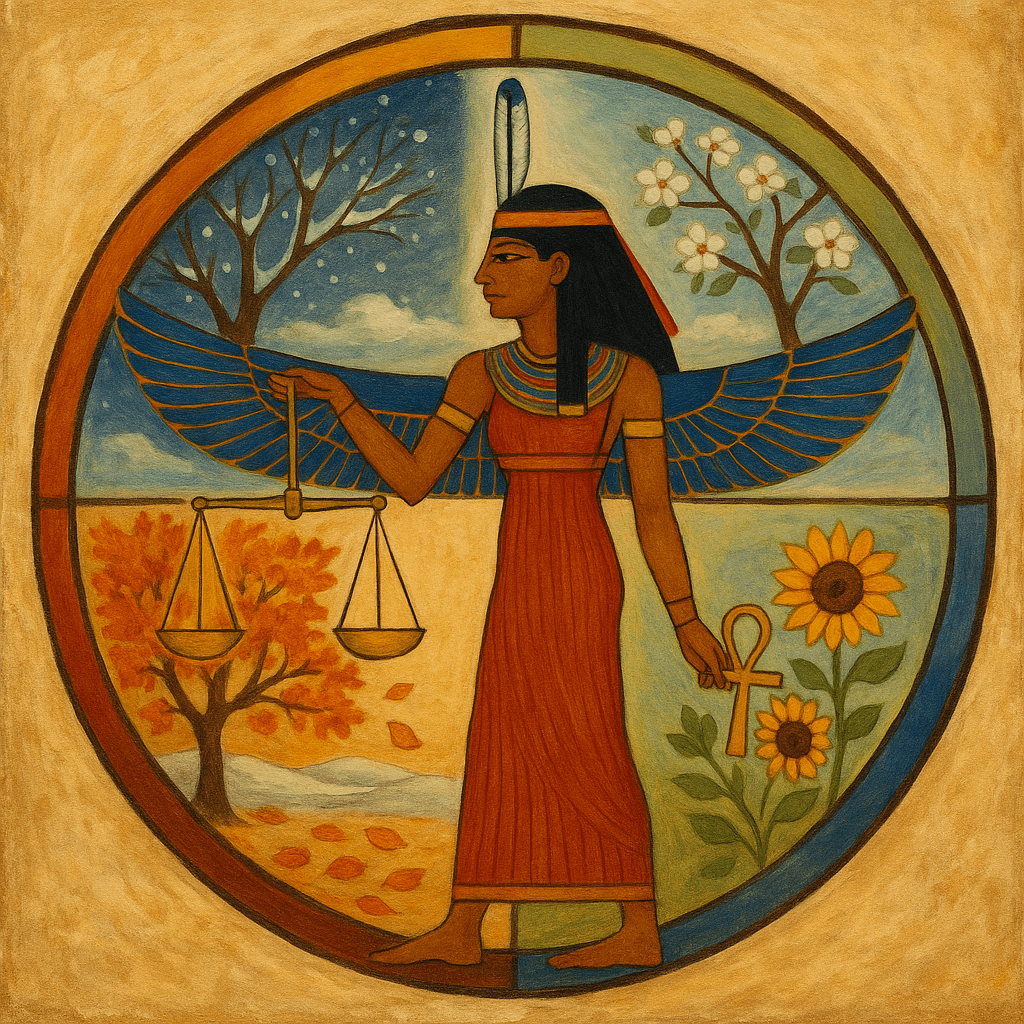
Every zodiac sign contains its own form of balance: the fire of Aries tempered by Libra’s air, the depth of Scorpio steadied by Taurus’ earth, the mutable energies of Gemini and Sagittarius completing one another in dialogue. Thus, the cycles of the year also bear this truth, with each season offering its own threshold of adjustment: light yielding to dark, growth returning to rest, and beginnings ripening into harvest. Ma’at’s presence is woven through all these rhythms, reminding us that balance is the thread that ties them together.
Even in daily life, we witness her universality: breath depends on balance between inhale and exhale, the body thrives when rest and activity are in harmony, and relationships flourish when giving is met with receiving. Just as the universe itself expands and contracts in cycles, we are called to honor the ebb and flow of balance in every layer of being.
To recognize this archetypal energy is to acknowledge that harmony is not an ideal to be reached once and for all, but an ongoing process that sustains the cosmos, the earth, and human experiences alike. In these ways, Ma’at is not only a goddess of truth and justice, but also a timeless reminder that all life depends on the equilibrium between opposites.
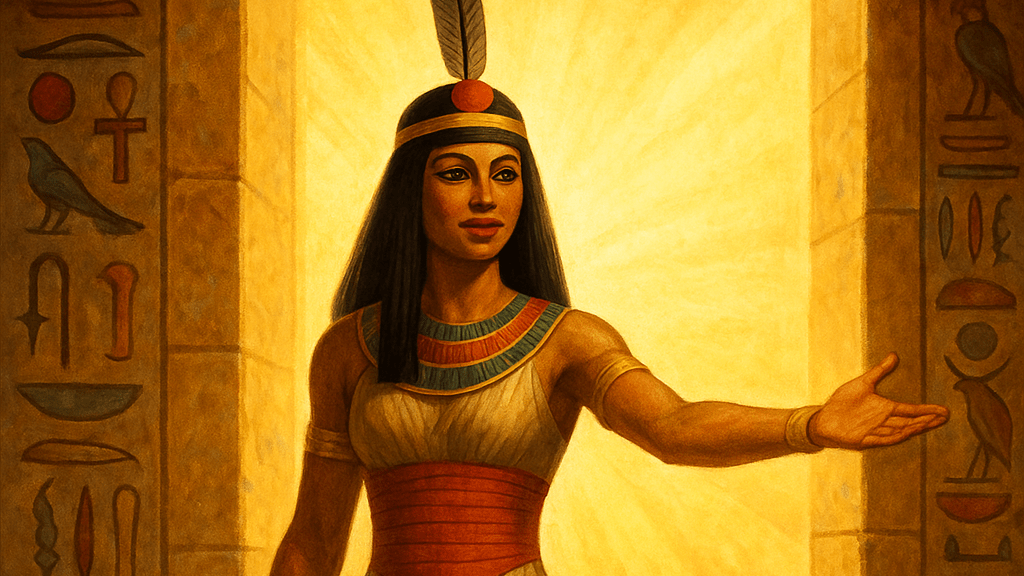
Ma’at’s Archetype Serves as a Timeless Invitation to Seek Balance & Harmony
At the heart of Ma’at’s archetype lies a truth both timeless and tender: balance is the thread that weaves all things together. From the judgment halls of ancient Egypt to the scales of Libra and the cycle of the seasons, her energy reminds us that harmony is not fixed, but something to be cultivated, protected, and lived each day.
As the equinox opens the threshold into autumn’s embrace, Ma’at invites us to pause and weigh our own hearts. What truths lighten us? What burdens call for release? In answering these questions, we do more than reflect, participating in the very principles of harmony that sustain the cosmos.
Mindful Meditation
Quiet your “monkey mind,” record your experiences, & deepen your practice.
To carry Ma’at’s wisdom with us is to walk more gently, live more honestly, and seek more reciprocity in all things. It means we honor both light and dark, joy and challenge, beginnings and endings; all as equal parts of a greater whole. Just as her feather steadied the scales of eternity in ancient times, her archetype can continue to guide us into greater harmony within ourselves, our communities, and the cycles of life.
Thank you for joining us here on Onescence! If you enjoyed this article, you can help support this free resource by becoming an Onesce Insider or purchasing one of our products through Onesce Press. Given your interest in ancient wisdom and natural cycles, perhaps you would benefit from:
Moon Cycle Journey

JOURNAL FEATURES:
- Learn about the rhythms of the lunar cycle and how to apply them to your own journey.
- Explore your cycle goals, developing and working with your own authentic intentions.
- Discover the power of personal feedback for enhancing and sustaining progress.
- Utilize daily/nightly journal prompts that are designed to bring out your best.
- Experiment with simple ritual ideas and when to employ them throughout the cycle.
- And so much more…
You can also get your copy on Amazon and begin your journey with the next moon cycle!